
 •
Rating:
•
Rating:
THE REVIEW
What Roger Waters attempts to do with "The Final Cut" is to draw lines, possible connections between the mistakes of the past and those of the present, to give a sign that the ideals of peace and brotherhood are sooner or later always swept away by considerations of convenience. With this reference to current events, "The Final Cut" becomes an album that uses the sadness of the bassist's father's death and its qualification as a requiem as the first argument to construct a critique that is not only political but also emotional, against those power logics which, according to Waters, lead to the outbreak of wars. Once the bassist had the concept in mind through which to develop "The Final Cut," he launched into the furious composition of songs and music suitable to bring his anguish to the album, without asking or demanding approval from his companions. From this point of view, the album can easily be considered a sort of Roger Waters' first solo product, especially in style, even less Floydian than that used in "The Wall.
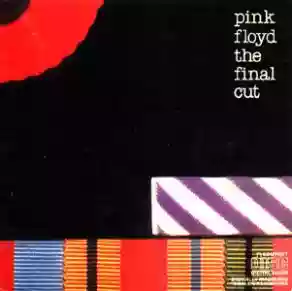
"The Final Cut" was officially released on March 21, 1983.
The first track is "The Postwar Dream"; it starts with machine noises and radio programs, over which a faint organ chord motif and voice interject, lamenting the reasons for World War II. The second part, underscored by an explosion of electric guitar, drums, and bass, returns to the present with a series of questions aimed directly at the Prime Minister who wanted the Falklands War. Opened by the sound of a train lock, "Your Possible Pasts" begins with ethereal organ textures and guitar arpeggios, announcing the new explosion of the chorus, a section led by the driving guitar riff that concludes with one of its rare solos. With "One of the Few," the main character of "The Final Cut" is introduced, the teacher who already appeared in The Wall. Here we discover him to be a war survivor, who, on a base of paranoid-flavored arpeggios, explains how he ended up being a school teacher. The next track, "The Hero's Return," shows another facet of this character: he is a tormentor, but he is also haunted by what he saw in the war. The music faithfully follows the various inflections of the text, it is stern and dark, followed by unsettling echoes of muted guitar during the verses and choruses, moving in the finale when the teacher recalls his comrades fallen in battle. The narrative focus continues to be concentrated on this character in "The Gunner's Dream," describing the dreams of justice and freedom of the fighters at the end of World War II, set to a very soft piano accompaniment and enhanced by the sax. All these traumas that the character carries are jealously guarded inside, hidden behind the insane expression of his gaze, which is the subject of "Paranoid Eyes," a track where the keyboards and orchestral arrangements take center stage. After this first tranche of songs dedicated to building the figure of the teacher, "The Final Cut" returns with "Get Your Filthy Hands off My Desert" to the contemporary theme with a text that satirically associates the figure and behavior of Margaret Thatcher with those of other rulers. Musically, it is a miniature for voice and strings in waltz time, introduced by the sound of an explosion.
"The Fletcher Memorial Home" continues the satire on power by describing a phantasmal retirement home for kings and retired tyrants. The music is once again based on string and piano accompaniment, whose timbre is suitable to underline the mournful quality of the album. The song ends with a moving Gilmour solo. With "Southampton Dock" and its sweet guitar chords, the focus of the narrative returns to the end of World War II, proposing the image of a wife waiting for the ship with which her husband should arrive and realizing that he will never arrive again. In the title track, the album reaches its first definitive turning point, the one in which Waters reveals himself behind the mask of the teacher and protagonist of the plot, the first victim of the guilt of having survived. Musically, it is a song based on the keyboard and orchestral textures of the previous tracks, with some moments of greater pathos in the chorus reminiscent of that of "Comfortably Numb." "Not Now John" is the most atypical song of the entire album, especially for the musical style typical of 80s rock, built entirely on muscular guitar riffs. This is not a track that clearly fits into the logic of the album, but seems like just a scream of racial hatred.
In the last track, we find the character of the teacher and the noise of street machines that start the album again; in fact, he is traveling in his car while a light stronger than the sun emerges in the rear window: the atomic explosion described in "Two Suns in The Sunset."
Loading comments slowly
Summary by Bot
This review delves into Pink Floyd's The Final Cut as a deeply political and emotional album shaped largely by Roger Waters. It highlights the album's anti-war themes, narrative focus on a war survivor, and stylistic departure from traditional Floyd sound. Each track is examined for its contribution to the overall concept, from poignant piano-driven melodies to powerful guitar solos. The review appreciates the album's intensity and its role as a near-solo effort by Waters.Tracklist Lyrics Videos
Pink Floyd
Pink Floyd formed in London in 1965 and became a defining force in psychedelic and progressive rock. The classic lineage spans Syd Barrett’s founding vision, Roger Waters’ conceptual leadership, Richard Wright’s harmonic textures, Nick Mason’s pulse, and David Gilmour’s arrival in 1968, shaping their signature sound.237 Reviews
Other reviews
By eclipse
Perhaps in the end it’s a demonstration that music can overcome all the barriers set by humans!!!
Waters creates the most 'his' album under the name Pink Floyd alongside 'The Wall,' with which there are many references in this album.
By Em
"To this day, I consider it Pink Floyd’s best album."
"Despite everything, he continues to dream."
By PAZZO AL SACCO
"Oh my God, what a depression, but damn what a sound!"
"This is the album that deserves more attention in the history of rock... Listen until fully assimilated and then, judge."
By claudio carpentieri
"Recording The Final Cut was a real challenge because there was no collaboration, no understanding among us; at least on the name, we all agreed" (Roger Waters).
"It was supposed to be ... a follow-up to the previous The Wall ... and in the end, it turned out to be something quite different from our original intentions..." (Nick Mason).
By paolofreddie
The Final Cut is an album in which you can feel the passion of the bassist tormented by the ghosts of his past.
The song that gives the album its title... reveals a great unease, a great fear of being left alone, of being abandoned.
