
 •
Rating:
•
Rating:
THE REVIEW
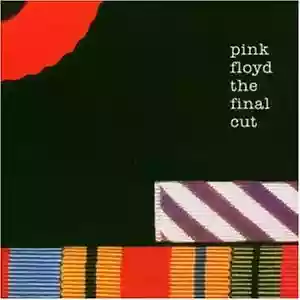
The requiem for the post-war dream of Roger Waters performed by Pink Floyd brings several memories to my mind. When I bought it, I was unaware of many things about this much-discussed album: I didn't know that it was Roger Waters' first solo album, that Wright was absent, or that there were numerous conflicts within the band. But I didn't care, and I listened to it fascinated (though a bit unsettled by that very dark cover) while sinking into my chair.
As I grew up (though not much), I learned many things, such as who Roger Waters, Rick Wright, and David Gilmour were, and what the disputes were about... But my affection for this album remained, and to this day, I consider it Pink Floyd's best album.
Here, everything is in its place: the hysterical background noises (in an embryonic stage in "The Wall") take form and meaning. The album deals with many things, and here every regret, resentment, and sadness of the author is vented: the despair over his father's death when he was just a newborn, the anger towards the two states involved in the current (at the time) Falklands War, the disgust for paranoid government leaders, but also the hope born from the dream of an old gunner. The album opens with the pleasant "The Post War Dream", where a melancholic and angry Waters asks himself what they had done to be English
. The first line opens with a line that rightfully should enter the annals of music:
"Tell me true, Tell me why
Was Jesus crucified...
is it for this that daddy die"
All the "whispered" sadness is then broken by a burst of anger that drives the young man to shout words of rage and resentment towards the one who, according to the author, destroyed "the post-war dream", Maggie Thatcher, the then British Prime Minister. The tone changes, and the next song, "Your Possible Pasts", with its sweet mark interrupted by obsessive refrains, simply talks about that feeling sung only rarely by the Floyd, love. Do you remember me, how we used to be?
In the following track, an old acquaintance returns: the Scottish teacher who had obsessed the pupil Pink in "The Wall" reappears here, and his figure, once so terrible as to be considered "another brick in the wall", is slightly softened. It is discovered that he was a gunner in World War II who, upon returning home at the end of the war, had nothing to do but teach young minds how to "suffer". Young minds on which to unleash all his anger.
The teacher is still the protagonist of the most beautiful track on the album, "The Gunner's Dream", where the gunner, returned home disheartened and destroyed by the war's barbarities, has a dream, a dream where:
"maniacs don't blow holes in bandsmen by remote control
And everyone has recourse to the law / And no-one kills the children anymore"
The piece is built on a delicate and trembling G major chord that introduces verses of sublime beauty with an harmony as delicate as it is complex and intricate, with rhymes embedded within the verses and wonderfully original assonances. After the stanza, a long saxophone solo erupts while the author shouts how, despite everything, he continues to dream.
With "Get Off Your Filthy Hands Of My Desert" opens a "grotesque and satirical" appendix to the album, followed by the track "The Fletcher Memorial Home". In this short track, a string quartet performs a movement in G major over which the vocalist's voice stands out clearly, singing about how Thatcher waged a war (the Falklands) just to regain patriotism and pride, here represented with the image of the flag.
In the "Fletcher Memorial Home" only the incurable Kings and Tyrants are admitted. This is what Waters imagines: a retirement home for hegemons and dictators, where to lock away (in a verse with blatant lack of diplomacy) Nixon, Brezhnev, Haig, and, of course, our Maggie.
After the parade of desperate political cases, a disheartened singer asks why "Did they expect us to treat them with any respect"
only to end, cynical and determined, saying that, now that the tyrants are all gathered, the final solution can be carried out".
The atmosphere changes here, and the author recalls the day of his father Eric Fletcher Waters' death during the Allies' landing at Anzio in '45, the despair of the soldiers on that cold morning. And among them was also him, that new father who now rests on a quay at "Southampton Dock".
With the title track, the concept reaches its finale. "The Final Cut" is characterized by a sneaky change of tempo and key from verse to chorus. In this song, the unusual theme of love returns, ending with a terrifying declaration, where the protagonist, on the brink of suicide, drops the knife and sings, disheartened, how "he never had the nerve to make the final cut".
The sudden change of genre leads us to a very harsh track that has no other purpose than to express the terrible vulgarity of military jargon, the ignorance in this and the hypocrisy of the "Rambos" at war. In spurts of calm, the horrifying verse from "One Of The Few" returns:
"Falli ridere/ falli piangere/ falli ballare nelle navate/
Falli pagare/ falli restare/ falli sentire in forma"
The song ends in total chaos where voices shout wildly in all languages "where's the bar"
and another that, in a stadium-like tone, shouts Go! Maggie
and a fanatic who repeats "hammer, hammer, hammer". Here lies the end.
The last track of the album serves (like "Outside The Wall" on the previous album and like "Pigs On The Wing Part 2" in "Animals") to soften the tone.Two Suns In The Sunset
briefly summarizes all the various themes of the album, only to conclude, desolate:
"My tears evaporate
Leaving only charcoal to defend
Finally i understand
The feelings of the few
Ashes and diamonds
Foe and friend
We were all equal in the end"
a stanza that, I'd say, is worth translating:
"Le mie lacrime evaporano
Lasciando solo carbone da difendere
Alla fine capisco
Ciò che pochi provano
Diamanti e ceneri
Amico e nemico
Siamo tutti uguali alla fine".
To conclude, I would say that no matter which "Floydian" side we take, in the bottom of our hearts We felt the final cut.
Loading comments slowly
Summary by Bot
This review praises Pink Floyd's The Final Cut as their best album, highlighting its intense political and emotional themes. Roger Waters's personal grief and criticism of war leaders shape the album’s powerful narrative. The music is praised for its atmospheric depth and complex composition. Despite band conflicts, the album stands as a profound concept work blending anger, despair, and hope.Tracklist Lyrics Videos
Pink Floyd
Pink Floyd formed in London in 1965 and became a defining force in psychedelic and progressive rock. The classic lineage spans Syd Barrett’s founding vision, Roger Waters’ conceptual leadership, Richard Wright’s harmonic textures, Nick Mason’s pulse, and David Gilmour’s arrival in 1968, shaping their signature sound.237 Reviews
Other reviews
By eclipse
Perhaps in the end it’s a demonstration that music can overcome all the barriers set by humans!!!
Waters creates the most 'his' album under the name Pink Floyd alongside 'The Wall,' with which there are many references in this album.
By floyd92
The album can easily be considered a sort of Roger Waters’ first solo product, especially in style, even less Floydian than that used in The Wall.
The Final Cut becomes an album that uses the sadness of the bassist’s father’s death as the first argument to construct a critique that is not only political but also emotional.
By PAZZO AL SACCO
"Oh my God, what a depression, but damn what a sound!"
"This is the album that deserves more attention in the history of rock... Listen until fully assimilated and then, judge."
By claudio carpentieri
"Recording The Final Cut was a real challenge because there was no collaboration, no understanding among us; at least on the name, we all agreed" (Roger Waters).
"It was supposed to be ... a follow-up to the previous The Wall ... and in the end, it turned out to be something quite different from our original intentions..." (Nick Mason).
By paolofreddie
The Final Cut is an album in which you can feel the passion of the bassist tormented by the ghosts of his past.
The song that gives the album its title... reveals a great unease, a great fear of being left alone, of being abandoned.
