
 •
Rating:
•
Rating:
THE REVIEW
Pink Floyd marked the history of music through an indispensable rock opera in the vast catalog of rock, The Wall, the product of the fertile mind of Roger Waters, bassist and singer of the English band. Unfortunately, The Wall is the result of a crisis that began as early as 1977, simultaneously with the release of the album Animals and its related tour. All of Waters' frustration towards the audience, his physical and mental distancing from the fans, transformed into music, into ideas for a new album. In 1979, the macro "watersian" work was released and exploded with success once again, and Roger resumed playing with the band on the tour dedicated to the album: the stage set was imposing, and Waters' "wall" was introduced on stage, giving the show greater emphasis and paving the way for a true theatrical performance.
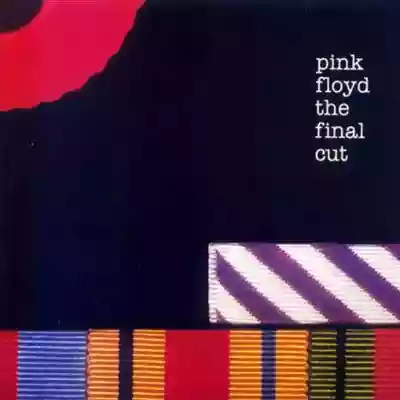
The album's success coincided with the group's crisis. David Gilmour, the band's guitarist, was eternally in conflict with Waters, Mason stayed on the sidelines, and Wright had already left (since the days of Animals when he was limited to a session man). For a while, Pink Floyd stopped playing, but Waters continued to write and compose music until in 1983 a new "Pink Floyd" album was released (so to speak). The Final Cut is an album in which you can feel the passion of the bassist tormented by the ghosts of his past, who, with his voice, denounces the corrupted system of war, that great machine involving all of humanity and leading to the destruction of the human race itself. Roger is influenced by his life experiences, just as he was with The Wall: his father's death in the battle of Anzio in '44, the year of the bassist's birth (he lived his entire life and grew up without a father). The band members are subordinate to the imperium of Roger Waters, writer and composer of all the songs, they play them, but The Final Cut cannot be defined as a Pink Floyd album. Gilmour's voice is heard in Not Now John, and Roger's voice shines excellently and tear-jerkingly in tracks like the album opener, The Post War Dream, in The Gunner's Dream, in The Fletcher Memorial Home, in When the Tigers Broke Free, a song added to the 2004 CD version and present in the film The Wall. The song that gives the album its title, The Final Cut, is very deep and significant (And if I show you my dark side, will you still hold me tonight? And if I open my heart and show you my weak side, what will you do? Will you sell your story to Rolling Stone? Will you take the children away and leave me alone? And smile to reassure me, while you whisper on the phone. Will you pack my bags or take me home?). From such phrases, one can sense a great unease, a great fear of being left alone, of being abandoned by his wife, the fear of not being able to be with his children, and of being publicly shamed for his romantic history. Also very beautiful is the closing track, Two Suns in the Sunset, which talks about the atomic bomb and the possible consequences of a nuclear war.
Certainly an album not on par with masterpieces like The Dark Side of the Moon, Wish You Were Here, an album subject to much criticism, an album ignored by many and considered, deservedly or not, not worthy of the name Pink Floyd. I consider it a good album, touching and thought-provoking. Regardless of the fact that it is more of an individual work, by Roger Waters alone, I give it an 8.
Loading comments slowly
Summary by Bot
The Final Cut, launched amid Pink Floyd's internal conflicts, showcases Roger Waters' deeply personal and political reflections on war and loss. While considered by some as less emblematic of Pink Floyd's legacy, the album features thought-provoking lyrics and emotional depth, especially on tracks like The Post War Dream and The Final Cut. Despite criticism and a sense of being a solo effort, it remains a powerful and touching rock opera.Tracklist Lyrics Videos
Pink Floyd
Pink Floyd formed in London in 1965 and became a defining force in psychedelic and progressive rock. The classic lineage spans Syd Barrett’s founding vision, Roger Waters’ conceptual leadership, Richard Wright’s harmonic textures, Nick Mason’s pulse, and David Gilmour’s arrival in 1968, shaping their signature sound.237 Reviews
Other reviews
By eclipse
Perhaps in the end it’s a demonstration that music can overcome all the barriers set by humans!!!
Waters creates the most 'his' album under the name Pink Floyd alongside 'The Wall,' with which there are many references in this album.
By Em
"To this day, I consider it Pink Floyd’s best album."
"Despite everything, he continues to dream."
By floyd92
The album can easily be considered a sort of Roger Waters’ first solo product, especially in style, even less Floydian than that used in The Wall.
The Final Cut becomes an album that uses the sadness of the bassist’s father’s death as the first argument to construct a critique that is not only political but also emotional.
By PAZZO AL SACCO
"Oh my God, what a depression, but damn what a sound!"
"This is the album that deserves more attention in the history of rock... Listen until fully assimilated and then, judge."
By claudio carpentieri
"Recording The Final Cut was a real challenge because there was no collaboration, no understanding among us; at least on the name, we all agreed" (Roger Waters).
"It was supposed to be ... a follow-up to the previous The Wall ... and in the end, it turned out to be something quite different from our original intentions..." (Nick Mason).
