
 •
Rating:
•
Rating:
THE REVIEW
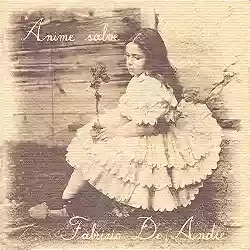
As in his earliest songs, in what is unfortunately De André's last album, the protagonists, the "Anime salve" indeed, are the marginalized, the poor, cut off from a society based solely on money and competition. For the music this time the distinguished fellow citizen Ivano Fossati collaborates, and it is a pity that this partnership could not continue. The two complement each other perfectly: De André is primarily a poet, Fossati an already refined musician. The album generically mentions "Lyrics and music by Fabrizio De André and Ivano Fossati," but it is plausible that the former dominated the lyrics and the latter the music.
Nonetheless, what emerged is the true masterpiece of the last De André, the "ethnic" one, although perhaps the only songs that seem a bit out of place are the dialectal ones: "Dolcenera" (partially in Genoese) a love story intertwined with the event of a flood hitting Genoa, and "A cumba" (The dove), a popular nursery rhyme like "Volta la carta", in Genoese, about a marriage proposal. "Princesa", which opens the album, is the story of a Brazilian, born male, who undergoes the most terrible treatments "so that his body resembles him on the seafront of Bahia", finally becoming a "viado". Rich in raw words, as the story and environment demand, it ends in a wild samba. The most chilling song on this album is dedicated to a marginalized people, the Romani: "Khorakhanè - a forza di essere vento" is at once a picture of the squalid life of a camp "torn by the wind," of monotonous days where "even today we go begging," of nightmares like deportations, but also of dreams, of festivals, of journeys made "for the same reason for traveling: to travel." Moving and inspired, it culminates in the desperate final song in the Romani language (voice of Dori Ghezzi).
"Anime salve" has splendid music, a slow and very elegant rhythm, but a text a bit too enigmatic, the most "Fossatiano" of the album. "Le acciughe fanno il pallone," although in Italian, recalls those fishermen and those sea places described in "Creuza de ma". Evocative flutes accompany an elaborate, not too fast rhythm. "Disamistade", with its dark, nocturnal setting and tragic imagery, recalls Sardinia and its feuds. "Ho visto Nina volare" offers dreamlike atmospheres and a clear classical guitar. "Smisurata preghiera" is the hardest track, the most "rock" (excluding the orchestral finale), but it compensates with a text that is the synthesis of the entire album: it is a hymn to "those who travel obstinately and contrary to the direction", to "servants disobedient to the laws of the pack". This is also somewhat the meaning of De André's entire artistic journey, which leaves this album as the last testimony of a life and art "against" to be framed.
Loading comments slowly
Summary by Bot
Fabrizio De André’s last album, 'Anime Salve', celebrates marginalized people through poetic lyrics and refined music by Ivano Fossati. The album mixes ethnic sounds with Genoese dialect songs, exploring deep social themes. Highlights include the chilling Romani song and the evocative samba in 'Princesa'. A masterpiece blending slow rhythms with enigmatic texts, it stands as a poignant final artistic statement.Tracklist Lyrics Videos
Fabrizio De André
Italian singer-songwriter (cantautore) Fabrizio De André (18 Feb 1940 – 11 Jan 1999) is known for poetic lyrics, narrative songs about marginalized people, and landmark albums including Creuza de mä and La buona novella.92 Reviews
Other reviews
By Poletti
Fabrizio De Andrè... one who went beyond any pleonastic reasoning, one who knew how to reconcile Present and Future, one who distinguished the boundaries of divine greatness.
Enormous prayers... we, with all the love and goodwill, could never be enormous: we are Men, therefore, we are Normal. In fact, Extremely Normal.
By hypnosphere boy
This Work is a grandiose and poetically suggestive 'structure' within which poetry unfolds in dramatic, sad, joyful, amusing, epic, and elegiac registers.
'Smisurata Preghiera' ends with an invocation to a divine justice, traversing infinite nuances between tragedy and comedy without touching either limit.
By enbar77
One of the most touching, profound, introspective musical expressions existing on the face of the earth.
Deus ti salve...Fabrizio.
By jubilasiatikusu
Mi dispiace, sembra che non hai incluso una recensione nel tuo messaggio.
Per favore, invia nuovamente il testo HTML della recensione e sarò felice di aiutarti con la traduzione mantenendo il formato HTML.
By joe strummer
The «anime salve» that Faber talks about are all the souls of men because the soul is a «beautiful deception», i.e., it doesn’t exist, it’s an illusion.
Life is companionship, but it’s also great loneliness. De André sees himself from outside: «I watched myself cry in a snow mirror / I saw myself laughing / I saw myself leaving with my back turned».
