
 •
Rating:
•
Rating:
THE REVIEW
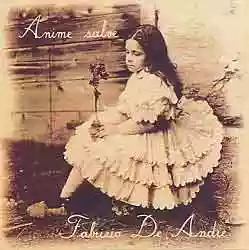
A melancholically prophetic title, albeit deservingly fulfilled, christens the latest work of the great Genoese literary figure. Refined work not only due to the particularly high level of the lyrics, but also by the accompanying notes that intertwine with excellent tribal incursions (by the much-missed Naco) and the striking guttural expressions of the brilliant Fossati, supported by the impeccable son Cristiano and the luminous voice of sister Luisa Vittoria.
De André wants to take a break. And he wants to do it in the best possible way. His obstinate neglect in taking care of his own health forces him to stop, unfortunately in an extreme way. Perhaps he knows this and doesn't want to tell anyone, or maybe he doesn't expect it, but he is eager to leave a musical testament.
The buzz of the twin-cylinders mixed with the laughter of today's deviant courtesans paves the way for one of the most touching, profound, introspective musical expressions existing on the face of the earth. Clinker crystals, swept by the pungent smell of bodily escapes, cannot resist the uncontested power of the temporal vortex that continues to incessantly mark the footsteps left by nomads from unknown survival camps. Voices of hope from the liberation of some evil, real or supposed, are veiled by seductive downpours of timbres sometimes similar, sometimes different, to emphasize or not the influence of beneficial currents meant to leave us that small ray of light we need not to lose the will to overcome the obstacles imposed by daily life. The power of nature destroys everything using a skillful accordion and choruses of Near Eastern origin, so sweetly intrusive as to interact without scratching anything with the picturesque hunt for anchovies. The salt that corrodes the ropes abandoned on the docks tends to lift off them to reach those that would carry the delicacy of a butterfly driven by the brightness of the sun. The road ends unexpectedly with a dead end characterized by a wall. A wall where too many tears will be shed and where a magical altar will be born.
At this point, paraphrasing an unmeasured Sardinian popular prayer wonderfully reworked by you, I am happy to be able to say "Deus ti salve...Fabrizio".
Loading comments slowly
Summary by Bot
Anime Salve marks one of Fabrizio De André's most introspective and poetic albums, blending tribal sounds with compelling lyrics. The album reflects a profound farewell, shaped by his health struggles, and enriched by contributions from family and collaborators. Its haunting melodies and cultural influences create a touching musical testament. This work stands as a significant, emotionally charged journey through hope, nature, and human existence.Tracklist Lyrics Videos
Fabrizio De André
Italian singer-songwriter (cantautore) Fabrizio De André (18 Feb 1940 – 11 Jan 1999) is known for poetic lyrics, narrative songs about marginalized people, and landmark albums including Creuza de mä and La buona novella.92 Reviews
Other reviews
By Grasshopper
De André is primarily a poet, Fossati an already refined musician.
'Smisurata preghiera' is a hymn to 'those who travel obstinately and contrary to the direction,' embodying De André’s entire artistic journey.
By Poletti
Fabrizio De Andrè... one who went beyond any pleonastic reasoning, one who knew how to reconcile Present and Future, one who distinguished the boundaries of divine greatness.
Enormous prayers... we, with all the love and goodwill, could never be enormous: we are Men, therefore, we are Normal. In fact, Extremely Normal.
By hypnosphere boy
This Work is a grandiose and poetically suggestive 'structure' within which poetry unfolds in dramatic, sad, joyful, amusing, epic, and elegiac registers.
'Smisurata Preghiera' ends with an invocation to a divine justice, traversing infinite nuances between tragedy and comedy without touching either limit.
By jubilasiatikusu
Mi dispiace, sembra che non hai incluso una recensione nel tuo messaggio.
Per favore, invia nuovamente il testo HTML della recensione e sarò felice di aiutarti con la traduzione mantenendo il formato HTML.
By joe strummer
The «anime salve» that Faber talks about are all the souls of men because the soul is a «beautiful deception», i.e., it doesn’t exist, it’s an illusion.
Life is companionship, but it’s also great loneliness. De André sees himself from outside: «I watched myself cry in a snow mirror / I saw myself laughing / I saw myself leaving with my back turned».
