
 •
Rating:
•
Rating: THE REVIEW
In the mid-seventies, a band forms in London that edges into the front lines of the next decade's scene. The eighties, full of lights and glitz, present various facets. They are not only about the desire for modernity, social and technological evolution, but also contradictions, darkness, and gloomy times.
Ultravox is an example of innocence, spontaneity, and purity. You can grasp their true essence by listening to their early tracks, especially as they were created during a pivotal period for society and art: the turbulent movement of '77. Led by the blonde John Foxx, they set themselves on a punk attitude brimming with energy and with electronic and kraut elements between the lines. That year, they debuted with the self-titled album and "Ha Ha Ha," the latter having a cover that evokes both "A Hard Day's Night" by the Beatles and "Taking Tiger Mountain" by Eno.
The records are a concentrated dose of adrenaline and euphoria that never descend into banality or even self-parody. It is clear that everything is about to change and that the new horizon expanded by Eno is about to be facilitated by the grace of these shocking projects.
The stage is the perfect place to highlight power and expressiveness, and it is precisely the concerts that serve as the main means of communication, where various bands become known and more and more youths with studs and unimaginable hairstyles flock.
The themes are not for easy consumption but offer lofty reflections akin to the texts of Robert Wyatt or Peter Hammill (two geniuses not at all hated by punks, unlike Jethro Tull or others).
Ultravox symbolizes fear towards technology, globalization, and the precarious state in which modern man finds himself.
With Foxx's consequent departure from the band, he embarks on a solo project that does not do justice to the depth of his art. Die-hard fans are shocked, generating doubts and uncertainties. Thus, we arrive at Midge Ure and everything that follows, from the admirably attractive mustache to the distinctive type of singing, dividing much of the audience worse than a referendum. New singer and new dimension.
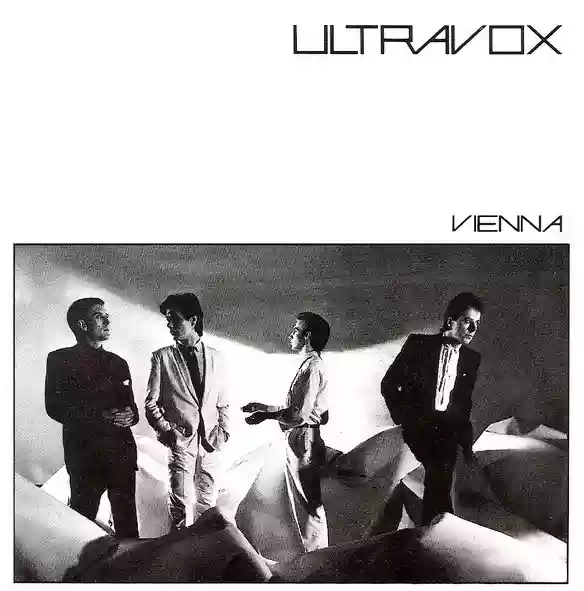
1980 arrives, and with the advent of the fourth album, it is crucial not to make the mistake of repeating oneself or, in this case, erasing the fame that has been earned. Since Midge is not a hollow personality lacking determination, "Vienna" is born, putting trust in his concept and stylistic traits. Just to say, up until that moment, we found him on guitar with Steve Strange's Visage, the ones with the big hit "Fade To Grey."
The framework for the new project, if we may define it as such, is marked by elegant compositions, enough to foreshadow the refined sound of "Avalon" by Roxy Music, which would come out two years later. What remains is the attachment to futuristic themes, the powerful bass lines of Chris Cross, and the pyrotechnic synth skills of Billy Currie.
"Astradyne" is the excellent instrumental that starts the show without fear, settling on a kraut-laden mid-tempo (Neu mostly) with fabulous synth interlocks. It feels like a dream; everything is so strange, but a bit of clarity still makes us think back to John Foxx. So far, we haven't heard the voice, only the music. With "New Europeans," the second track, we are catapulted into the era of the second album. Uncompromising punk riffs and square rhythms. Midge's melodramatic tone proudly inaugurates the new guise, where there is no time for questions, but in which you only have to unlock another piece of imagination.
We are faced with a cauldron of influences. So far, we find a half-prog instrumental and a new wave anthem. From "Private Lives," dancey synth atmospheres trigger surrounded by damn catchy choruses. It's a new era. I recall that in 1980, in the field of new wave (excluding industrial and post-punk), giant steps were made only with the Human League's "Being Boiled" (the masterpiece "Dare" would come out the following year along with "Movement" by New Order and "Non Stop Erotic Cabaret" by Soft Cell).
The dark "Sleepwalk" chisels gothic choirs and Currie's fabulous synth solos, while glam oozes in the sticky "Passing Stranger." With "Mr. X," a true dedication to Foxx, they show that the technicalities and experiments of "Systems Of Romance" did not occur by chance, but they simply hold a different role.
At the end of the work, one is captivated by the class of "Vienna," undoubtedly the evergreen of the genre. Classical piano notes fused with synthetic drum kits and chameleonic vocal registers. The subdued intro and the grace of the verse slowly lift into the sublime chorus's flight. The dawn after the night. That feeling of having done something great.
Love, poetry, melancholy, and decadence are the key elements to being a successful band in the eighties, and not just then. The last jewel "All Stood Still," with boldness akin to the euphoria of Devo's "Jocko Homo," revisits the "disco punk" model with electronic bursts and even a taste of reggae in the final break.
There's still room for another boom, as by 1981, the proposal of a new mood with "Rage In Eden," the album of the famous "The Voice," is already ready. Unfortunately, from here, they are increasingly sucked into business and the fading of grit, resulting in a few more hits ("Dancing With Tears In My Eyes" and "Hymn") while staying away from the beauty of creating complete albums like "Ha Ha Ha" and "Vienna."
Loading comments slowly
Summary by Bot
This review explores Ultravox's album Vienna as a pivotal new wave release marking the transition from punk-inspired beginnings to refined synth-driven elegance under Midge Ure. It highlights the band's technological skepticism, thematic depth, and musical innovation. The album is celebrated for timeless compositions like the title track and inventive synth work. Ultravox's journey reflects broader 80s musical shifts with complexity and style.Tracklist Lyrics Videos
Ultravox
Ultravox are a British band associated with new wave and synth-driven rock. Early recordings (often credited as Ultravox!) featured singer John Foxx; from 1979/1980 the group fronted by Midge Ure achieved major commercial success, with “Vienna” commonly cited as their signature work.17 Reviews
Other reviews
By egebamyasi
No one like Ure's Ultravox managed to transplant into 'commercial' sounds that sense of Central European decadence.
'Vienna' is a small masterpiece, which may well not appeal to everyone, but it says a lot about the period in which it was conceived.
By AJM
The revenge of the synthesizers over the guitars had already laid its groundwork... now with the advent of Ure the transformation is complete, definitive.
'Vienna,' a grand musical summary of the heart of Europe... a cold and dark portrait of hopes that are lost in a splash of water at the sides of the dark streets.
By RRDN
Probably the best Ultravox album ever, the self-titled track is simply fantastic.
There is a perfect harmony between instruments typical of classical music and those typical of rock music, and the atmosphere is almost tangible.
