 •
Rating:
•
Rating: THE REVIEW
When it comes to the '80s, Ultravox must have a seat at the senators' table. During the period with John Foxx on vocals, they delivered stunning works of punk deconstructed on the teachings of Eno-Bowie. Later, with the arrival of Midge Ure, they veered towards a more synthetic and melodic sound. At this point, critics turned their backs on the group with a snobbish and superficial attitude, often grouping them with chart-topping bands and the numerous awful trash that sprouted like mushrooms during that time. It was a time of hedonism, an era marked by superficiality, but also by latent and hidden tensions.
Indeed, no one like Ure's Ultravox managed to transplant into "commercial" sounds that sense of Central European decadence, that poignant romanticism emanating from Billie Curie's string arrangements, perhaps the true soul of the group.
Their arrangements were sometimes too ornate but always of great class and elegance, light-years away from the rest of the "Top Of The Pops" company.
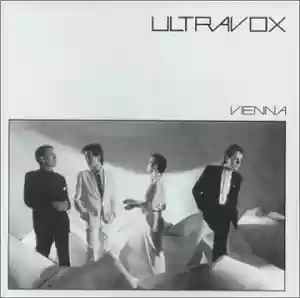
Vienna is the first work after Foxx's departure, released in 1980. It remains perhaps their best, certainly the most representative of their art.
The initial "Astradyne" is an instrumental cousin to the icy visions of Berlin Bowie, between walls of synths and drum rides à la Neu!, which introduces the overwhelming charge of "New European". A piece with a catchy and epic melody, subtly melancholic, with Ure's voice perfectly at ease in these urban twilights, ending with a splendid piano coda, a refined and original farewell.
It is not synth-pop, but rather synth-rock; the energy their songs emit has more affinity with rock than pop. "Private Lines" confirms this theory by diving into a compelling synthetic whirlpool, with an ever-present rhythm, but above all, with meticulous attention to detail, for a sought-after refinement, but never baroque, redundant. The class is felt, and, in this case, it was also sold. This is not necessarily a mortal sin, on the contrary. "Passing Strangers" continues the discourse always on high levels, with interludes always in good taste. With "Sleepwalk" you enter the most "dandy" clubs of the era, but through the front door.
Almost as if to "apologize," Ultravox follows with the most experimental track of the batch, "Mr.X", a hypnotic nocturnal journey through the meanderings of a Europe divided by contradictions, and united by a dream born of a vigilant slumber, gripped by fear and seduced by heavy makeup. The tone remains dark with the furious "Western Promise," an emblematic and perhaps foretelling title...
And here is the song that gives the album its title, "Vienna". This electro-glam, poignant and evocative, is perhaps the manifesto of their new direction. A slow progression embellished by the chimes of a tearful piano accompanying Ure's desperate declamations, never so "expressive." The track picks up speed and is enveloped by the coils of a melancholic viola, ending with a Parisian-style "grandeur" emphasis. A quintessential 80s piece.
Ultimately, when evaluating a work, one should free oneself from prejudices and compartmentalized labels. One should look deep into its value, dissecting its deepest aspects with clarity, which was not done. "Vienna" is a small masterpiece, which may well not appeal to everyone, but it says a lot about the period in which it was conceived. It is a revealing album, that "speaks" of its era, representing, for better or worse, its salient aspects.
Loading comments slowly
Summary by Bot
Ultravox's 'Vienna' stands as a pinnacle of 80s synth-rock, showcasing refined arrangements and a unique blend of melancholic romanticism. With Midge Ure at the helm, the album departs from punk roots and embraces a more synthetic yet expressive sound. Critics initially dismissed the album as mainstream, but its elegance and depth reveal a masterpiece that reflects the era's hidden tensions. Key tracks like 'New European' and 'Vienna' highlight the band's emotional and musical sophistication.Tracklist Lyrics Videos
Ultravox
Ultravox are a British band associated with new wave and synth-driven rock. Early recordings (often credited as Ultravox!) featured singer John Foxx; from 1979/1980 the group fronted by Midge Ure achieved major commercial success, with “Vienna” commonly cited as their signature work.17 Reviews
Other reviews
By AJM
The revenge of the synthesizers over the guitars had already laid its groundwork... now with the advent of Ure the transformation is complete, definitive.
'Vienna,' a grand musical summary of the heart of Europe... a cold and dark portrait of hopes that are lost in a splash of water at the sides of the dark streets.
By Battlegods
Ultravox symbolizes fear towards technology, globalization, and the precarious state in which modern man finds himself.
Vienna is born, putting trust in Midge Ure’s concept and stylistic traits, creating an evergreen classic of the genre.
By RRDN
Probably the best Ultravox album ever, the self-titled track is simply fantastic.
There is a perfect harmony between instruments typical of classical music and those typical of rock music, and the atmosphere is almost tangible.
