
 •
Rating:
•
Rating: THE REVIEW
Tuesday, January 18, 2011, evening, thick fog in Milan, a gray and cold sky that clings to your bones: Vienna and its Stephansplatz seem closer.
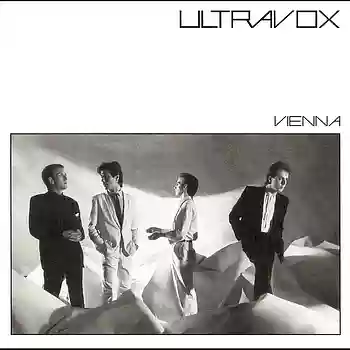
Dated 1980, the beginning of the end, the fourth work by Ultravox sends a clear signal of change, the first evident from the lineup on the field, while the second requires at least one listen to notice: the vocal cords of Midge Ure, a Scot from the distant future of a fleeting star due to a Swatch commercial, replace those of John Foxx, and the group’s musical tone moves away from Post-Punk towards the Electronic New Wave which will dominate the upcoming decade. The revenge of the synthesizers over the guitars, fierce rivals of the time, had already laid its groundwork in the previous "Systems Of Romance" and now with the advent of Ure the transformation is complete, definitive; there is no trace of abandonment of the decadence that has characterized the group's music from the start but there is a strong message of change regarding the form. They are less angry and more romantic, a transformation dictated in part by the trends of the moment and in part by Billy Currie who wanted to follow them, thus extending (thank heavens) the life of a band thought to be dead. From the cover, Ultravox remind us that they live in black and white, Midge Ure, the newest member, is already playing the Paul McCartney act and looks in a completely different direction than the others who seem lost while for him the direction is clear: there, Vienna, the heart of Central Europe, Mitteleuropa, land of the Danube, call it what you will, that foggy place.
"Astradyne," an instrumental and relentless synth introduction, already sounds like a calling card of someone who has changed clothes and grown a mustache. No, I was Foxx, now I am Midge Ure, let’s start from scratch. Or almost: indeed, John Foxx would have been happy with the subsequent "New Europeans," a success, a too explicit call back to what Ultravox had produced until that moment and which couldn’t be missing, a goodbye or a see you later. From here it’s clear the key to the shift, synthesizers steering an atypical and dark rock made of piano, electric guitars, and strings. A bomb. Vienna. "Private Lives" and "Passing Strangers" sound as sombre as the narrow and seldom-trodden streets of the center at twilight, the first is calmer and contained while the second is more direct and spectral, whereas the subsequent "Sleepwalk" leaves the door open to more positive atmospheres; a single, number 5 sounds more cheerful, buoyant and above all gives a bit of relief, a breath of fresh air even if always and strictly in black and white. A breath of fresh air that’s worth savoring because then you arrive in the darkest lowlands there are, in Zentralfriedhof with the wind cutting through you and the ravens staring at you, with a "Mr. X" as icy as loneliness. At the end, there is also space for Billy Currie’s personal affirmation on the viola. Few stop to admire the minimal but effective portrait Ultravox paint in the subsequent "Western Promise" ("Mystical East, all taxi-cabs, all ultra-neon, sign of the times, your Buddha Zen and Christian man, all minions to Messiah Pepsi can. This is my Western Promise", small drops of modernity shot like bullets) as number 7 is often seen as a simple intro to the most decadent picture a painter could paint on a foggy day like this: "Vienna," a grand musical summary of the heart of Europe. The title-track is the most representative piece of this second era of Ultravox, the era with Midge Ure at the helm, a cold and dark portrait of hopes that are lost in a splash of water at the sides of the dark streets. "This means nothing to me," a phrase shouted with all the breath Ure has in his body and soul, for those who can listen to it, it has the same effect as a stab, of something now lost and what is sadder than the end of something? Closing with "All Stood Still," bringing back up, or let’s say to an acceptable level, the name of chart-topping synth-pop: once again the synthesizers vie for the scene with Ure’s guitars in a modest piece that nevertheless sounds dry and dark, like all the rest. God, it's cold.
This fourth work by Ultravox has two slight flaws, the first: "Astradyne," at the beginning, would have been happy with a sung part, brief and naive as it may be, but it would have fit perfectly. The second: "All Stood Still," at the end, is poorly placed; tossed in the middle it would have looked much better leaving the conclusion to the void of "Vienna" or the dreamy "Waiting," excluded from the tracklist and fished out later as a b-side. However, these are minor details, the taste of a black, white, and infinitely gray album in between does not suffer. The best of Midge Ure's Ultravox.
Loading comments slowly
Summary by Bot
Ultravox's 1980 album Vienna marks a defining shift from post-punk to synth-driven New Wave with Midge Ure replacing John Foxx as vocalist. The album blends dark, romantic atmospheres with innovative use of synthesizers. Key tracks like 'Astradyne,' 'New Europeans,' and the iconic title song capture a cold, misty European mood. Minor flaws in track placement do not detract from its lasting impact. This work revitalized Ultravox’s sound and legacy for the decade ahead.Tracklist Lyrics Videos
Ultravox
Ultravox are a British band associated with new wave and synth-driven rock. Early recordings (often credited as Ultravox!) featured singer John Foxx; from 1979/1980 the group fronted by Midge Ure achieved major commercial success, with “Vienna” commonly cited as their signature work.17 Reviews
Other reviews
By egebamyasi
No one like Ure's Ultravox managed to transplant into 'commercial' sounds that sense of Central European decadence.
'Vienna' is a small masterpiece, which may well not appeal to everyone, but it says a lot about the period in which it was conceived.
By Battlegods
Ultravox symbolizes fear towards technology, globalization, and the precarious state in which modern man finds himself.
Vienna is born, putting trust in Midge Ure’s concept and stylistic traits, creating an evergreen classic of the genre.
By RRDN
Probably the best Ultravox album ever, the self-titled track is simply fantastic.
There is a perfect harmony between instruments typical of classical music and those typical of rock music, and the atmosphere is almost tangible.
