
 •
Rating:
•
Rating:
THE REVIEW
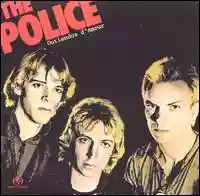
The progenitor of Police’s works, “Outlandos D’Amour”, was released in 1978, right in the midst of the wave of excitement caused by the punk wave that began spreading the previous year after a short period of gestation. And while various groups were forming here and there, destined to leave a profound mark on the future global music scene, three musicians of different skills and experience joined their forces to express their particular approach to rock music by founding The Police.
The individuals in question are: the bassist, composer, and singer with a jazz background Sting, whose real name is Gordon Matthew Sumner, the experienced guitarist Andy Summers, who had already worked with the Animals, and the American-born drummer Stewart Copeland. After their first single, “Fall Out” (produced with the modest guitarist Henry Padovani still in the lineup) and several attempts to get noticed by playing alongside purely punk groups like the Sex Pistols and Buzzcocks, the three hit the right path with the release of a song written by Sting, “Roxanne”, which skillfully blends reggae and punk. The piece in question, which narrates a boy's attempt to persuade the prostitute he loves to leave her "job," was censored by the BBC, but as often happens in these cases, it had the opposite effect. The Police indeed, riding the wave of success earned by the single, secured a contract with A&M for three albums over three years and recorded their debut album, almost entirely composed by Sting: “Outlandos D’Amour”.
This is a hybrid work, still utilizing elements of punk origin, but already containing the reggae germs that would characterize the subsequent “Reggatta De Blanc.” These are evident in the second track, “So Lonely”, a remarkable song with alternating rhythm, reggae in the verse, and vigorous in the chorus, enriched by lyrics that very well describe the loneliness after a love story, in the second beautiful single “Can’t Stand Losing You”, also with a dual structure and on the subject of the unbearable nature of the end of love and in the fourth track, “Hole In My Life”, musically somewhat repetitive and once again centered on the lack of love, the true thread of the work. Besides the famous “Roxanne”, the album contains other impactful songs, such as the rhythmic “Truth Hits Everybody”, “Born In The 50’s”, and “Peanuts” (written jointly by Sting and Copeland and accompanied by a saxophone solo). The last two compositions of the album deserve a separate discussion: the unique “Be My Girl-Sally” (by Sting and Summers) in which the musical background is interrupted for a poetry reading by Summers himself and the instrumental “Masoko Tanga”, in which the desire to experiment and have fun with the music prevails among three musicians proficient with their instruments. It is precisely this fact, the technical superiority of the three "policemen" compared to others from the post-punk cohort, and their use of it to renew the song form with insertions of other genres, combined with Sting's excellent melodic ability, that would constitute their fortune already starting from this work.
A seminal album for the Police genre.
Loading comments slowly
Summary by Bot
Outlandos D'Amour, The Police's 1978 debut, emerged amid the punk movement but distinguished itself with a unique fusion of punk and reggae. The trio’s technical skill and Sting's melodic songwriting shine throughout. Featuring iconic tracks like 'Roxanne', the album reflects themes of love and loneliness while pioneering a fresh sound. This record laid the foundation for their future success and enduring influence.Tracklist Lyrics Videos
The Police
British rock trio formed in 1977 (Sting, Andy Summers, Stewart Copeland) known for blending rock, reggae and new wave and for hits such as "Every Breath You Take".35 Reviews
Other reviews
By MrSalzano
"Roxanne, you don’t have to put on the red light, those days are over you have to understand once and for all!"
Their irresistible ascent is captured entirely in the three singles from this debut album, which alternated at the top of the American and English charts for more than a year.
By claudio carpentieri
An album that has all the cards on the table to be considered a regal jewel box both for the presence of valid tracks and for that creative and imaginative way of making music.
'Next To You' clarifies how a compact and expressive sound can represent one of the strengths of this debuting trio.
By Rax
The force and emotional impact of this "little disc" are absolutely devastating.
"So Lonely"... could have been the grand finale of the album. The Police would realize this over the years when it became the grand finale of their concerts.
