
 •
Rating:
•
Rating:
THE REVIEW
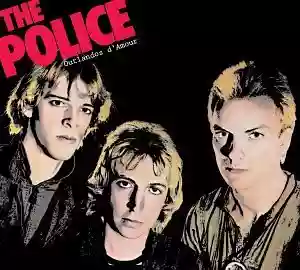
Looking back retrospectively at the career of The Police, one cannot help but be somewhat impressed by the speed with which this trio of bleached thirty-somethings managed to rise from anonymity to the top in the few months between '78 and '79. Their irresistible ascent is captured entirely in the three singles from this debut album (a title that perhaps alludes to the eternal love theme present in almost all of the album's tracks), which alternated at the top of the American charts first, and then the English ones, for more than a year.
"Roxanne," first and foremost, born as a "filler," becomes the most unpredictable hit of rock: in the midst of the Punk storm, here comes a soft and melodic slow song (rhythmically, it's actually a tango(!)) where Sting warns, in a paternalistic tone, a street girl not to walk the streets anymore ("Roxanne, you don't have to put on the red light, those days are over you have to understand once and for all! You don't have to sell your body tonight, don't wear that dress tonight: you walk the streets for a handful of dirty money"). Then the bouncy "Can't Stand Losing You," which also deals with a hot topic like suicide, even if only threatened (incidentally, both this song and "Roxanne" were initially boycotted by the BBC), and the wonderful "So Lonely," surely one of the group's most successful reggae-rocks, famous for its climax finale. Stylistically, at this point, The Police are yet to refine the perfect musical form they later achieved in "Reggatta de Blanc." There are still tracks blasted at full volume that bear the punk beginnings ("Next To You," "Truth Hits Everybody," "Peanuts"), but the attempt to utilize the space offered by reggae is already noticeable (exemplary, in this sense, are the hypnotic "Masoko Tanga" and the desperate "Hole In My Life"). Finally, worth mentioning is the generational anthem "Born in the '50s," which is also the most conventional track of the bunch, where Sting recalls his childhood lived under the shadow of the collective anxieties of the Cold War, and the bubblegum refrain of "Be My Girl-Sally," complete with a cabaret interlude recited by Andy Summers dedicated to the inflatable doll Sally to whom "to make the wrinkles disappear, just blow".
Loading comments slowly
Summary by Bot
The Police's debut album Outlandos d'Amour reflects their rapid rise to fame between 1978 and 1979. Featuring iconic singles like "Roxanne," "Can't Stand Losing You," and "So Lonely," the album blends punk roots with reggae influences. The review highlights the album's thematic depth and stylistic experimentation, capturing the band's early energy and musical exploration. Despite some raw elements, the album set the stage for their later polished works.Tracklist Lyrics Videos
The Police
British rock trio formed in 1977 (Sting, Andy Summers, Stewart Copeland) known for blending rock, reggae and new wave and for hits such as "Every Breath You Take".35 Reviews
Other reviews
By VIOLATOR 88
This is a hybrid work, still utilizing elements of punk origin, but already containing the reggae germs that would characterize the subsequent Reggatta De Blanc.
It is precisely this fact, the technical superiority of the three 'policemen' compared to others from the post-punk cohort, and their use of it to renew the song form with insertions of other genres, combined with Sting's excellent melodic ability, that would constitute their fortune already starting from this work.
By claudio carpentieri
An album that has all the cards on the table to be considered a regal jewel box both for the presence of valid tracks and for that creative and imaginative way of making music.
'Next To You' clarifies how a compact and expressive sound can represent one of the strengths of this debuting trio.
By Rax
The force and emotional impact of this "little disc" are absolutely devastating.
"So Lonely"... could have been the grand finale of the album. The Police would realize this over the years when it became the grand finale of their concerts.
