
 •
Rating:
•
Rating:
THE REVIEW
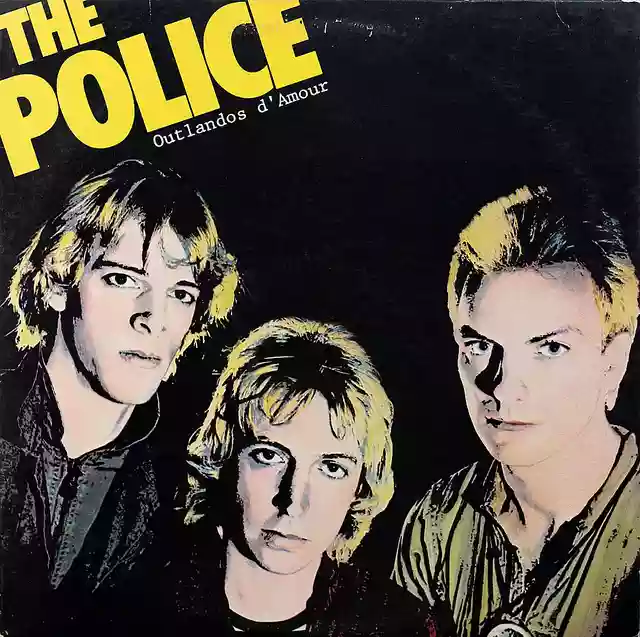
When it was released in 1978, it was criticized in various ways: "raw," "little disc," "not much to offer." Even Copeland denigrated it affectionately, as seen in the VHS "The Police: the Video": "At the beginning, our songs were two-chord tricks."
While respecting the opinion of the great drummer, judging "Outlandos" from a technical point of view is not the right approach. The force and emotional impact of this "little disc" are absolutely devastating. The number of chords matters little when faced with tracks that, like it or not, stick in your head after the first listen. From a "memorability" perspective, "Outlandos" genuinely has something miraculous.
The songs on this album almost all have the same structure. Punk fury (a movement to which the Police were always indebted) immersed in splendid Pop melodies (truly worthy of the Beatles and REM) that Sting's falsetto-leaning voice makes even more beautiful - for many, to be truthful, uglier -, the guitar providing support where needed with ingenious counterpoints, imaginative drumming, an explosive crescendo before a memorable chorus that repeats the song's title. "Little songs." Yes, but we could use such "little songs" today: "Roxanne" (which, if it had been released three years earlier, would undoubtedly have been part of the "Taxi Driver" soundtrack, as it feels like hearing Travis trying to redeem Iris), "Can't Stand Losing You" (with a nice change before the chorus), "Born in the 50s" (with a Sting truly in full swing), "Truth Hits Everybody" (one of the most underrated in the repertoire), "Next to You" (a perfect intro), "Peanuts."
Above all, the masterpiece stands out: "So Lonely," a mix of reggae that borrows chords from "No Woman, No Cry" (as Sting confessed in an interview), and punk, ennobled by Summers' psychedelic counterpoints and closed by Sting's chilling scream (singing a personal story), completed by Copeland's marvelous drum solo. An ending you never tire of listening to - and playing. It could have been the grand finale of the album. The Police would realize this over the years when it became the grand finale of their concerts.
"Hole in My Life" - perhaps the most substantial track, given its intimate and desperate lyrics - does not have the impact of the previous ones. But in the live version, where the policemen had very few rivals (go see the "Synchronicity Concert"), the track was reborn and became a little gem.
Not everything is gold, of course: "Be My Girl - Sally" (dedicated to... an inflatable doll) could have been left out. The final track "Masoko Tanga" is a tremendously boring jam session, a piece that clashes so much in the album that it feels like cheese on fish.
The album is a whip-crack. For this energy, it should have been called "Police Brutality." Then it was decided to name it "Outlandos," a mix of the words "Outlaw - Commandos" (outlaw commando). Obviously "Of love." A perfect way to appear punk and good guys simultaneously. They were clever, but we forgive them.
Loading comments slowly
Summary by Bot
Released in 1978, The Police's Outlandos D'Amour was initially criticized for its rawness and simplicity. However, its emotional impact and memorable songs, like 'Roxanne' and 'So Lonely,' prove its lasting power. The album blends punk energy with pop melodies and showcases the band's clever songwriting and performance. While a few tracks feel less compelling, the overall energy and creativity make this debut a classic.Tracklist Lyrics Videos
The Police
British rock trio formed in 1977 (Sting, Andy Summers, Stewart Copeland) known for blending rock, reggae and new wave and for hits such as "Every Breath You Take".35 Reviews
Other reviews
By MrSalzano
"Roxanne, you don’t have to put on the red light, those days are over you have to understand once and for all!"
Their irresistible ascent is captured entirely in the three singles from this debut album, which alternated at the top of the American and English charts for more than a year.
By VIOLATOR 88
This is a hybrid work, still utilizing elements of punk origin, but already containing the reggae germs that would characterize the subsequent Reggatta De Blanc.
It is precisely this fact, the technical superiority of the three 'policemen' compared to others from the post-punk cohort, and their use of it to renew the song form with insertions of other genres, combined with Sting's excellent melodic ability, that would constitute their fortune already starting from this work.
By claudio carpentieri
An album that has all the cards on the table to be considered a regal jewel box both for the presence of valid tracks and for that creative and imaginative way of making music.
'Next To You' clarifies how a compact and expressive sound can represent one of the strengths of this debuting trio.
