
 •
Rating:
•
Rating:
THE REVIEW
The first lineup formed between the end of 1976 and the beginning of 1977 includes Stewart Copeland on drums, Gordon Matthew Sumner on bass, and Henry Padovani on guitar. The group's first rehearsals take place in January and are led by the young drummer fully inspired by the punk philosophy, the skilled bassist (who always wears a yellow and black striped sweater earning him the nickname Sting), and Andy Summers whose harmonically more complex compositions make it challenging to keep up with the rather modest Padovani. After several months of rehearsal, they record for Illegal Records the single with "Fall Out" (in which you'll appreciate Stewart's qualities as a lead guitarist) and "Nothing Achieving" which receives an excellent response in the punk scene.
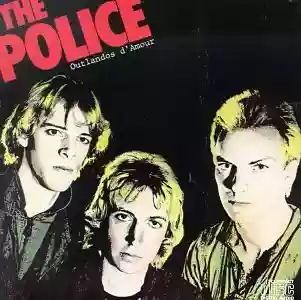
Shortly after, Henry leaves and is replaced by the more mature Andy Summers (who had previously worked with Soft Cell, Jon Lord of Deep Purple, and Mike Oldfield among others, but was not present on Fall Out!), who, despite the historical context, together with his two adventure companions, realizes how important substance and the ability to innovate still are in music. The group as a quartet lasts only a few concerts, so the new trio (which had previously attempted to make a name for themselves with the name Strontium 90, for which a fantastic CD called "Police Academy" is available on Pangaea Records from 1997), enters the studio and releases "Outlandos D'Amour" for A&M.
The opening bars of "Next To You", a track that shines with explosive rhythm and melodically shouted vocals, clarify how a compact and expressive sound can represent one of the strengths of this debuting trio. "So Lonely" is one of those tracks that can be considered one of the few straightforward examples of those junction points between white reggae in the verses and rock wave of a compelling chorus. "Roxanne" (released in April '78 as a single) confirms how Sting's prolific songwriting inspiration (now the leadership is his!) is gaining ground within the group, considering that, apart from the skillful combination of storytelling/music, he increasingly prefers to engage in areas where soft atmospheres alternate well with more rhythmic moments. With "Hole In My Life", the sonic uniformity presented so far is interrupted, just as the reggae component diminishes, giving way to melodic rock of fine workmanship. Certainly, the palm of most entertaining track is claimed by "Peanuts", where lightheartedness and playfulness reign supreme, along with an exemplary solo and an unexpected trumpet coloring the finale. The opening of the b-side of what was the good old and beloved vinyl goes to the exuberant "Can't Stand Losing You", a superlative example of the young "stinger's" excellent compositional skill, showcasing that unparalleled talent in crafting a verse of unheard beauty, combined with a bridge and an equally enchanting derived refrain, forging one of the most exemplary representatives of that reggae&rock that will henceforth become the Police's trademark. Almost three minutes of tenacious and compact rock could only be heralded by a prophetic title like "Truth Hits Everybody", in which the tested triad lets us know that skill and refined ability can be unleashed even by playing the usual three chords.
After the generational anthem "Born In The 50's" (pleasant but unpretentious) and the pop rock of "Be My Girl-Sally" (which has the same intro as "3 O' Clock" from the aforementioned "Police Academy"), where we hear an extended spoken interlude, the album ends with the peculiar "Masoko Tanga" where Sting, with his voice, follows the directives of the instruments, Stewart, through his magical drumsticks, disseminates an innate tribalism that connects well to the evanescent atmosphere created by Andy's fingers. Even though the cultured critics didn't give it a very warm reception, I believe we are facing a work that has all the cards on the table to be considered a regal jewel box both for the presence of valid tracks and for that creative and imaginative way of making music that managed to blend sounds (reggae and rock) and musical trends (punk) that seemed destined to live apart until then (circa 1978); an album that, besides playing a watershed role for listeners and industry workers, will also be one for the band in question, which will no longer make advertisements (as happened for the "Wrigley's Chewing Gum" for which they had to bleach their hair, bringing with them that golden look that would distinguish them in the years to come) to overcome unhappy financial situations, just as Sting shortly thereafter will take on the role of Ace Face in Quadrophenia, initiating his prolific and dignified acting career.
Ten tracks for almost 40 minutes of excellent music, which can place "Outlandos D'Amour" among those works with the role of forerunner of that innovative period called New Wave, just as (The) Police was to carry out revitalization work in favor of a genre in full deficit of popularity.
Loading comments slowly
Summary by Bot
The review traces The Police's early formation and highlights the replacement of Henry Padovani with Andy Summers, which shaped their sound. Outlandos D'Amour is praised for its innovative fusion of reggae, rock, and punk elements. Key tracks like 'Roxanne' and 'Can't Stand Losing You' showcase Sting's songwriting prowess. Despite mixed critical reception at release, the album is recognized as a milestone in New Wave music. It remains a creative and influential work that revitalized the genre.Tracklist Lyrics Videos
The Police
British rock trio formed in 1977 (Sting, Andy Summers, Stewart Copeland) known for blending rock, reggae and new wave and for hits such as "Every Breath You Take".35 Reviews
Other reviews
By MrSalzano
"Roxanne, you don’t have to put on the red light, those days are over you have to understand once and for all!"
Their irresistible ascent is captured entirely in the three singles from this debut album, which alternated at the top of the American and English charts for more than a year.
By VIOLATOR 88
This is a hybrid work, still utilizing elements of punk origin, but already containing the reggae germs that would characterize the subsequent Reggatta De Blanc.
It is precisely this fact, the technical superiority of the three 'policemen' compared to others from the post-punk cohort, and their use of it to renew the song form with insertions of other genres, combined with Sting's excellent melodic ability, that would constitute their fortune already starting from this work.
By Rax
The force and emotional impact of this "little disc" are absolutely devastating.
"So Lonely"... could have been the grand finale of the album. The Police would realize this over the years when it became the grand finale of their concerts.
