
 •
Rating:
•
Rating:
THE REVIEW
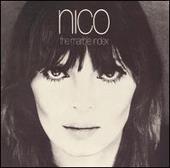
The Marble Index (1969), is the first solo work of the unforgettable Nico, the undisputed pioneer of all that music which draws vital energy from "sepulchral" realities. The music proposed by Nico, especially in this first work of hers, is decidedly timeless in its "surrealism" (if I may use the term). Out of any temporal connotation is, first of all, the constant use of the harmonium, an instrument with sound that is both arcane and religious. The disoriented voice, used itself as an independent instrument, seems to be in the grip of a hallucination, intensely suggesting an echo coming from far-away spaces, an echo emitted from a "somnambulistic" mouth blossomed from gardens beyond time and space.
This is particularly evident in the spectral Lawns of Dawns and in Facing the Wind, where the voice is totally independent of the musical inlay, creating a remarkable jarring effect. Yet, when the singing harmoniously fits into the rest of the composition, as in the case of the stunning No One Is There and Julius Caesar (Memento Hodie), the effect is equally disconcerting, as it seems like being in the presence of medieval ballads. But these are "lunar" ballads of a Gothic and Central European lineage, which seem to take root in the mythical and unsettling waters of Germanic folklore, as evidenced by the closing of Nibelungen, where the reference to the traditions of what represents for Nico the "country of the soul" becomes more evident. A simple sepulchral proclamation, on the other hand, is Frozen Warnings, which precedes that immense dark jewel which is Evening of Light. It is a track with a very interesting structure, built on obsessive reiteration, each verse is always repeated twice:
"Midnight winds are landing at the end of time
Midnight winds are landing at the end of time
A true story wants to be mine
A true story wants to be mine
The story is telling a true lie
The story is telling a true lie
Mandolins are ringing to his viol singing
Mandolins are ringing to his viol singing"
Except in the third part of the composition, which anticipates a chilling finale that will definitively break the track's fairy-like stride, within it the verses are arranged in an alternate manner:
"In the morning of my winter
When my eyes are still asleep
In the morning of my winter
When my eyes are still asleep
A dragonfly lady in a coat of snow
I'll send to kiss your heart for me
A dragonfly lady in a coat of snow
I'll send to kiss your heart for me"
The atmospheres are consistently icy, cold, and sidereal, bordering on the metaphysical, evoking objects and beings that belong to a world different from the one perceivable immediately. The lyrics weave more than ever new symbolic correspondences between seemingly common realities. What a daring association, concluding and summarizing the album in its entirety, as present in the track Roses in the Snow, between roses and snow, where undoubtedly the roses and the lights in the night unconsciously refer to the image of blood:
"He came your way
And when he had to go
There were roses growing in the snow
Silently you'll go to the shadow of your soul
But you know it was like this before we had to go
You will never see these lights
Glowing in your nights
If you don't know
And there are roses growing in the snow"
Snow, like blood, possesses an ambivalent symbolism, representing innocence, virginal candor, but also the icy desert and silence... That "desertshore" from which Nico's archaic and mysterious sounds come, the snow in its apocalyptic essence also clearly recalls the shroud and final annihilation... (is not "blank" in English perhaps empty?) and reposes the image of "marble" contained in the title. While the "blood" of the rose, if linked on one hand to passionate Eros, it is however also dark water provoked by violence.
This union, then, of blood and snow, which Nico achieves through the unsettling image of roses blooming in the snow, generates an archetypal association that fascinates for its ambiguity and its power to create other images... often profoundly disturbing, evoked also by the coldness of a voice pronouncing words in a foreign language. The Germanic substratum is deeply felt in Nico’s English, and it renders her singing even more metallic and icy, like a crystal born at the edge of the ethereal (the snow) and the infernal (the blood rose)... I like to think that snow roses have blossomed on the "marble index" inscribed in the mind of one who in her uniqueness and timelessness is comparable to no other. Recommended for nighttime listening, for particularly dark and restless souls.
Loading comments slowly
Summary by Bot
Nico's The Marble Index (1969) is a pioneering solo album known for its surreal, gothic soundscape driven by a haunting harmonium and disoriented vocals. The review highlights the album's timeless quality, Germanic folklore influences, and evocative symbolism, especially the fusion of blood and snow imagery. Standout tracks like Evening of Light showcase the album's mesmerizing and unsettling atmosphere. Recommended for listeners seeking a deep and dark musical experience.Tracklist Lyrics Videos
Nico
Nico (born Christa Päffgen) was a German singer and songwriter, also known for her association with the Velvet Underground and for a stark solo catalog built around harmonium, austere vocals, and collaborations with arranger John Cale.16 Reviews
Other reviews
By dissipatio_hg
The music accompanying Nico’s pure voice is like the wind—an inconstant wind, that torments and unsettles.
The poetic lyrics, made of words that freeze the soul, recall some of Bruegel’s paintings.
By Alvo23
Nico makes her TRUE debut... it seems that the music she has participated in until now never existed.
The emotion unleashed in these grooves can poison you and make you dependent on the darkness surrounding it.
By paolofreddie
Christa’s lyrics and music convey anguish, profound sadness, annihilate the listener with their spontaneity, with their lack of inhibition.
With 'Marble Index,' Nico introduces for the first time a genre that will have a wide echo in the '80s and '90s, the gothic genre.
