
 •
Rating:
•
Rating:
THE REVIEW
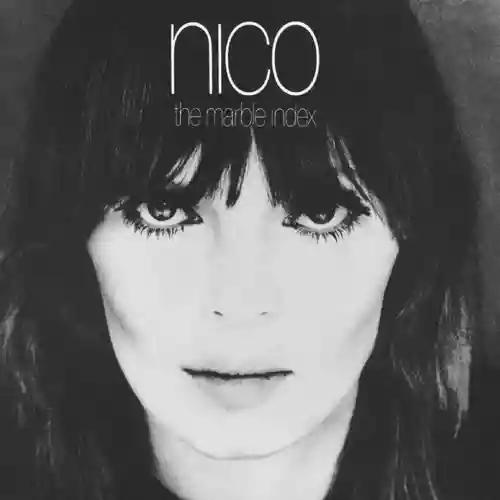
The spectral voice that the German chanteuse Nico lent to some of the famous and magnificent tracks by the Velvet Underground is now at the service of the music audience in the solo albums of the introverted vocalist. After a not very stellar debut named “Chelsea Girls,” a title also given to the avant-garde film directed by Andy Warhol, darling of New York's underground culture, the artist with a dark vocal timbre releases a record album with an enigmatic title: “The Marble Index.” The idea of marble, a very bright and appreciable material, perhaps relates to the sensory sphere of touch, but translated, it can have a value linked to the hardness of feelings despite its brilliance. Christa's lyrics and music (Nico's birth name) convey anguish, profound sadness, annihilate the listener with their spontaneity, with their lack of inhibition. The singer intends to exorcise her demons through music and wants to make her suffering known to the world. As for the title of the album mentioned earlier, the index could be a clear signal: the marble index might be nothing more than an allegory of the judging hand, the finger pointing to blame.
Besides the troubled young girl from Cologne, the album features the renowned experimental artist John Cale as a musician, who also (excuse the pleonasm) played with the Velvet Underground alongside Lou Reed. He plays his usual instrument, the viola, and also performs the tracks on the piano, bass, electric guitar, glockenspiel (commonly called a metallophone), bells, and finally the harmonica and various wind instruments. The girl, besides singing, plays the harmonium.
With “Marble Index,” Nico introduces for the first time a genre that will have a wide echo in the '80s and '90s, the gothic genre: she, in the guise of the “high priestess of darkness,” weaves her musical web and digs into her own psyche and into that of the listener. The instrumental prelude anticipates the evocative “Lawns of Dawns,” which, as the German chanteuse states, was written by her after a “spiritual” experience, influenced by peyote, in the company of Jim Morrison, the lead singer of the Doors, her old flame. On the other hand, “No one is there” is primarily dedicated by the author to the thirty-seventh president of the “Land of the Star-Spangled Banner,” Richard Nixon, and then to Reagan, the fortieth president of the same USA. The following “Ari’s Song” also refers to the versatile vocalist's only daughter, Ari indeed. The second side of the LP is occupied by only three medium-length tracks (four to five minutes), among which the final “Evening of Light” stands out, for which a promotional video was made that features the psychedelic/glam rock icon, Iggy Pop, the leader of the Stooges.
Released by Elektra Records, this album cannot be regarded as anything other than an innovative masterpiece in the musical history of the last fifty years. The legacy among modern musicians is significant: there are important names like the bands Siouxsie and the Banshees and Dead Can Dance. 1969 is a year of great artists and magnificent LPs, and among the great artists stands Nico by right with her excellent “The Marble Index,” a masterpiece for which everyone should take off their hat and bow.
Loading comments slowly
Summary by Bot
Nico's The Marble Index marks a shift from her debut into a deeply introspective and innovative gothic sound. The album channels themes of anguish and personal demons, aided by John Cale's multi-instrumental talents. It stands as an influential work in music history, credited with shaping later gothic and experimental genres. The album is praised as a timeless masterpiece of 1969.Tracklist Lyrics Videos
Nico
Nico (born Christa Päffgen) was a German singer and songwriter, also known for her association with the Velvet Underground and for a stark solo catalog built around harmonium, austere vocals, and collaborations with arranger John Cale.16 Reviews
Other reviews
By dissipatio_hg
The music accompanying Nico’s pure voice is like the wind—an inconstant wind, that torments and unsettles.
The poetic lyrics, made of words that freeze the soul, recall some of Bruegel’s paintings.
By Joe Vanny 78
The disoriented voice, used itself as an independent instrument, seems to be in the grip of a hallucination.
Recommended for nighttime listening, for particularly dark and restless souls.
By Alvo23
Nico makes her TRUE debut... it seems that the music she has participated in until now never existed.
The emotion unleashed in these grooves can poison you and make you dependent on the darkness surrounding it.
