
 •
Rating:
•
Rating:
THE REVIEW
1968 Year of Our Lord.
The beautiful Christa Pfaffgen, now known to everyone as Nico, once her brief adventure in the uncomfortable shoes of the Velvet Underground was over, and after releasing an impersonal album written by multiple hands like "Chelsea Girl", disappeared for some time into the folds of America's sprawling cities, treading little-beaten paths with her younger mentors and occasional lovers such as Jim Morrison and the good Iggy Pop... wild companies that broaden her perspective and make her personal, sharp, finally herself.
When she resurfaces to record an album, she calls on the brilliant John Cale, fresh off being fired by that lovely Lou Reed after that masterpiece "White Light/White Heat" to arrange music that SHE has written, alone, finally... and it is from here (for me) that Nico makes her TRUE debut... it seems that the music she has participated in until now never existed, despite the already published songs, just like her voice, always peculiar, now powerful, confident, passionate yet icy, cold, drugged.
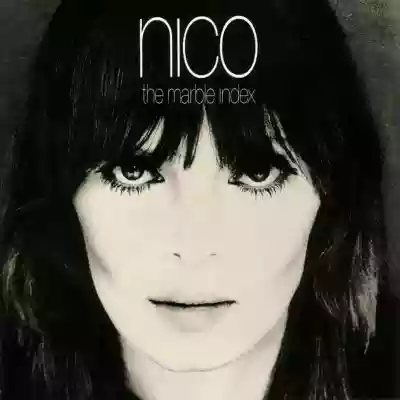
Even the splendid cover photo shows a different person, although her eyes are not extinguished, they reveal an abyss that is as exciting as it is dangerous to venture into.
An album with daring arrangements, where the typical song form is abandoned in favor of nursery rhymes with a shamanic flavor and timeless, in a flow of sounds, suggestions, and emotional jolts dictated by dark words, among a Nico transformed into a black Virago with a harmonium to support her and Cale all around conspiring magic with every classical instrument and not at his disposal, granting the platter a.
From the leaden "Prelude" to the mournful chamber music of "No One Is There", Nico sings of sensations bigger than herself, enigmas possibly undecipherable even to herself, in a tragic crescendo of oppressive feelings (not even the song dedicated to little son Ari is spared from that melancholic and almost esoteric mood), the album undergoes an unsurpassable climax in music up to then and since then, with "Evening Of Light", a description of the end of time in which Nico and Cale rise in intensity to the unthinkable, so much so that it scares the listener, who passively witnesses the death of everything in a macabre dance masterfully arranged.
An indicative finale of the emotional and mental state in which this new Nico will immerse herself until the end of her life.
An album not recommended for the faint-hearted, the emotion unleashed in these grooves can poison you and make you dependent on the darkness surrounding it.
One of the best albums perhaps ever recorded.
Loading comments slowly
Summary by Bot
Nico's 1968 album The Marble Index marks her true artistic debut, showcasing a dark, emotional, and pioneering sound with John Cale's haunting arrangements. Moving away from her past, Nico delivers intense, icy vocals supported by minimalist harmonium and classical instruments. The album's chilling atmosphere and tragic themes create a powerful listening experience, cementing it as a groundbreaking and timeless masterpiece. Not an album for the faint-hearted but essential for lovers of deep, challenging art.Tracklist Lyrics Videos
Nico
Nico (born Christa Päffgen) was a German singer and songwriter, also known for her association with the Velvet Underground and for a stark solo catalog built around harmonium, austere vocals, and collaborations with arranger John Cale.16 Reviews
Other reviews
By dissipatio_hg
The music accompanying Nico’s pure voice is like the wind—an inconstant wind, that torments and unsettles.
The poetic lyrics, made of words that freeze the soul, recall some of Bruegel’s paintings.
By Joe Vanny 78
The disoriented voice, used itself as an independent instrument, seems to be in the grip of a hallucination.
Recommended for nighttime listening, for particularly dark and restless souls.
By paolofreddie
Christa’s lyrics and music convey anguish, profound sadness, annihilate the listener with their spontaneity, with their lack of inhibition.
With 'Marble Index,' Nico introduces for the first time a genre that will have a wide echo in the '80s and '90s, the gothic genre.
