
 •
Rating:
•
Rating:
THE REVIEW
Dear Castaldo, I quote verbatim what you wrote on October 26, 2005, about the album by 883 “Hanno ucciso l’uomo ragno”: “The most beautiful pop-rock album in the history of Italian music”.
Dear Castaldo, excuse my insolence: are you serious or just joking? If 883 represents for you the most brilliant peak in the history of Italian pop-rock, it means that either you are completely drunk, or you understand music as much as a little ant just crushed by a modern Cyclops.
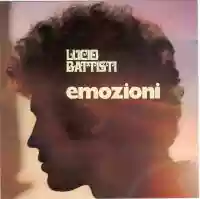
Dear Castaldo, it's not over yet: regarding a little song by Max Pezzali, "Con un deca," you had the audacity to declare: “It’s a nostalgic ballad in the style of Vasco with lyrics worthy of Mogol.” “There's not even a trace of a tobacconist anymore, there are two left, pick whichever you want, what's the point of leaving the T on, here the two assholes will notice”: my dear Castaldo, do you truly believe Mogol could have written something as trivial and vulgar as this. No Castaldo, you are way off base. The most beautiful pop-rock album in history isn't dated 1992. It's dated 1970 and it's “Emozioni” by Lucio Battisti (not Pezzali!).
Whoever doesn't own this beautiful album either in their house or in the cellar (I have it in the old vinyl version) doesn't own, in the fullest sense of the word, the Legend. Not just because of the vast public success the album received thirty-five years ago (almost a million copies sold!) but because of the style, deliberately carefree and playful, the daring musical partitions, the catchiness of certain refrains that have rightfully become a part of our most glorious musical culture. Battisti, in a dazzling state of grace and Mogol, never so inspired, wrote true milestones of a past that, with the relentless pace of the future, becomes increasingly unreachable. The title track is insane: “Fiori rosa fiori di pesco” is a heartbreaking love song by Battisti composed almost by chance (Mogol wrote the lyrics about two years before); “Dolce di giorno” is a curious and playful musical experiment that Battisti sings with finesse (the music is by the Dik Dik); “Il tempo di morire” is history: “Motorcycle, 7HP, all chromed, it's yours if you say yes,” a stunning start and music halfway between pop and rock à la Jimi Hendrix (dear Castaldo, this is true rock!); “7 e 40” is a fun love ballad; “Emozioni” gives you chills even on the twentieth listen: a wonderful song, voice and guitar blend into a sensational mix of tremors and emotions that culminate in the famous verse: “Running like a madman in the night with the headlights off, to see if it's so difficult to die”; “Dieci ragazze” we have all hummed at least once; “Acqua azzurra, acqua chiara” is a heartbreaking song dedicated to the old profession of prostitution (here redeemed) but many, over the years, have repeatedly defined it as just a mediocre youthful composition; “Era” is perhaps the least known song, yet it borders on masterpiece; “Non è Francesca” was and always will be the soundtrack of an entire generation (mine for example, class of 1968); “Io vivrò (senza te)” is stunning, the beginning is electrifying: “That you don't die from love, is a great truth” and the melody is exquisitely romantic; “Anna” is art: the urgent and, at the same time, melodic refrain is something hard to replicate: “I slept here, between her hair, me with her, I was a man, how many and how many times, she screamed yes, how many you don't know, I was a man” the metaphor becomes daring and the provocation genuinely sexual.
Friends, Debaserian, Castaldo: this is music, everything else, as Shakespeare said, is silence. And don’t come and tell me the old story that Battisti was just a puppet in Mogol’s hands (it seems incredible, but someone even dared to describe the Great Lucio like this!): dear Castaldo, listen to this masterpiece and surround yourself with pure “Emozioni.” Then, calmly, “Il tempo di morire” will come.
Loading comments slowly
Summary by Bot
This review passionately defends Lucio Battisti's 1970 album Emozioni as the greatest Italian pop-rock record ever made. The author contrasts it sharply with later works, praising its innovative music, unforgettable melodies, and profound lyrics. Detailed commentary on individual songs highlights the album's emotional depth and cultural significance. The review dismisses modern comparisons, urging listeners to experience the timeless masterpiece firsthand.Tracklist Lyrics Videos
Lucio Battisti
Lucio Battisti (1943–1998) was an Italian singer, composer and producer from Poggio Bustone. He rose to prominence in the late 1960s and 1970s with lyricist Mogol, crafting many of Italy’s most beloved songs, and later pursued a radical electronic and linguistic shift with Pasquale Panella (1986–1994). From 1980 onward he withdrew from concerts, TV and interviews, insisting the art should speak for the artist.104 Reviews
Other reviews
By TONI E FURMINI
"This CD is the result of the work of an incredibly inspired Mogol and Lucio Battisti in an extraordinary moment."
"The lyrics of this track are as valuable as those of the great foreign bands that were popular in the 70s... almost worthy of a Nobel Prize for literature."
By Fiumani
Battisti revolutionized well-established canons with rhythmic beat focus rather than traditional bel canto.
'Emozioni' is the masterpiece of his first period, equally revolutionary and closer to Italian song.
By Spoonful
Are you referring to something bittersweet? That dear sensation of almost unjustified happiness surrounded by a sadness that you can’t even explain?
Like a medicine, that’s what we need. Friendly hands, hands to hold, clean and sincere hands.
By Boop07
'Emozioni remains the best of the best expressed by Battisti over the years with Mogol.'
'A mixture of Rock and Rhythm ’n’ Blues, for which Battisti’s personal voice was perfect, and the lyrics that spoke of everyday life and feelings were textbook examples.'
By mirocotti
Lucio Battisti, after his debut album 'Luci Battisti,' introduces Italy to sounds never heard before.
Lyrics filled with tales of marital infidelity and fleeting loves.
