
 •
Rating:
•
Rating:
THE REVIEW
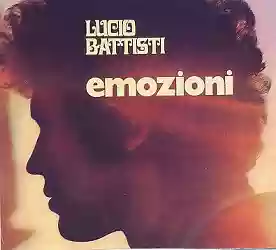
Released in 1970 what is undoubtedly the greatest album in Italian music history: "Emozioni".
This CD is the result of the work of an incredibly inspired Mogol and Lucio Battisti in an extraordinary moment. The songs are 12 poems, 12 pearls, in a word true and genuine (as the title says) emotions. The masterpiece of Italian music opens with the beautiful "Fiori di rosa fiori di pesco," a ballad that makes it clear from the outset what the central theme of the entire album will be: Love. The second track, "Dolce di giorno," is a top-level piece that in any other CD would have stood out greatly; instead, in this one, it is just a transition bridge leading to the most emotional part (again the word emotion, in my opinion, never has a title been so fitting). This part opens with the beautiful "Tempo di morire" where Mogol prays for his beloved to "not say no," a chorus that made history like many others for that matter. Track no. 4 is certainly among the top ten Italian pieces of history (and there are others in this CD): "Mi ritorni in mente," who doesn't know
"Mi ritorni in mente bella come sei, forse ancor di più Mi ritorni in mente dolce come mai, come non sei tu Un angelo caduto in volo questo tu ora sei in tutti i sogni miei come ti vorrei, come ti vorrei"
the verses of this masterpiece are simply poems more touching than many studied at school, and if we add to this Battisti's splendid voice, we can only bow to such beauty. The album continues wonderfully with "7 e 40," a beautiful Italian-style ballad with great lyrics (as they all do) and with the most beautiful song in our musical history, "Emozioni," with this sweet track Battisti and Mogol reached the peak of success reaching dizzying levels, the lyrics of this track are as valuable as those of the great foreign bands that were popular in the 70s because
"E prendere a pugni un uomo solo perché è stato un po' scortese sapendo che quel che brucia non son le offese e chiudere gli occhi per fermare qualcosa che è dentro me ma nella mente tua non c'e' Capire tu non puoi tu chiamale se vuoi emozioni tu chiamale se vuoi emozioni"
is almost worthy of a Nobel Prize for literature. No. 7 is the song that musically represents Italy in that period, "Dieci ragazze," no track by the Battisti/Mogol duo has been danced more than this one and moreover it has a bold yet touching lyric.....
"Dieci ragazze per me posson bastare dieci ragazze per me voglio dimenticare"....
fantastic. The album is strong, and this is demonstrated by no. 8, the immortal "Acqua azzurra acqua chiara," a track that all Italians know at least a few verses of, and where Battisti's voice shines brilliantly. No. 9, "Era," brings everyone back down to earth a bit, but the next song reaches new heights.... we're talking about "Non è Francesca," a song so famous that it led the good Carlo Conti 10 years ago to create a show looking for the famous Francesca mentioned in the title. The album concludes with two excellent tracks: "Io vivrò (senza te)" and "Anna".
Summing up, we can simply say that this album makes us proud to be Italian, such high points in our history will only be reached again with De André, De Gregori, Capossela, and some pieces of Vasco Rossi and for this, we must thank the angelic voice of the great Lucio who perfectly expressed the sentiments of that ABSOLUTE POET named Mogol, one comment only thank you again for giving us these EMOTIONS.
Loading comments slowly
Summary by Bot
Lucio Battisti's 1970 album Emozioni is celebrated as a masterpiece and a milestone in Italian music. Featuring 12 emotional and poetic tracks crafted with lyricist Mogol, it explores themes of love and human feeling with unforgettable melodies. The album includes enduring classics like "Mi ritorni in mente" and "Dieci ragazze," symbolizing Italy's rich musical heritage. The reviewer praises Battisti's voice and the profound literary quality of the lyrics, positioning Emozioni as a work that continues to inspire and move audiences.Tracklist Lyrics Videos
Lucio Battisti
Lucio Battisti (1943–1998) was an Italian singer, composer and producer from Poggio Bustone. He rose to prominence in the late 1960s and 1970s with lyricist Mogol, crafting many of Italy’s most beloved songs, and later pursued a radical electronic and linguistic shift with Pasquale Panella (1986–1994). From 1980 onward he withdrew from concerts, TV and interviews, insisting the art should speak for the artist.104 Reviews
Other reviews
By Viva Lì
The most beautiful pop-rock album in history isn’t dated 1992. It’s dated 1970 and it’s 'Emozioni' by Lucio Battisti.
Friends, Debaserian, Castaldo: this is music, everything else, as Shakespeare said, is silence.
By Fiumani
Battisti revolutionized well-established canons with rhythmic beat focus rather than traditional bel canto.
'Emozioni' is the masterpiece of his first period, equally revolutionary and closer to Italian song.
By Spoonful
Are you referring to something bittersweet? That dear sensation of almost unjustified happiness surrounded by a sadness that you can’t even explain?
Like a medicine, that’s what we need. Friendly hands, hands to hold, clean and sincere hands.
By Boop07
'Emozioni remains the best of the best expressed by Battisti over the years with Mogol.'
'A mixture of Rock and Rhythm ’n’ Blues, for which Battisti’s personal voice was perfect, and the lyrics that spoke of everyday life and feelings were textbook examples.'
By mirocotti
Lucio Battisti, after his debut album 'Luci Battisti,' introduces Italy to sounds never heard before.
Lyrics filled with tales of marital infidelity and fleeting loves.
