
 •
Rating:
•
Rating:
THE REVIEW
Lucio Battisti has been extremely important for the history of pop, rock, and in general the entire Italian song landscape, thanks also to a long artistic journey that led him to embark on different paths, touching on a wide range of genres, guided by an innate passion for music and always in search of experimentation and a new form of song.
Starting from the late '60s, through the '70s, '80s, and '90s, Battisti increasingly distanced himself from the melodic song rooted in Italy, also moving away from the most committed singer-songwriters, declaring himself an "uncommitted" artist, albeit of value. In continuous evolution, always with an eye overseas and across the Channel and increasingly open to unconventional harmonies and styles. His passion for R&B, beat, prog, psychedelia, and then for dance, electronics, and the cryptic experimentation of the last albums, Battisti was fundamental in stirring something in Italy, to make songs increasingly discontinuous and dynamic in terms of structure and form, offering an alternative to the classic verse-chorus format.
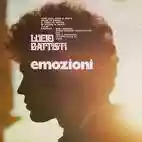
"Emozioni", from 1970, is the masterpiece of his first period, the one farthest from the experimentalism of albums like "Don Giovanni" and closer to Italian song, the one in which he interprets Mogol's verses, the one of his national breakthrough. Yet, it is equally revolutionary: firstly, he is the only valuable pop singer who successfully aligns with the beat cover groups that dominated the music market in those years; then there is an instrumental care based more on rhythmic beat than on cantability for its own sake, which is typical of some Italian music that unfortunately still exists today, and thus he revolutionized well-established canons; finally, there is that non-canonical and characteristic voice, sharp and unique, that serves as an alternative to the Italian bel canto full of virtuosities for their own sake.
This album includes masterpieces such as the stark "Tempo di morire", the poetic and psychedelic "Emozioni", the beautiful "Fiori rosa, fiori di pesco", and other songs that have remained entrenched in the memory of all Italians for decades.
Loading comments slowly
Summary by Bot
Lucio Battisti's 'Emozioni' is a landmark Italian pop album from 1970, blending innovative rhythms with poetic lyrics by Mogol. The album stands out for its break from traditional Italian melodic norms and showcases Battisti's unique vocal style. Featuring timeless tracks like 'Tempo di morire' and 'Fiori rosa, fiori di pesco,' it marked his national breakthrough and influenced Italian music's evolution.Tracklist Lyrics Videos
Lucio Battisti
Lucio Battisti (1943–1998) was an Italian singer, composer and producer from Poggio Bustone. He rose to prominence in the late 1960s and 1970s with lyricist Mogol, crafting many of Italy’s most beloved songs, and later pursued a radical electronic and linguistic shift with Pasquale Panella (1986–1994). From 1980 onward he withdrew from concerts, TV and interviews, insisting the art should speak for the artist.104 Reviews
Other reviews
By Viva Lì
The most beautiful pop-rock album in history isn’t dated 1992. It’s dated 1970 and it’s 'Emozioni' by Lucio Battisti.
Friends, Debaserian, Castaldo: this is music, everything else, as Shakespeare said, is silence.
By TONI E FURMINI
"This CD is the result of the work of an incredibly inspired Mogol and Lucio Battisti in an extraordinary moment."
"The lyrics of this track are as valuable as those of the great foreign bands that were popular in the 70s... almost worthy of a Nobel Prize for literature."
By Spoonful
Are you referring to something bittersweet? That dear sensation of almost unjustified happiness surrounded by a sadness that you can’t even explain?
Like a medicine, that’s what we need. Friendly hands, hands to hold, clean and sincere hands.
By Boop07
'Emozioni remains the best of the best expressed by Battisti over the years with Mogol.'
'A mixture of Rock and Rhythm ’n’ Blues, for which Battisti’s personal voice was perfect, and the lyrics that spoke of everyday life and feelings were textbook examples.'
By mirocotti
Lucio Battisti, after his debut album 'Luci Battisti,' introduces Italy to sounds never heard before.
Lyrics filled with tales of marital infidelity and fleeting loves.
