
 •
Rating:
•
Rating:
THE REVIEW
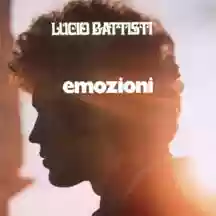
Thursday marked 50 YEARS since the release of the single 'Emozioni': where has OUR PAST gone?
Perhaps into the most absolute banality...
(I write this only inspired for a start, not for full awareness).
Thursday evening, I posted a personal recollection on Facebook about this song. I listened to it again and...I no longer felt the emotions of the past, when I loved Battisti viscerally (and it was long).
But this doesn't mean I don't still love this song, with its particular music transitions, lyrics and...
I can't find the words.
For me, 'Emozioni' remains the best of the best expressed by Battisti over the years with Mogol: listening to many songs before and after, this one must stand alone in the ' 'Olympus' of Battisti's production (then 'Acqua azzurra acqua chiara', 'Pensieri e parole', 'La canzone del sole', 'I giardini di Marzo' ['Io vorrei...non vorrei...ma se vuoi...'] and 'Il mio canto libero').
And the album? A treasure trove, with two 'reprises': 'Io vivrò (senza te)' and 'Non è Francesca' (from the previous album). In those years, Lucio was breaking with Mogol a style in lyrics and music that had already taken quite a broad direction, but there didn’t seem to be an 'Italian way' to the sounds coming from America and England.
And in popular culture, in society, he lived through 'a period of profound changes in Italian society (of the '70s),' as recalled by the president (of the Republic) Mattarella, on the 20th anniversary of his death, in 2018.
What to say about this album? More memorable than the previous (''Lucio Battisti''), with many more classics: 'Fiori rosa fiori di pesco', 'Il tempo di morire', 'Mi ritorni in mente', '7 e 40', 'Dieci ragazze', 'Acqua azzurra acqua chiara', '''Anna' and the two previously mentioned.
A mixture of Rock and Rhythm 'n' Blues, for which Battisti's personal voice was perfect, and the lyrics that spoke of everyday life and feelings were textbook examples. Fortunately, as Mogol recalled his words, he forced Battisti to sing his own songs because in the interpretations of other voices that had promoted him in the '60s (especially Equipe 84 and Dik Dik), the ability to capture the soul was missing*.
And what about, musically, two tracks that haven't stood the test of time, namely 'Era' and 'Luisa Rossi'? They don't do too badly, especially 'Era', the better of the two.
'Emozioni', the last compilation album in Battisti's discography, after, in part, the previous one (almost all remakes). From 'Amore non amore**', onwards, only inédites.
When he left us in 1998, the TV played his songs from the period with Mogol. Of Panella, not a trace. But certainly, the production of 'silence from the television cameras', i.e., the absence from public appearances***, is not much less esteemed than the notable works with Mogol: especially because, Panella was an ARTIST.
*in my opinion
**of 'Dio mio no'
***already begun in the days with Mogol, but 'completed' in the period with Pasquale Panella
Loading comments slowly
Summary by Bot
This review honors the 50th anniversary of Lucio Battisti’s legendary album Emozioni, praising its standout tracks and lasting influence. The reviewer reflects on the deep emotions once felt and acknowledges the album as a pinnacle of Italian pop and rock fusion from the 1970s. Despite some tracks aging less well, the album remains a treasure trove of classic songs. The cultural impact and collaboration with lyricist Mogol are key to its timeless stature.Tracklist Lyrics Videos
Lucio Battisti
Lucio Battisti (5 March 1943 – 9 September 1998) was an Italian singer-songwriter, composer and producer from Poggio Bustone. A central figure in Italian pop, he partnered with lyricist Mogol in the late 1960s–70s and later with Pasquale Panella for a radical electronic-leaning phase. He withdrew from public appearances around 1979–1980 and left a catalog spanning 1969–1994.103 Reviews
Other reviews
By Viva Lì
The most beautiful pop-rock album in history isn’t dated 1992. It’s dated 1970 and it’s 'Emozioni' by Lucio Battisti.
Friends, Debaserian, Castaldo: this is music, everything else, as Shakespeare said, is silence.
By TONI E FURMINI
"This CD is the result of the work of an incredibly inspired Mogol and Lucio Battisti in an extraordinary moment."
"The lyrics of this track are as valuable as those of the great foreign bands that were popular in the 70s... almost worthy of a Nobel Prize for literature."
By Fiumani
Battisti revolutionized well-established canons with rhythmic beat focus rather than traditional bel canto.
'Emozioni' is the masterpiece of his first period, equally revolutionary and closer to Italian song.
By Spoonful
Are you referring to something bittersweet? That dear sensation of almost unjustified happiness surrounded by a sadness that you can’t even explain?
Like a medicine, that’s what we need. Friendly hands, hands to hold, clean and sincere hands.
By mirocotti
Lucio Battisti, after his debut album 'Luci Battisti,' introduces Italy to sounds never heard before.
Lyrics filled with tales of marital infidelity and fleeting loves.
