
 •
Rating:
•
Rating:
THE REVIEW
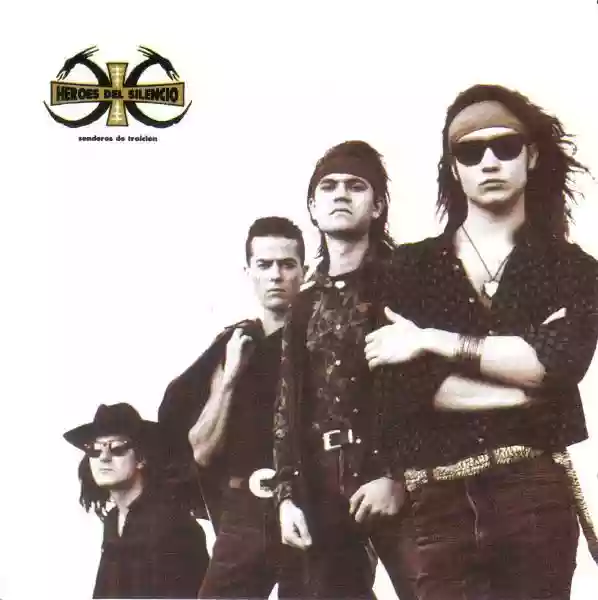
It is with great pleasure that I start to review this album by Heroes del Silencio, which represents the peak of the band's fame. "Senderos de Traicion" was released in 1990 and marks the turning point of their career, selling over 400,000 copies in Spain, but more importantly, it brought them international success. Of particular note are the 250,000 copies sold in Germany and 100,000 in Italy. Overall, the results were good across almost the entire old continent. Right after the album's release, the Heroes embarked on a national tour that drew a large following. In 1992, they dedicated themselves to gaining recognition in the rest of Europe, playing dozens of concerts and receiving excellent feedback. Lastly, let’s not forget their historic playback performance at Festivalbar 92 (Arena di Verona) where they played a shortened version of "Entre Dos Tierras". They were also interviewed there by Benedetta Mazzini, who at the time was in a relationship with Enrique Bunbury. Bunbury dedicated three songs to her, which can be heard on the following two works, I am referring to: "Bendecida 2", "Bendecida", and "La chispa Adecuada (Bendecida 3)".
Needless to say, the leading track of the album is the splendid "Entre Dos Tierras", a suggestive rock song, which is undoubtedly the most popular of the Spanish quartet. I remember that in the period of 1991-92 it was a hit not only on the Iberian Peninsula but also here in Italy, and it was often played on the radio and the music video broadcast on music channels. The 12 tracks that compose this album are all well-crafted and deserve some attention. The lyrics are very beautiful, reaching poetic and metaphorical peaks in "Maldito Duende", a suggestive song that begins with a wonderful guitar arpeggio and continues with a delightful and at times almost "fairy tale-like" chorus. It is said that Bunbury composed it when he was still a young boy, before joining the band. You can notice references to magic and what concerns it: the night, the moon, and the “Duende” (which means “Goblin” in English), a woodland spirit that in popular tales was mischievous and thus a sort of "Maldito." "La Carta" and "Malas Intenciones" are two melancholic tracks that deal with difficulties due to distance and crises that often occur in stories between men and women. The style is quite similar to that of the second track. Hats off to guitarist Juan Valdivia, author of simple and engaging compositions.
"Senda" and "Hechizo" are two other precious tracks of the album, the first is characterized by a cadenced rhythm and has almost "epic" nuances; the second, on the contrary, is faster and also allows for a pleasant guitar solo. As usual, the lyrics have a certain depth, distinguished by allegories and wordplay, typical of the Aragonese band. "Oracion" is a sort of criticism of the church, a line in the song cites: "No hay oracion capaz de decidir por mi..." (There is no prayer capable of deciding for me...). Even here the formula is always the same: the initial arpeggio is more than fitting, Bunbury's theatrical entry, and an impeccable rhythmic base. In "Decadencia", the tones become darker, the music is more refined especially in the solos and bass lines. Live, this song often included long improvisations, Bunbury’s monologues, and covers of other bands. The album concludes with the ballad "Con Nombre de Guerra", another “sentimental” track which also had a music video. In the CD, there is actually a bonus track "El Quadro II" which is not on the vinyl and the MC.
As you can easily guess, "Senderos De Traicion" is a good album from a band that has been partly underrated, which made a huge contribution to the growth of Spanish rock. I recommend anyone who doesn’t know it to get a copy immediately! This also goes for the other Héroes albums: “El Mar No Cesa” (1988), "El Espiritu Del Vino" (1993), and "Avalancha" (1995).
Loading comments slowly
Summary by Bot
This review highlights 'Senderos de Traicion' as the peak of Héroes del Silencio's fame, marking their international breakthrough. It praises key tracks like 'Entre Dos Tierras' and 'Maldito Duende' for their poetic quality and memorable melodies. The album's balanced mix of rock rhythms, thoughtful lyrics, and skilled guitar work is emphasized, along with the band's significant contribution to Spanish rock. The reviewer recommends it highly for new listeners.Tracklist Lyrics Videos
Héroes del Silencio
Héroes del Silencio formed in Zaragoza in 1984 and rose from early EMI releases to international acclaim. Their debut El mar no cesa (1988) carried new wave/pop hues, but Senderos de Traición (1990) became a turning point, with strong European sales and the hit “Entre dos tierras.” El espíritu del vino (1993), produced by Phil Manzanera, expanded their sound and chart reach, and Avalancha (1995), produced by Bob Ezrin, marked a peak before the 1996 split. The band reunited for a short tour in 2007.05 Reviews
Other reviews
By Mariaelena
"The voice is the soul of the Album, a guttural intertwining that ignites the soul."
"This Album is ser todo oídos y corazón, which means it must be listened to with ears and heart."
