
 •
Versione 1
Rating:
•
Versione 1
Rating:
THE REVIEW
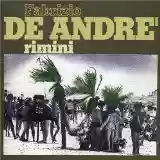
This morning I woke up in a foul mood, but instead of unloading some sacred crap on one of those not-too-ok albums that are usually liked by people who go to Pixies concerts, I decided to try listening to a De André record from start to finish. To really give it a go, since I don't like easy missions, I opted for that record that usually annoys even the most purist fans, probably because it would be Salvini's favorite.
However, "Rimini" is an album that deserves it, apart from "Avventura a Durango," which tries to reinterpret that old Bob Dylan song but only reminds me of the Big Brother house. For the rest, De André tries, and succeeds, anticipating the arrival of Sfera and trap by a good ninety-six years ("Zirichiltaggia," but also "Rimini," the song, and its vacuously colorful imagery). While imagining Faber sipping a bit of syrup, I can't hold back the emotion when the song "Andrea" starts: "Andrea had a love, black curls." Very sweet.
Perhaps "Rimini" doesn't have the straight beat, but it straight-up challenges all the conventions of the time, especially with "Coda Di Lupo," a song dedicated to Yoko Ono. "Parlando del naufragio della London Valour" only has the bad luck of having a name so long that it makes me forget what good I was about to say about it, and in fact, I forgot, but it was just like the Pappalardo-Zequila fight. "Sally" and "Vola La Carta" surprise with poetic insight, while "Folaghe," well, some people even eat glue, so it's okay. That said, it's clear that "Rimini" isn't a perfect album, but I don't feel like saying I didn't like it, so I think it's quite nice.
EDIT (05/05/2019): obviously, I didn't listen to the record, so it probably sucks, but you only read the rating in a review anyway.
Loading comments slowly
Summary by Bot
The review offers an appreciation for Fabrizio De Andrè’s album Rimini, highlighting its innovative style that prefigures trap music and poetic songwriting. While not perfect, the album challenges conventions and resonates emotionally, especially in tracks like "Andrea" and "Coda Di Lupo." Despite some critiques, the reviewer regards Rimini as a notable and enjoyable work.Tracklist Lyrics Videos
Fabrizio De André
Italian singer-songwriter (cantautore) Fabrizio De André (18 Feb 1940 – 11 Jan 1999) is known for poetic lyrics, narrative songs about marginalized people, and landmark albums including Creuza de mä and La buona novella.92 Reviews
Other reviews
By Grasshopper
"Rimini is a wonderful ballad with delicate guitar arpeggios, a profound portrait of a woman in the style of Leonard Cohen."
"De André speaks as in a Dylanian talking blues, but instead of a sparse guitar, he is accompanied by evocative and intense music, decidedly leaning toward rock."
By AJM
'Rimini' is dense with that underlying melancholy that embraces you.
'Sally' represents the purity that is gradually lost growing up, moving from fairy-tale landscapes to heroin and knife-realities.
By wolfatthedoor
Listening to this record with closed eyes allows the imagination to roam through a series of images.
Faber’s poetry reaches towering heights in the title track, the story of the 'grocer’s daughter.'
By tomny
Rimini, a transitional work for the majority of fans and critics, certainly less impactful than other previous and subsequent masterpieces, yet not to be underestimated.
De Andrè’s full disillusionment with the 'Metropolitan Indians' of '77 and other events is cryptic, rich in metaphors but not only.
