
 •
Rating:
•
Rating:
THE REVIEW
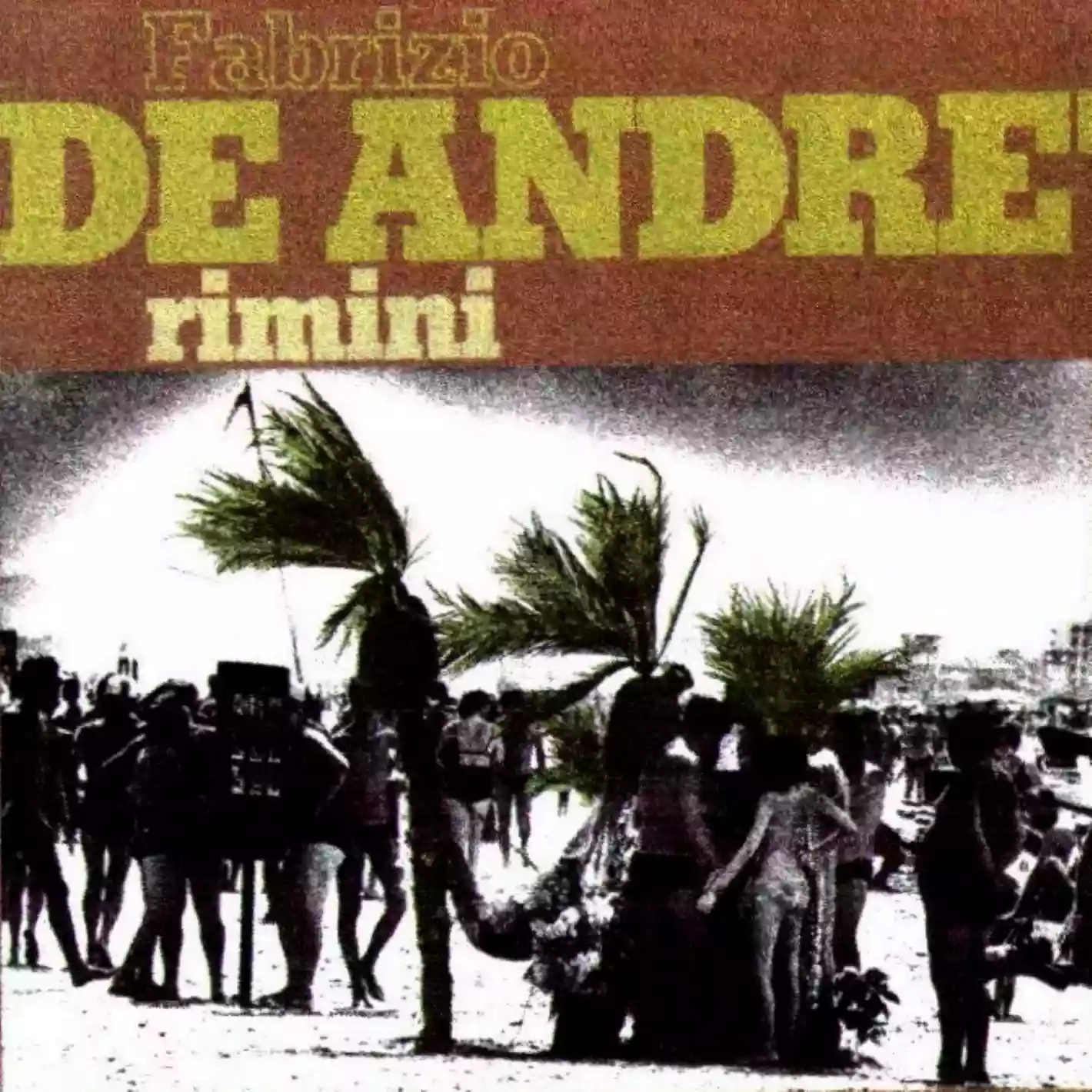
The ability to evoke is perhaps one of the most important qualities that a songwriter, a poet, or anyone embarking on a certain type of writing can have. Evoking memories, moments lived, or even moments that transcend experience, created by the imagination through listening or reading. After "Volume VIII," Fabrizio De André released "Rimini" in 1978, which takes the listener from the regrets of a Fellini-inspired Rimini to the Native American atmospheres of Coda di lupo, reaching the journeys of Sally among "forest gypsies" and "dolls enticing gentlemen." Listening to this record with closed eyes allows the imagination to roam through a series of images that can bring to mind entirely different things even just from one verse to the next. Faber's poetry reaches towering heights in the title track, the story of the "grocer's daughter," forced to "abort the lifeguard's child and then look at him tenderly"; in "Coda di lupo", which through the story of an Indian's initiation recalls the generation of youths raised during the years of lead; in "Andrea", with an almost fairy-tale atmosphere, which tells the story of a homosexual love against the backdrop of the Second World War. Not only do the words play a fundamental role in this record: the guitar of "Rimini" seems embroidered on Fabrizio's words, just as the folk music of "Volta la carta" and "Zirichiltaggia" easily engages the listener.
An album that consistently remains at very high levels, not the best in De André's discography, but right behind his greatest masterpieces.
Ps: this is the first review so I gladly accept advice, suggestions, and constructive criticism. Thank you!
Loading comments slowly
Summary by Bot
Rimini by Fabrizio De Andrè is a deeply poetic album combining vivid storytelling with rich folk music. The record explores diverse themes, from a Fellini-inspired Rimini to Native American tales and LGBTQ+ stories set against WWII. Its evocative lyrics and intricate guitar work engage the listener’s imagination throughout. While not considered De Andrè's absolute best, it stands just behind his greatest masterpieces in quality and emotional impact.Tracklist Lyrics Videos
Fabrizio De André
Italian singer-songwriter (cantautore) Fabrizio De André (18 Feb 1940 – 11 Jan 1999) is known for poetic lyrics, narrative songs about marginalized people, and landmark albums including Creuza de mä and La buona novella.92 Reviews
Other reviews
By Grasshopper
"Rimini is a wonderful ballad with delicate guitar arpeggios, a profound portrait of a woman in the style of Leonard Cohen."
"De André speaks as in a Dylanian talking blues, but instead of a sparse guitar, he is accompanied by evocative and intense music, decidedly leaning toward rock."
By AJM
'Rimini' is dense with that underlying melancholy that embraces you.
'Sally' represents the purity that is gradually lost growing up, moving from fairy-tale landscapes to heroin and knife-realities.
By tomny
Rimini, a transitional work for the majority of fans and critics, certainly less impactful than other previous and subsequent masterpieces, yet not to be underestimated.
De Andrè’s full disillusionment with the 'Metropolitan Indians' of '77 and other events is cryptic, rich in metaphors but not only.
By POLO
"De Andrè tries, and succeeds, anticipating the arrival of Sfera and trap by a good ninety-six years."
"I can’t hold back the emotion when the song 'Andrea' starts: 'Andrea had a love, black curls.' Very sweet."
