
 •
Rating:
•
Rating:
THE REVIEW
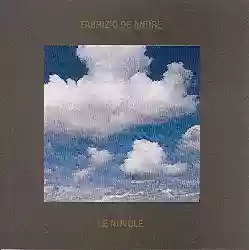
Long-awaited, 6 years after "Creuza de ma", this original album is released, which at first listen seems to be a mishmash of the most diverse song genres, with no connection. Soon, however, two well-defined parts emerge: one of denunciation, almost all in Italian, the other "ethnic". The first part opens and closes with a chorus of cicadas, symbolizing the only "vibrant protest" left in a country that is falling apart. "Le nuvole" is a poem, recited by two women’s voices with a slight Sardinian accent, on a background that evolves from the initial cicadas into a symphonic crescendo of strings. "Ottocento" is actually quite eighteenth-century, rococo, precisely to ridicule with sharp irony the obtuseness of these times where the winners are "Versace bronzes" capable of "playing the stock market and raping in a hurry,” frivolous times like the end of the 1700s, and moreover, devoid of a Mozart. The satire becomes increasingly madcap, up to the delirious macaronic German and the "Jodel" that close the song.
A few piano notes (Tchaikovsky) lead to "Don Raffaè", where the satire becomes tremendously timely: the warden Pasquale Cafiero (a not accidental surname) doesn’t believe in the State but only in that "brilliant, selected, and immense" man, who is precisely the Camorra boss Don Raffaè, the only one capable of delivering justice, and of "bringing comfort and work". It’s a tarantella sung in Neapolitan, with band accompaniments (like the old "Bocca di rosa"). The same piano interlude introduces "La domenica delle salme", and here there is not even the strength of satire, but only the chilling and total desolation of an Italy, and of a world, now completely "normalized", where Utopia is now a corpse and over everything reigns a "terrifying peace", the silence of ideas. The song is now 14 years old, but every day it becomes more timely.
Second half of the record: the "ethnic", dialectal. It’s not a follow-up to "Creuza de ma": in Genoese, there are only "Megu megun" (Doctor Quack), a strange figure of a hypochondriac doctor, oriental-sounding music, akin to "Jamin-a", and "A cimma", a bizarre story of a cook who creates his masterpiece (la cima, a complicated Genoese dish) with almost mystical faith, and is moved when the waiters take it away. It can only be in Neapolitan "Nova gelosia", a classic taken up by Roberto Murolo (who will reciprocate by singing "Don Raffaè"). Great interpretation, especially for a non-Neapolitan. It is instead in Sardinian "Monti di Mola", an idyllic and sincere love story between a young shepherd and a beautiful donkey with a light coat, but enough to arouse the villagers' envy. Varied album, perhaps a little disorganized, but of great quality. Co-author, as in "Creuza de ma", is the former P.F.M. Mauro Pagani.
Loading comments slowly
Summary by Bot
Le nuvole is Fabrizio De Andrè’s highly anticipated album blending Italian social critique with ethnic and dialectal songs. The first half is dominated by sharp satire and denunciation of modern Italy’s flaws, while the second half explores regional sounds and stories. The album features orchestral elements and contributions by Mauro Pagani, delivering an eclectic yet meaningful experience that remains relevant years after its release.
Fabrizio De André
Italian singer-songwriter (cantautore) Fabrizio De André (18 Feb 1940 – 11 Jan 1999) is known for poetic lyrics, narrative songs about marginalized people, and landmark albums including Creuza de mä and La buona novella.92 Reviews
Other reviews
By NiCoII
Le Nuvole are not merely atmospheric phenomena, but the cumbersome characters of our society who cast a shadow over the sun.
Fabrizio De André revolutionized Italian music with Creuza de Ma, but with this album, he takes a step forward, combining tradition, political denunciation, folk song, and poetry.
By JpLoyRow
"Le nuvole is the highest example of how two worlds, music and poetry, can be reconciled."
"One of the most prophetic, heartbreaking, and tragic pieces of the entire Italian songbook."
