
 •
Versione 1
Rating:
•
Versione 1
Rating:
THE REVIEW
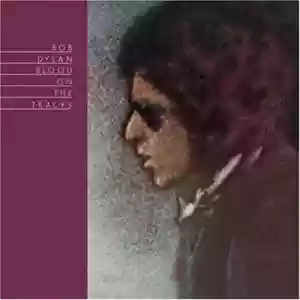
1974, Punk, the "new" American rock, hard rock ... and Dylan. It has always been this way, Bob Dylan and everything else. This album was supposed to be a rock, proto-punk, electric album, but a few days before delivering the acetate to Columbia, Dylan, dissatisfied, erased everything, and re-recorded it from scratch, giving us a masterpiece of essentiality, folk to the core, a sparse album, but divinely played: the acoustic guitar lines in this album, in my opinion, are the best of Bob's career. What does the album lack? Nothing.
Meet me in the Morning is one of Bob's best blues songs and my favorite track on the album, an excellent piece for the clarity of the harmonic transitions, the depth of the voice, and the lyrics, a desperate cry of rage towards the woman who left him "They say the darkest hour is just before the dawn...". The little rooster crows, something must be on its mind", a biblical reference, pre-Catholic conversion, to describe the despair of a man thinking of ending his life.
If you see her, Say Hello, another intimate track, almost romantic, without the anger of the above song, a folk piece from another time, with the acoustic guitar in the foreground accompanied in the background by the organ "If you go near her give her a kiss for me I always respected her for her choice to run away and become free again Oh, whatever could make her happy I will not stand in the way Despite the bitter taste I still feel from that night I tried to hold her back".
Shelter from the storm, Folk and on a level that recalls the beginnings (The freewheelin' Bob Dylan), guitar and voice, a stroke of art that reminds me, for the beauty of the melody, of Blowing in the wind; the lyrics, as I read them, draw inspiration from personal events, the separation from his wife, to acquire a universal meaning, also becoming an anthem against wars; here too appears a pre-literary biblical reference, "In a little village upon the hill, they gambled my clothes I bargained for salvation and they gave me a lethal dose I offered my innocence and got repaid with scorn" recalls the Gospel of Matthew "After they crucified him, they parted his garments, casting lots, so that what was spoken by the prophet might be fulfilled".
Lily, Rosemary and the Jack of Hearts is a country ballad that anticipates some episodes of the subsequent masterpiece Desire and reprises the style of the seminal John Wesley Harding, in particular, it seems to derive from The ballad of Frankie Lee and Judas Priest.
Tangled up in blue was released as a single and propelled the album's sales, which was among Dylan's most commercially successful; here too the arrangement and the singing anticipate the style of Desire, a long text, rich in references, including biblical ones, centered, despite the author's denials, on the pain of separation from his wife.
Simple Twist of Fate, You're a Big Girl now and You're gonna make me lonesone when you gone are three folk masterpieces, the first and last more sparse and closer to the debut style, the second very refined in the guitar accompaniment (only acoustic), three pieces that any songwriter should memorize before trying their hand at the art of songwriting.
Finally, Idiot Wind, a track with a "nervous" and rock pace, inside blows the anger, the power of Like a rolling stone, controlled anger in the studio version, beautiful nonetheless, but which clearly comes out in live performances, like the fascinating version that can be heard in Hard Rain, one of Dylan's most beautiful Live albums.
This is an album to listen to, letting oneself be penetrated by the refinement of the music, intentionally "sparse" in execution but rich in harmonic progressions. The lyrics, I believe, have substantially contributed to the Nobel Prize for Literature.
Loading comments slowly
Summary by Bot
Blood on the Tracks is hailed as one of Bob Dylan's finest albums, blending sparse but masterful acoustic guitar with profound, intimate lyrics. The reviewer highlights key tracks like "Meet Me in the Morning" and "Shelter from the Storm," emphasizing Dylan's skillful songwriting and biblical allusions. The album’s emotional depth and musical simplicity contribute to its lasting impact and critical acclaim. It is regarded as essential listening for both Dylan fans and folk music lovers.Tracklist Lyrics Videos
Bob Dylan
American singer-songwriter Robert Allen Zimmerman, known as Bob Dylan, is a major figure in 20th-century popular music, noted for pioneering songwriting and continual reinvention across folk, rock, country and blues.127 Reviews
Other reviews
By ilsuonatorejones
"Bob Dylan is the greatest and this is his best album. Consequently, this is the greatest album in the history of music."
"‘Blood on the Tracks’ is ultimately a kaleidoscopic reflection of love and loss in ten moments."
By j&r
The stunning and impetuous lyricism of this album shakes, stirs, and deeply moves the human soul.
"Blood On The Tracks" is undoubtedly a turning point album where Dylan confronts his intimate problems with unparalleled emotional power.
By villagevoice
Lost love... that’s indeed the main theme of this wonderful album, the brightest gem of the 70s Dylan era.
"Shelter from the storm"... a picture depicting a sacred image that offers protection to a weak one...
By denis1982
The answer is 'Blood On The Tracks,' where the blood covering the notes and verses is no longer that of the social struggle, but the songwriter himself, and our own blood as well.
Bob Dylan... is forced to unveil his raw truth. It’s amazing to observe the various devices used to accomplish this sublime and intimate confession.
By GabrielTripaldi
"Bitter and embittered Dylan, harmonica stitching the cuts, word chef like serpents, definitive and clarifying sound shifts into gear and gets drunk on its own."
"After 'Tangled Up In Blue,' 'Simple Twist Of Fate,' 'You're A Big Girl Now,' and of course 'Idiot Wind,' I let out a burp of satisfaction. I didn't need anything else."
