
 •
Rating:
•
Rating:
THE REVIEW
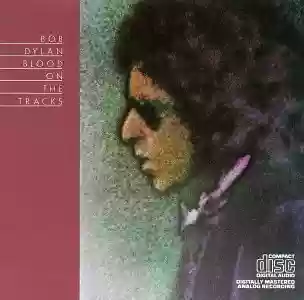
"Blood On The Tracks" is an equation. It's simple: Bob Dylan is the greatest and this is his best album. Consequently, this is the greatest album in the history of music. "Rolling Stone," a notable magazine, says it's the fourteenth, and that two more of Bob Dylan's albums are fifth and sixth. However, according to fan votes on the internet, critics, and De Gregori, "Blood On The Tracks", 1975, is the best.
It should be noted that the album was recorded twice, first in September of 1974, in New York, all acoustic, with the guitar tuned in open E tuning (which means that playing the open strings produces the E major chord). This technique offers few possibilities: reasonably, only the chords of the E major harmonic progression are used, and recording an entire album like this, even with various variations, results in monotony. So some songs were re-recorded during Christmas in Minnesota with the band.
Below, I translate the introductory notes to "Blood On The Tracks" written by Eyolf Ostrem on the website www.dylanchords.com (a site with all the chords and lyrics, worth visiting):
"Blood on the Tracks" is Dylan's best album. Others might say that "Blonde on Blonde", "Highway 61 Revisited" or even "Desire" are his best albums, but they are wrong. "Blood on the Tracks" is also Dylan's best album in its published version. Others might say that if he had left the songs as he recorded them in September of 1974, it would have been a much better album, and the songs recorded during Christmas, with local Minnesota musicians, are far inferior, both in terms of lyrics and music, to the New York versions, more intense. They are wrong.
In the single comparison between versions, the only better in the original version is "If You See Her, Say Hello".
In any case, individual songs are one thing, an album another: let's compare.
On one side is an album that begins with the never-surpassed masterpiece "Tangled Up In Blue", performed with the same restless, confident intensity that the lyrics reveal, continues with the nocturnal drama of "Simple Twist" and the bittersweet tenderness of "You're A Big Girl Now" (which of these is Dylan's best song?), the anger of "Idiot Wind", seemingly mitigated by the lyricism of "You're Gonna Make Me Lonesome" (seemingly because the lyricism of the lazy river and crimson hair recomposes the pain of the inevitable loss of all this, as Dylan had just been left by his wife); then a delightful blues ("Meet Me In The Morning"); an ironic Western screenplay ("Lily, Rosemary and the Jack of Hearts"); precise rearrangement of past things, set in a distant future ("If You See Her, Say Hello"); the myth of salvation ("Shelter From The Storm"); Zen in a bucket ("Buckets Of Rain"): ultimately a kaleidoscopic reflection of love and loss in ten moments. On the other side, there are ten songs, all rather slow, mainly oscillating between bitterness and sadness, all in the same open key with the same three or four chords, where the constant ringing of the open high E and B drives you mad after a while.
I know which album I prefer.
Probably "Blood On The Tracks" hasn't had the same echo, the same influence as the other LPs mentioned. But on a ten-song album, there are at least four absolute masterpieces, to be contemplated among Dylan's ten best songs. The majestic and brilliant "Tangled Up In Blue", whose phenomenal final version will save an otherwise mediocre live album like "Real Live" and is still vital in all its versions, the stunning and poetic "Simple Twist Of Fate", the biting and angry "Idiot Wind", and the masterful, as well as absolute best track by Dylan, "Shelter From The Storm".
All these will be revisited in live performances with spine-chilling results (just think of the last two cited on "Hard Rain"). And the other tracks are no less. The beautiful "You're A Big Girl Now" pays the price for the unfortunate line of "corkscrew to my heart", which in Italy, a country of poets, saints, and sommeliers, makes one smile, but the rest is excellent. "You're Gonna Make Me Lonesome" is very beautiful, "Meet Me In The Morning" is pleasant to listen to, "Lily, Rosemary and the Jack of Hearts" is another masterpiece, "If You See Her Say Hello" is chilling, but it's better in the "Bootleg Series Vol.1-3" version, "Buckets Of Rain" is beautiful even from a guitar perspective.
The voice is convincing throughout the album, the accompaniment is well blended and balanced. The New York versions can be found on "Biograph" and "The Bootleg Series Vol. 2-3". There's also an out-take, on "Biograph", excluded from the album because it's very similar to "Shelter From The Storm", it's called "Up To Me", and, needless to say, it's a masterpiece, on par with the others.
The lyrics are once again those of the inspired Dylan that had been missing for years, preparing for the "Rolling Thunder Revue", the legendary '75-'76 tour. Dylan experiences an inner restlessness (due mainly to the imminence of his divorce from Sara) which unnerves him but also provides the shock that his creativity needed. Ultimately, '75-'76, after '65-'66, is Zimmy's second period of grace, the peak is reached a second time and it won't be the last (a unique case, I believe, in the history of music). The result is an immortal masterpiece.
Loading comments slowly
Summary by Bot
This review praises Bob Dylan's Blood On The Tracks as his greatest and most influential album. It details the recording history, comparing acoustic and band versions, and highlights standout songs like Tangled Up In Blue and Shelter From The Storm. The album is depicted as a powerful reflection on love and loss, marking a peak period in Dylan’s career. The review emphasizes the album’s lasting impact and lyrical brilliance.Tracklist Lyrics Videos
Bob Dylan
American singer-songwriter Robert Allen Zimmerman, known as Bob Dylan, is a major figure in 20th-century popular music, noted for pioneering songwriting and continual reinvention across folk, rock, country and blues.127 Reviews
Other reviews
By j&r
The stunning and impetuous lyricism of this album shakes, stirs, and deeply moves the human soul.
"Blood On The Tracks" is undoubtedly a turning point album where Dylan confronts his intimate problems with unparalleled emotional power.
By villagevoice
Lost love... that’s indeed the main theme of this wonderful album, the brightest gem of the 70s Dylan era.
"Shelter from the storm"... a picture depicting a sacred image that offers protection to a weak one...
By denis1982
The answer is 'Blood On The Tracks,' where the blood covering the notes and verses is no longer that of the social struggle, but the songwriter himself, and our own blood as well.
Bob Dylan... is forced to unveil his raw truth. It’s amazing to observe the various devices used to accomplish this sublime and intimate confession.
By GabrielTripaldi
"Bitter and embittered Dylan, harmonica stitching the cuts, word chef like serpents, definitive and clarifying sound shifts into gear and gets drunk on its own."
"After 'Tangled Up In Blue,' 'Simple Twist Of Fate,' 'You're A Big Girl Now,' and of course 'Idiot Wind,' I let out a burp of satisfaction. I didn't need anything else."
By Hungry
The acoustic guitar lines in this album, in my opinion, are the best of Bob's career.
"Meet Me in the Morning" is one of Bob’s best blues songs, a desperate cry of rage and despair.
