
 •
Rating:
•
Rating:
THE REVIEW
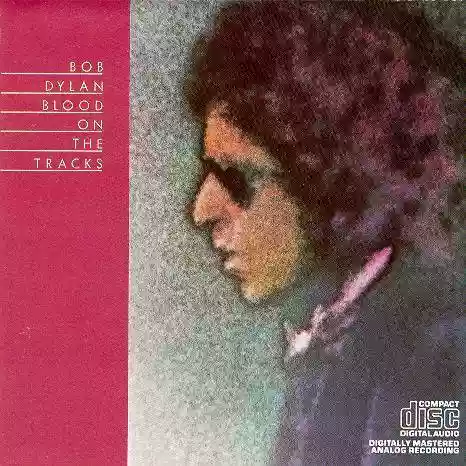
It had been 10 years since the question "How does it feel to be like a rolling stone?" It had been 10 years since those legendary records that launched him into legend. The wind that once inspired him now blows against him and is "idiot." His latest albums no longer satisfy his fans, who are disoriented and inexplicably annoyed by his constant changes in artistic direction. As if that weren't enough, his wife leaves him, alone, a marriage in deep crisis, the poet is lost, "tangled up in blue," "with a pain that comes and goes/ like a corkscrew in the heart".
Bob Dylan is now called upon to answer that harsh question, launched back then against everyone and everything. And the answer is not long in coming: bright, clear, brilliant, harsh, lyrical, a journey with sails unfurled into the depths of Dylan's Hell. The answer is "Blood On The Tracks," where the blood covering the notes and verses of the record is no longer that of the social struggle for rights, but that of the songwriter himself, and our own blood as well, gushing from the open wounds of hearts, burning and blazing in search of Paradise, even though disillusioned by all those "simple twists of fate" that end up making us suffer and to which we inexorably place the blame.
Bob Dylan has always liked to reshuffle the cards, but now he has no more excuses, now he doesn't seek compromises, now he is forced to unveil his raw truth. It's amazing to observe the various devices used to accomplish this sublime and intimate confession: the poet goes back in time, retrieves the quintessential salvific literary journey, the "Divine Comedy," which frames the background of the entire work.
The poet's journey begins. While he is "tangled up in blue", it is She who:
then opened a book of poems
and handed it to me
It was written by an Italian poet of the thirteenth century
And every one of those words rang true
and glowed like burning coal
seeping off of every page
like it was written in my soul from me to you
Who do we blame for this suffering? The first answer is: "simple twist of fate". However, this is not enough to alleviate the suffering and pain shouted in "You're a Big Girl Now." Suffering, as often happens, turns into anger: Dylan explodes in "Idiot Wind," inveighing repeatedly against the one who left him, who no longer believes in him, but then exhausted, in the end, he admits the idiot wind blows for him too:
Idiot wind blowing through the buttons of our coats
blowing through the letters that we wrote
Idiot wind blowing through the dust upon our shelves
Loading comments slowly
Summary by Bot
This review highlights Bob Dylan's album Blood on the Tracks as a brilliant and emotionally intense work born from personal turmoil. It marks a return to lyrical honesty and poetic depth, framing the album as a journey through heartbreak and self-discovery. Drawing on literary influences like Dante's Divine Comedy, the album presents raw truths with powerful imagery and evocative storytelling. It is praised as a timeless classic and a high point in Dylan's career.Tracklist Lyrics Videos
Bob Dylan
American singer-songwriter Robert Allen Zimmerman, known as Bob Dylan, is a major figure in 20th-century popular music, noted for pioneering songwriting and continual reinvention across folk, rock, country and blues.127 Reviews
Other reviews
By ilsuonatorejones
"Bob Dylan is the greatest and this is his best album. Consequently, this is the greatest album in the history of music."
"‘Blood on the Tracks’ is ultimately a kaleidoscopic reflection of love and loss in ten moments."
By j&r
The stunning and impetuous lyricism of this album shakes, stirs, and deeply moves the human soul.
"Blood On The Tracks" is undoubtedly a turning point album where Dylan confronts his intimate problems with unparalleled emotional power.
By villagevoice
Lost love... that’s indeed the main theme of this wonderful album, the brightest gem of the 70s Dylan era.
"Shelter from the storm"... a picture depicting a sacred image that offers protection to a weak one...
By GabrielTripaldi
"Bitter and embittered Dylan, harmonica stitching the cuts, word chef like serpents, definitive and clarifying sound shifts into gear and gets drunk on its own."
"After 'Tangled Up In Blue,' 'Simple Twist Of Fate,' 'You're A Big Girl Now,' and of course 'Idiot Wind,' I let out a burp of satisfaction. I didn't need anything else."
By Hungry
The acoustic guitar lines in this album, in my opinion, are the best of Bob's career.
"Meet Me in the Morning" is one of Bob’s best blues songs, a desperate cry of rage and despair.
