
 •
Rating:
•
Rating:
THE REVIEW
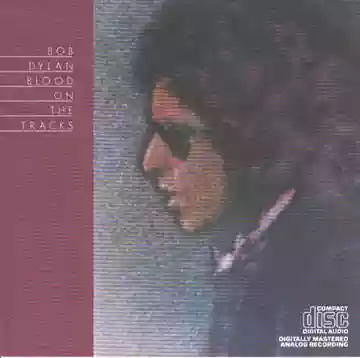
The stunning and impetuous lyricism of this album shakes, stirs, and deeply moves the human soul; it's truly impossible to remain indifferent in front of this masterpiece of farsighted lexical and musical perfectionism; allegory and symbolism elevate it to latitudes never again reached in the realm of modern music.
Listening to it today, thirty years later, that irrepressible lump in the throat still rises, which, bittersweet, brings to mind moments of life that are just nostalgic, physical calls, and spiritual flights. A metaphysical, poetic, mystical journey “within the soul,” in the “spirit,” purifying, from which one awakens a bit dazed, a bit confused, gently saddened. An unstoppable river of emotions flows from the depths of senses that truly warms the heart: probably the most mature album in the history of rock. "Blood On The Tracks" is undoubtedly a turning point album. Before then, Dylan had never been so inclined to speak about himself, his most intimate problems, his inner ghosts. The album is focused on describing the dark side of life; indeed, the singer-songwriter talks about resentment, suffering, melancholy, depression, and sometimes even cruelty. Perhaps it's not entirely correct, perhaps there's a risk of trivializing it, perhaps it's superficial to say, but "Blood on The Tracks" is the chronicle of “a” marital failure: his love-hate towards his wife Sara, his troubled married life.
"Tangled Up In Blue," which opens the album, deeply and resentfully explores his marital story. It's no coincidence that this piece features a repetitive, circular, almost “claustrophobic,” paranoid structure, from which there is no escape and brings us relentlessly back to the starting point: it's clear that our artist is tormented by a monotonous daily routine, a spiral made of cold silences, violent quarrels, unlikely reconciliations. Iconic are the phrases: "... so I go back again, I have to reach her somehow... we felt the same, but in judgment, of another race... tangled in sadness”.
The second piece, "Simple Twist Of Fate,” completely changes tone: from behind the monumental wall of pain that rises in this song comes a voice genuinely full of passion, tears, and regret; all in an atmosphere of deep and disheartened reflection and resignation. Dylan, completely captured by the memory of his wife, wonders about the true reason for his unbearable situation. And finally, in the grip of the bitterest resignation, he ironically finds the answer to his question: it all stems from "a simple twist of fate.” The enduring dream of eternal love has indeed vanished due to a twist of fate and Dylan, for a moment touched by a hint of pride, screams out all the disillusionment of this vanished desire in one of the fiercest songs ever written about the end of a matrimonial relationship: "Idiot Wind.” In an atmosphere exuding impetuous carnal passion mixed with disdain, our artist lashes out at his wife with words as lethal as poison. The “prophet wind” of Blowin' in The Wind, then a metaphor for the “Holy Spirit” or more simply for fate, now becomes an idiotic wind. Our artist, as if in a fit of rage, curses this vile fate and the wife who has left him alone: “...idiot wind, blowing every time you move your mouth, blowing down the back roads heading south. Idiot wind, blowing every time you move your teeth; you're an idiot, babe. It's a wonder that you still know how to breathe.”
Loading comments slowly
Summary by Bot
This review praises Bob Dylan's Blood On The Tracks as a profound and emotionally charged album. It highlights the raw exploration of personal pain, particularly surrounding his troubled marriage. The songs are described as poetically symbolic, capturing feelings of regret, melancholy, and passionate anger. The album is seen as a high point in Dylan's career, blending lyrical depth with musical perfection.Tracklist Lyrics Videos
Bob Dylan
American singer-songwriter Robert Allen Zimmerman, known as Bob Dylan, is a major figure in 20th-century popular music, noted for pioneering songwriting and continual reinvention across folk, rock, country and blues.127 Reviews
Other reviews
By ilsuonatorejones
"Bob Dylan is the greatest and this is his best album. Consequently, this is the greatest album in the history of music."
"‘Blood on the Tracks’ is ultimately a kaleidoscopic reflection of love and loss in ten moments."
By villagevoice
Lost love... that’s indeed the main theme of this wonderful album, the brightest gem of the 70s Dylan era.
"Shelter from the storm"... a picture depicting a sacred image that offers protection to a weak one...
By denis1982
The answer is 'Blood On The Tracks,' where the blood covering the notes and verses is no longer that of the social struggle, but the songwriter himself, and our own blood as well.
Bob Dylan... is forced to unveil his raw truth. It’s amazing to observe the various devices used to accomplish this sublime and intimate confession.
By GabrielTripaldi
"Bitter and embittered Dylan, harmonica stitching the cuts, word chef like serpents, definitive and clarifying sound shifts into gear and gets drunk on its own."
"After 'Tangled Up In Blue,' 'Simple Twist Of Fate,' 'You're A Big Girl Now,' and of course 'Idiot Wind,' I let out a burp of satisfaction. I didn't need anything else."
By Hungry
The acoustic guitar lines in this album, in my opinion, are the best of Bob's career.
"Meet Me in the Morning" is one of Bob’s best blues songs, a desperate cry of rage and despair.
