 •
Rating:
•
Rating: THE REVIEW
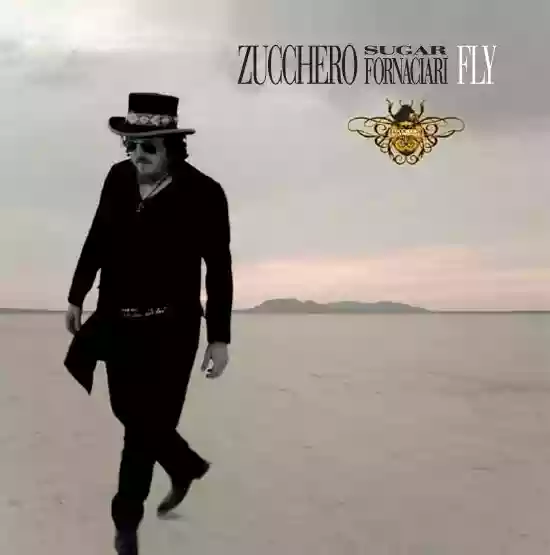
With "Fly," Zucchero soars among airy melodies and tracks, all of which are of broad breath and catchiness.
The (captivating) CD is inserted into the stereo, and in the end, one is left with a question: if Zucchero was capable of all this, why didn't he do it before? "Fly" is a record capable of completely erasing the past, confirming that a true artist must view a work as a momentary snapshot and the fruit of a particular moment. From "Spirito Divino" we moved to "Bluesugar," from "Bluesugar" to "Shake," and now from "Shake" to "Fly." It is really difficult to draw even a single parallel among these four records.
'Bacco Perbacco' represents the little link between Zucchero made of rhythm and blues and exuberance, and the Zucchero of today. 'Fly' is indeed pure poetry, a continuous "soaring above the parts" (or better "above the clouds"), with the absolute value of love and faith as the true leading theme of the album. Musically, Zucchero now relies on very varied harmonic progressions, flooding every track with continuous chord changes, and consequently, the singing is always ready to surprise and make continuous changes (it's no coincidence that we have three tracks where falsetto is used). There is no longer that improvisation and that longing for America of the past. Just as Sugar leaves the Italian producer Corrado Rustici after twenty years of continuous collaboration and manages to work with Don Was (the producer of the Rolling Stones, Dylan, Springsteen), surrounding himself with musicians of pure English and American Rock tradition, the Emilia artist rediscovers his true Italian roots. And in these songs, there is his history and his feelings, inserted in a harmonic framework typical of the European musical tradition. Previously veiled feelings, but now revealed.
And the Zucchero famous for innuendos today lets himself go with words like "Too much loyalty kills me," "How are you and how are you, I thank heaven, I don't know," to quote the track co-written with Jovanotti. Speaking of guests, it is no coincidence that the only contributions are from Fossati (in the masterpiece "È delicato") and Cherubini. In the end, "Fly" almost leaves the substantial technical comments that emerged from the analysis of past records ("Bluesugar" above all) in the corner, leaving space for the emotional vein. Because "Fly" is one of those albums with naive, pure, sweet, and disenchanted music. Discovering this romantic soul, these texts that could participate in literary poetry competitions (while still remaining, however, on tangible themes, without too many idealizations), this voice so warm and clean is truly disconcerting. Reacting spontaneously is a natural consequence, in the face of the smile of "Fly," which is that of a child. The impression is that this "Fly," piracy and people's wallets permitting, will reach places it hadn't reached before, drawing attention around Zucchero from an audience that in recent years was lost in the midst of experimentation and very intense and substantial texts.
Final note, on "Let it Shine": the track, dedicated to New Orleans, is the only track of true "black" origin, where the sadness for the tragedy caused by Hurricane Katrina hits the stomach right from the start, but it devours us at the hypnotic cry of a children's choir that - it becomes clear after reading the entire text - represents the angels of the kids "seen diving into the Mississippi, never to return, never to return...". Zucchero recalls what New Orleans meant to him "I saw without light Sundays of gospel in the air and bright days only of you, only of you, love knows... ... and everything shines," to then explode in a "it's all here... yet it's all here...": the angels respond "Let it Shine, shine, shine," Zucchero closes the track in a succinct manner. A highly successful piece, with a mystery and a darkness that unleashes emotions.
The CD closes with "E di grazia plena," a soft classical composition made of harmony laid on a piano and a low and deep voice by Zucchero, who, accompanied by a cello, cries: "I have nothing, but I have a lot, she alone and mine but of grace plena my fortune and true Madonna hallelujah the soul shines and does not stop anymore."
"Fly" is an example of how you can totally change the cards on the table while still remaining true to yourself.
Loading comments slowly
Summary by Bot
Zucchero's album Fly marks a significant evolution in his music, blending poetic lyrics with diverse harmonic progressions. Moving away from his earlier improvisation and blues roots, this album highlights love, faith, and his Italian heritage. Produced by Don Was with select guest artists, Fly embraces emotional clarity and maturity. The touching tribute to New Orleans and the closing classical piece add depth, making Fly a heartfelt and surprising artistic statement.Tracklist Lyrics Videos
Zucchero
Adelmo Fornaciari (born 1955, Roncocesi) is an Italian singer-songwriter known by his stage name Zucchero. He rose to prominence in the 1980s with blues‑influenced pop, major albums such as Blue's and Oro, incenso & birra, and numerous international collaborations.35 Reviews
Other reviews
By Emiliano
“Fly has the sweet taste of maturity, perhaps finally reached.”
“The album globally struggles to find its identity, suspended between the glories of the past and the normality of the present.”
By Birbabirba
Every single rhyme, verse, and chord is an anthem to joy.
A record full of love is the most appropriate definition for this work with a pinch of Zucchero’s typical glee and irony.
By hypnosphere boy
"Zucchero is objectively a composer of music and lyrics, with a world-level talent and competence in the field."
"Mixing 'high and low,' good taste, and bad taste... manages to sound like the possible closure of a cycle, like a 'work in progress.'"
