
 •
Rating:
•
Rating:
THE REVIEW
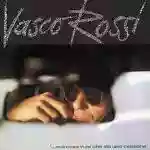
Perhaps a stance, perhaps a sarcastic invective, perhaps an ironic citation. Perhaps approval and perhaps a protest. Perhaps disapproved rhetoric or perhaps a manifest rebellion.
Who knows what Vasco Rossi had in mind when he had to give a title to his first LP.
In the midst of the '70s, and more precisely in the triennium '75-'78, the young Vasco, just over twenty, was busy with a playboy life on the outskirts, composing his first songs, and managing the legendary Punto Radio (whose death, and that of all free radios, he would avenge some years later in "Ultimo domicilio conosciuto".
Against the boredom of Zocca and the Emilia discos, he puts his energy into listening to rock and the early songwriters: and so, by starting to write the songs that would end up on his first album, he mixes rock exasperation, love adventures, and political and social engagement. This is how "...Ma cosa vuoi che sia una canzone" comes to life. The hybrid that emerges from the blend of the aforementioned themes certainly represents a unicum in the Italian musical panorama of the time, even though Vasco's way of singing in certain aspects reminds one of Rino Gaetano.
But Vasco is less ironic, more harsh, and he does not use clichés, nursery rhymes, and apparent nonsense on which Gaetano played. The boredom and the outcry, the fear of a normal life and daily routine are immense and explode in the desire for a "reckless life", in the hard and warm voice, sweet and aggressive, moved and ironic, but always sincere, only capable by that "ordinary guy, one of many young people, accidentally ended up on stage".
Gaetano Curreri had the task of "dressing" the eight songs of the album, a task carried out in a minimally excellent manner; just listen to "La nostra relazione": many instruments are used, but without sacrificing emotional impact, and even increasing its spasmodic strength, despite the simplicity of the harmonic loop on which the song is built, the story of an exhausted love and the fear of letting go, to "just live / in the same bed / partly out of habit / and perhaps also partly out of spite".
I don't know if it's the lack of authors like Vasco today, or the shortage of arrangers and musicians of Curreri's caliber (or if both categories are extinct); but a song predominantly built on two chords like "...E poi mi parli di una vita insieme" is immensely interesting especially when compared to the formless masses of cold music of today's songs, with their unison instrument arrangements; while Curreri manages to make each instrument stand out, despite using many (in this respect, the bass part is interesting to listen to), and Vasco launches into the declamation of a series of verses that hardly fit into the rhythm of the metric, reminding us, especially at the end of the song, of Rino Gaetano's "Sfiorivano le viole".
"Silvia" and "Tu che dormivi piano (volò via)" are two songs, rock, but also delicate, born from the observation of the female universe studied in Vasco's occasional partners, with interesting Moog solos while the lengthy "Jenny è pazza" reeks of social commitment, denouncing the marginalization affecting the weaker members of society, and the treatment reserved by society for them; accompanied predominantly by piano and tormented electric guitars. Finally, after the honky-tonk piano – dry drum "Ambarabaciccicoccò" (a ferocious mockery of the man who, having failed to make something of himself, lives a banal life and finds refuge in the party) and the torrid "Ed il tempo crea eroi", there is a small gem "Ciao", a piece without singing, just piano, a melancholic farewell on seventh atmospheres, a lump in the throat and a nostalgic flutter of the heart.
A goodbye from Vasco to the day when an albachiara will finally rise.
Loading comments slowly
Summary by Bot
This review delves into Vasco Rossi's first LP, highlighting its blend of rock energy, social engagement, and personal storytelling. It praises the unique arrangements by Gaetano Curreri and the emotional depth of songs like "La nostra relazione" and "Jenny è pazza." The album is recognized as a distinctive and sincere outcry from a young artist navigating 1970s Italian culture. The album stands out for its raw voice, political protest, and departure from typical clichés.Tracklist Lyrics Videos
Vasco Rossi
Vasco Rossi is an Italian rock singer‑songwriter from Zocca (Modena), active since the late 1970s. Known as “Blasco,” he’s a central figure of Italian rock with enduring anthems and massive live shows.91 Reviews
Other reviews
By cacchione
The best track on the album is without a doubt 'jenny è pazza,' addressing the marginalization of the different.
This work is in my view a little gem, the rock turning point is just around the corner.
By GerryKing
"...what do you think a song is?" reflects the genuine desire to communicate emotion and youthful vigor.
"'Ambarabaccicciccoccò' is Vasco’s ironic masterpiece criticizing rigid beliefs while poking fun at himself."
By DDQ
Vasco eliminates the overabundance of material and goes straight to the essence, freeing himself from pleonastic circumlocution.
This '...ma cosa vuoi che sia una canzone...' might seem like a raw work, at times perhaps a bit rhetorical and disillusioned, but at the same time wrapped in a genuineness, in a fascinating naivety.
