
 •
Rating:
•
Rating:
THE REVIEW
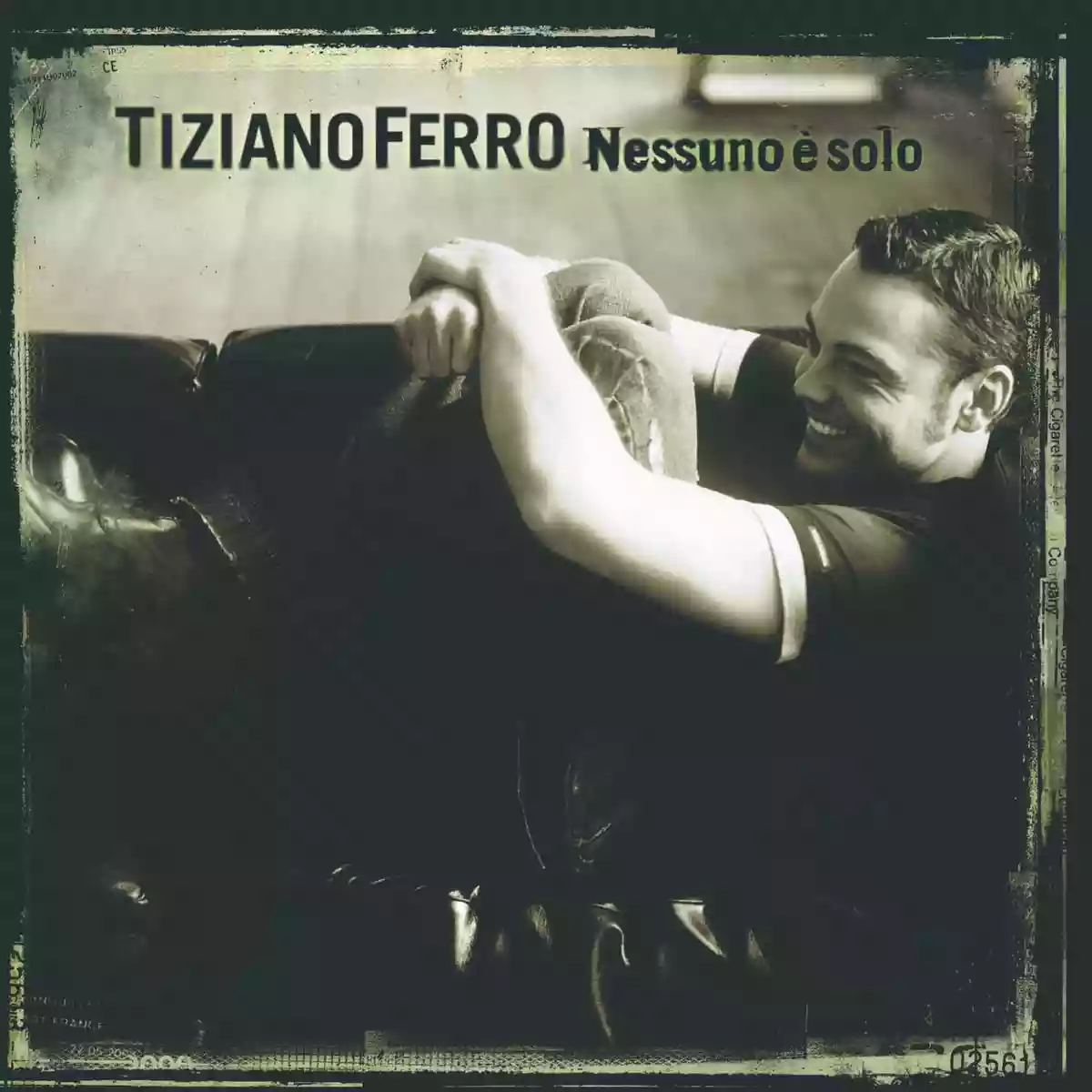
NESSUNO E' SOLO (2006) 5.5/10
How long has it been since I last listened to this album? Ages. I remembered it being better: hearing it again now, it seems to have aged terribly. Compared especially with Tiziano Ferro’s previous two albums (both very, very good, especially “111”, 2003), this “Nessuno è solo” feels like at least three steps backward. The main reason is the choice to abandon r&b in favor of a more commercial pop sound, which, obtorto collo, turns out to be more predictable, despite the usual Canova in production. Let’s be honest: here the Ferro-Canova duo clearly aimed for the hearts of teenage girls (Tiziano hadn’t come out as gay yet, and all the songs on the album tell stories—lucky or not—in which the protagonists are a man and a woman), helped along by a song used in the soundtrack of “Tre metri sopra il cielo” (goodness…), and it’s fair to say the goal was achieved. Sales records (almost half a million in Italy alone, one and a half million worldwide), teenagers in ecstasy, and loads of “piacioneria." What suffers is the album’s fluidity (very, far too fragmented) and the song quality. If it weren’t for 2-3 truly successful tracks, we’d be talking about a disaster—the kind of disasters Ferro would keep making in the following years (from 2011 on, he wouldn’t get a single one right until today, as he tries, struggling, to climb back up the charts way past his prime).
It’s no coincidence that the best tracks are the most “sbarazzini” (light-hearted), and the less interesting ones are the slow and whiny ones, even though slow and whiny would become Ferro’s signature style from here on out (how many ballads, all identical, will he write from here onwards?). Of course, the Italian music scene sees Ferro (just like Pausini) as the hero, since he’s one of the few Italians with a significant international market (especially in South America), but our hero stumbles, and between interviews, in Fabio Fazio’s (remarkably soft) studio, he makes an unforgivable gaffe by describing Mexican women as “donne che hanno i baffi” (“women with mustaches”; the Mexican market wouldn’t forgive that). And, somewhat bravely, he chooses “Stop! Dimentica” as the lead single, an energetic track reminiscent of the old days, to which Ferro gave an explanation regarding the controversial refrain: “...Il singolo è controverso […] però lo ritengo coerente con la mia personalità e mi piace l'idea di iniziare un nuovo lavoro con qualcosa di prorompente […]...” Yes, all well and good, but the accusations of plagiarism were harsh: it’s very similar to “Fade to Grey” by Visage—true, but, at least for me, I can’t blame him for it; otherwise we should hang Zucchero at the very least (as a figure of speech, of course). When he just wants to entertain, it must be said, he’s irresistible: “E Raffaella è mia” deserves more than one listen (as Ferro told Repubblica: “...La Carrà è un modello per tutti […] In un mondo dove l'approssimazione regna sovrana, lei è una delle poche serie professioniste capace di nutrire sentimenti umanissimi come la galanteria, l'educazione ed il rispetto […]...”). He even comes up with a classy ballad, maybe not quite like “Non te lo so spiegare”, but refined: “Ed ero contentissimo” (he even mentions Amsterdam, for once not just the usual Paris, London, New York, Rome...).
The rest is a half flop (in terms of quality). Apart from the three aforementioned tracks (which bump the album up to a 5.5 but not more—6 would be too generous), there’s little to save: it opens with the cryptic “Tarantola d’Africa”; the other ballads are more clichéd than the last, starting with the famous “Ti scatterò una foto”, which always reminds me of Scamarcio and Moccia (and that’s not a fond memory, considering I was 21 at the time and already a bit too old for syrupy stories like “Ho voglia di te”); “E fuori è buio” is a copy of a copy already copied from a much-copied song (with lyrics, moreover, that are incomprehensible: what does “...Ho collezionato esperienze da giganti/ho collezionato figuracce figuranti” even mean?), and so on with the rest, though “Già ti guarda Alice” has something about it I don’t mind, though I never know what. As for a semi-symphonic track like “La paura che...”, it really could have been left out: it’s four minutes of whining that feel like twice (or even three times) as long. The duet with Biagio Antonacci (already…) “Baciano le donne” ended up, rightfully, forgotten, and that’s where it should stay. In short, by contradicting his r&b roots, Tiziano Ferro dulls his explosive energy and turns toward a more classically Italian sound, less incisive. As if he were afraid of losing the over audience (who, anyway, still saw him as a kid). Or maybe he had simply run out of ideas; that’s possible.
Loading comments slowly
Summary by Bot
The review expresses disappointment with Tiziano Ferro’s album 'Nessuno è solo.' It highlights shortcomings in artistic direction and musical innovation. The reviewer expected more from such a celebrated artist. Listeners may find the album lacking compared to previous works. Overall, the album is seen as one of Ferro's less impressive efforts.Tracklist Lyrics
01 Tarántula de África (04:40)
02 Te tomaré una foto (04:33)
03 Y estaba contentísimo (04:12)
04 Stop! Olvídate (03:48)
05 Y está oscuro (03:42)
06 Despidiendoteahogo (03:43)
07 Y Raffaella es mía (03:15)
08 El miedo que… (03:59)
09 Baciano le donne (feat. Biagio Antonacci) (03:08)
10 Già ti guarda Alice (04:07)
12 Mi credo (feat. Pepe Aguilar) (05:11)
Tiziano Ferro
Tiziano Ferro is an Italian singer-songwriter and producer from Latina, Italy. He debuted in 2001 with the hit single Xdono and the album Rosso relativo, blending pop and R&B. He has released Italian- and Spanish-language records and achieved major success across Italy and the Spanish-speaking world.19 Reviews
Other reviews
By Me Myself & I
The album is very acoustic, sometimes reminiscent of sixties or ’80s atmospheres, it is dominated by acoustic guitar and rarely by electric guitar.
True genuineness is the suitable adjective for the songs; truth and simplicity are the only things people who are lonely need.
By Victor
"The album’s most fitting adjectives are 'true' and 'authentic', all with the significant vocal abilities that Tiziano has always demonstrated."
"Tarantola d’Africa is a jewel for its lyrics and music, with a truly well-crafted and airy arrangement."
By Birbabirba
Tiziano Ferro is an excellent, celestial singer-songwriter who, with one of the most beautiful voices ever heard, gives us 11 pieces of heart and songwriter’s music.
Nessuno è solo is an absolute masterpiece, comparable to the Beatles’ albums in a certain sense.
By MAZINGA
It is so explicit, without barriers or façades of convenience, revealing a guy who is not just a pretty face with a beautiful voice and a rogue smile, but also a person full of fragility and insecurities.
If there’s one thing this beautiful album is full of, it’s the sense of loneliness.
