
 •
Rating:
•
Rating:
THE REVIEW
"Abbey Road" is an overrated work. And as the years go by, historical perspective confirms this impression.
Year 1969. Albums like "In the Court of King Crimson", "Happy Sad", and "Ummagumma" were being released. Innovation, elliptical art, progression, a culturally defining or at least representative imprint of an era; with poetic and technical characteristics of undeniable relevance. In this sense, "Abbey Road" is just an album that represents its authors at the peak of a certainly dazzling career, capable of backing every gesture with a mystical aura that confuses ideas and sugarcoats any pill.
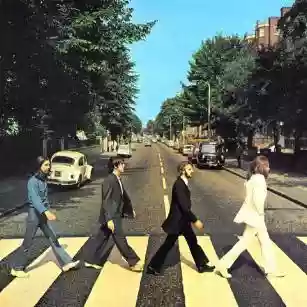
What is so brilliant and epochal about "Abbey Road"? An album more famous for its cover than for the songs it contains: indeed, try asking a hundred people to name a track from it, and only a small percentage will be able to name the most well-known titles (Here Comes the Sun, probably, and Come Together). Conversely, the crosswalks of the street with the same name are known even to mosquitos. Musically, a summary of the Beatles' ability to create a style, a trademark; a summary of the McCartney-style song form and the various modes of singing (and playing) that in the end had nothing exceptional, even setting aside King Crimson and Pink Floyd for a moment.
If we consider that "The Velvet Underground & Nico" and "The Piper at the Gates of Dawn" came to light two years before... why is "Abbey Road" universally considered one of the most beautiful albums in rock history?
Of course, beauty or the intrinsic lyrical value of a work is not measured only by certain structural characteristics. But even within Lennon and company's discography, there have been more substantial and markedly new highlights. And if it weren't for that gem of "I Want You", the album in question would be a collection of ballads that rework, adjust, and definitively fix the group's global style (especially of the two main authors) to pass it on to posterity as a kind of testament. Inside, you'll find the palettes already used in "Sgt. Pepper" and "Revolver", well-hitched formulas that wink at various types of admirers, but first and foremost the cult iconography - both manifest and subliminal - of the Fab Four that cloaks everything in monumental and indestructible seductiveness.
Frankly, I find little appeal in fanciful ballads that involve the octopus's garden, or the stories of Mr. Mustard... both from a narrative and sound perspective. Today more than ever, especially considering the discotheque has since filled with masterpieces compared to which "Abbey Road" is a musical surrogate of pop-blues reminiscences and pseudo-psychedelic nursery rhymes.
I know well that I am dissonant compared to the average: have you prepared the rotten tomatoes to throw at me? Go ahead. I have only expressed my opinion. And if I have to listen to a Beatles album, I pull out "Pepper" or "Revolver".
Loading comments slowly
Summary by Bot
This review argues that The Beatles' Abbey Road is overrated and lacks the innovation present in other 1969 albums like those by King Crimson. It suggests the album is more notable for its iconic cover than the music itself, which is viewed as a summary of Beatles' earlier styles rather than a groundbreaking work. The author prefers albums like Sgt. Pepper and Revolver as more representative of the band's innovation. Overall, Abbey Road is seen as a polished but less substantial testament to the band's legacy.Tracklist Lyrics Videos
The Beatles
The Beatles were a British band formed in Liverpool in 1960 by John Lennon, Paul McCartney, George Harrison and, from 1962, Ringo Starr. They revolutionized popular music through songwriting, studio innovation and cultural impact, releasing landmark albums from Rubber Soul and Revolver to Sgt. Pepper’s, the White Album and Abbey Road before disbanding in 1970.173 Reviews
Other reviews
By rob
Paul is the only one differing from the other FAB 4, walking barefoot with the right foot leading—clues to his alleged death.
Abbey Road is dominated by Paul’s particular state of grace, especially in the final majestic medley that builds a sober but flashy mosaic.
By pinkoSpallino
This album is mainly famous for its cover, which portrays the 4 boys from Liverpool as they were heading towards their futures.
In short, a great album that demonstrates how this group created unforgettable things.
By Jack Darko
"Abbey Road is the true masterpiece of rock music, it is certainly the album that has influenced rock music the most."
"The track 'The End' is of astonishing beauty because it mixes a sort of primitive punk, rock, and a beautiful slow bit at the end. Absolute masterpiece."
By Braindamaged
Abbey Road was released, the last (but not last) of the 12 albums published by the Beatles.
Come Together has become a generational anthem and is electrifyingly beautiful.
By enbar77
"Abbey Road, despite everything, is a work of overwhelming charm, rich with exceptional pieces of pure rock."
"In the end the love you take is equal to the love you make."
