
 •
Rating:
•
Rating:
THE REVIEW
"Abbey Road" is probably the most mature album by the Beatles. For many, it is even superior to Sgt. Pepper's, although I continue to state otherwise. Nothing to take away from the former, but as tedious as it may seem, Sgt. Pepper's is Sgt. Pepper's.
The album, which takes the name of the famous street where the iconic studios are still located, was born in a rather peculiar period for the Fab4. A period overshadowed by each member's desire to escape, the possibility of pursuing solo careers, too many poisons stirred up by Yoko "Cobra" Ono, by now hated by everyone except the confused Lennon. A period also marked by the flurry of rumors about Paul's alleged death. The end of the Beatles is near, but with a display of mighty fireworks.
Abbey Road, despite everything, is a work of overwhelming charm, rich with exceptional pieces of pure rock, hard, dazzling, at times corrosive, which alternate with the sweetness of velvety strings and guitars played with absolute simplicity. Remarkable vocal performances and exceptionally crafted musical accompaniments clash without any violence with sorties of noise skillfully chiseled.
An excellently crafted overture. "Come Together" is a great piece of rock music with very few rivals, starting from Lennon's metallically fragmented voice, singing lyrics based on his famous nonsense, and the fine and essential drumming accompanying simple yet terribly effective electric guitar solos that help fortify the song's immense structure. McCartney's bass dances, offering impressive riffs, also found in the immensely valuable "Something", second only to "While My Guitar Gently Weeps" in my opinion.
The voice of the lamented Harrison is alluring, at some points so sweetly thorny that it touches your soul, as is the electric guitar interlude that highlights the song's lightness. It then transitions to a playful phase, a divertissement phase with its benevolent influence on the album's body. "Maxwell's Silver Hammer" and the second/last song written by Ringo Starr, "Octopus's Garden", flow pleasantly, interlaced by the powerful "Oh, Darling!", vocally taken by McCartney from Lennon. Better this way, in my view. If John had sung it, with his slightly more nasal tone that tends toward a guttural sanguine quality in the higher stages, it wouldn't have had the same effect. Paul's clear voice, explosive in its tenor escapades, possesses the right timbre for an interpretation I judge exceptionally powerful.
Here comes "I Want You", another excellent point in the album. Rock with an acidic tone, suitable for Lennon's voice (refer to the previously mentioned discussion), extraordinarily effective bass lines, and guitars initially caressed in the interludes and then pleasantly hammered in a resonant final reverb, fused with a sulfurous and destructive hiss, granting power to a song of strong intensity.
Normalcy returns, so to speak, as it reaches very high peaks with "Here Comes the Sun", by a Harrison in a state of grace, who offers us a song of absolutely engaging freshness and essentiality. The graceful coils of his voice, already evident in "Something", envelop the listener's ear, creating an important disorienting effect.
"Because", skillfully traced over a piece of classical music (perhaps Beethoven) and cleverly reversed, is another atypical track (see She's Leaving Home), accompanied only by voices and a guitar/organ/harpsichord (forgive me) of great emotional impact. Then the second divertissement is born, translated into a medley, the first, which includes four short pieces quite effective both musically and vocally, except for "Sun King", which appears melodically interesting but marked by an absolutely useless text. The second medley will be found written in history books. "Golden Slumbers/Carry That Weight/The End" needs no introduction, much less mine. From sweet and touching airs to boisterous and gracefully invasive choruses, concluding with a phrase born from a mother of philosophy and a father of wisdom. Before listening to the true farewell of the Beatles, where "in the end the love you take is equal to the love you make," savor the 1.21-gigawatt sonic discharge of the Fab4, and we will discuss it further. "Her Majesty" may have been forgotten by Geoff Emerick, but it doesn't matter.
A colossal rock work that remains, in my view, glancing at Sgt. Pepper's from a slightly, almost imperceptibly lower step.
Loading comments slowly
Summary by Bot
Abbey Road showcases The Beatles at their artistic maturity during a turbulent time for the band. Packed with remarkable rock songs and poignant vocals, it balances hard rock with tender melodies. The review highlights individual performances and the album’s lasting impact, positioning it just below Sgt. Pepper's in greatness. Its iconic medley and powerful closing tracks demonstrate The Beatles' enduring brilliance.Tracklist Lyrics Videos
The Beatles
The Beatles were a British band formed in Liverpool in 1960 by John Lennon, Paul McCartney, George Harrison and, from 1962, Ringo Starr. They revolutionized popular music through songwriting, studio innovation and cultural impact, releasing landmark albums from Rubber Soul and Revolver to Sgt. Pepper’s, the White Album and Abbey Road before disbanding in 1970.173 Reviews
Other reviews
By rob
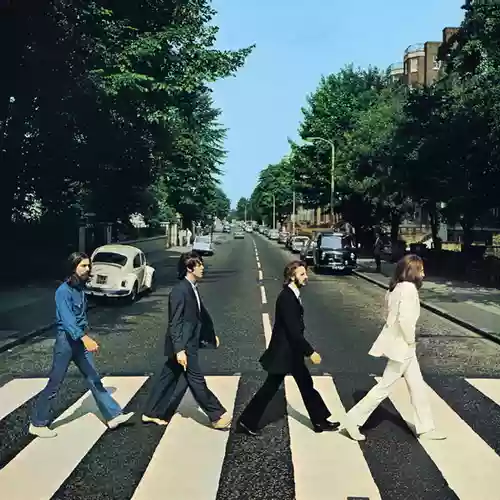
Paul is the only one differing from the other FAB 4, walking barefoot with the right foot leading—clues to his alleged death.
Abbey Road is dominated by Paul’s particular state of grace, especially in the final majestic medley that builds a sober but flashy mosaic.
By pinkoSpallino
This album is mainly famous for its cover, which portrays the 4 boys from Liverpool as they were heading towards their futures.
In short, a great album that demonstrates how this group created unforgettable things.
By Jack Darko
"Abbey Road is the true masterpiece of rock music, it is certainly the album that has influenced rock music the most."
"The track 'The End' is of astonishing beauty because it mixes a sort of primitive punk, rock, and a beautiful slow bit at the end. Absolute masterpiece."
By Braindamaged
Abbey Road was released, the last (but not last) of the 12 albums published by the Beatles.
Come Together has become a generational anthem and is electrifyingly beautiful.
By whereismymind
Between this record and any other, there is a chasm not to be found in the individual songs but in the magic and surreal balance of the whole.
With side B of Abbey Road, music reaches the top and from that moment on, it can only descend.
