
 •
Rating:
•
Rating: THE REVIEW
The Queen made their debut, discographically, in 1973 with the self-titled album that did not achieve much sales success: Roger Taylor, the band's drummer, in an interview once said that "Queen I" was a complete crash, a total failure and that there was great disappointment due to the little acclaim the album received.
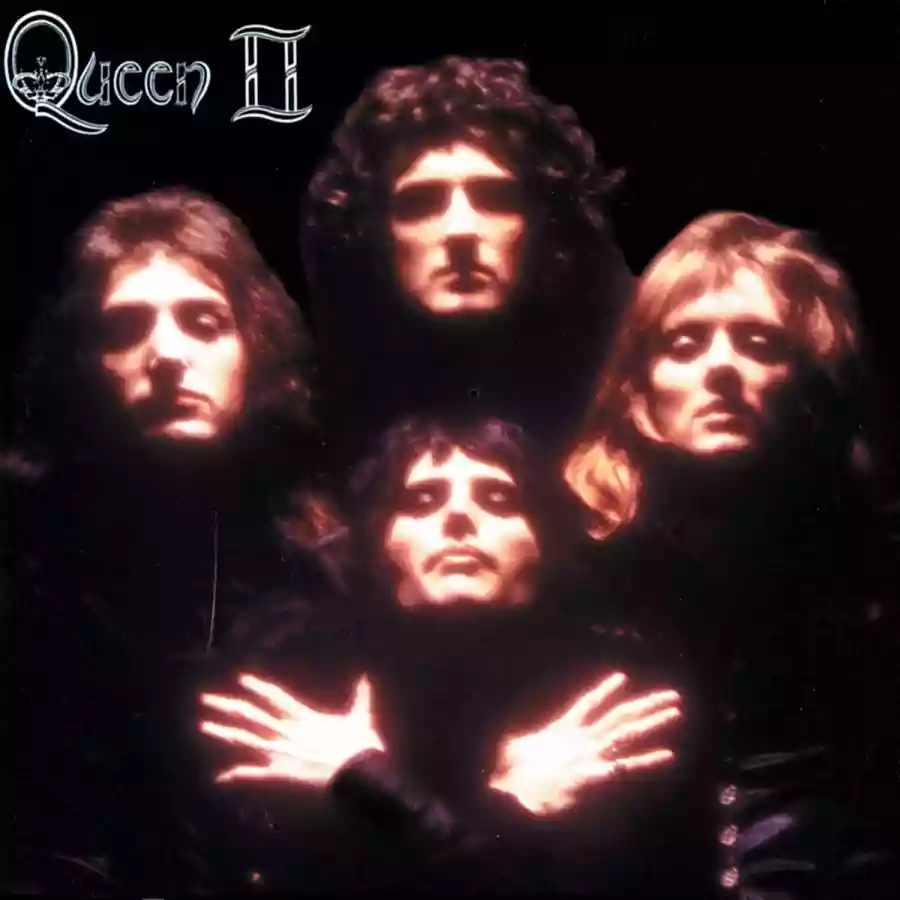
But the London band did not get discouraged, they didn't give up their dream of greatness, so they returned to the studio with new ideas to turn into music. The guys are adventurous, they don't hold back and use their time wisely, producing what I believe to be their best songs, the very same songs that would end up, in 1974, on the album "Queen II". Their dedication to studio technique is evidenced by the great artistry and compositional beauty of the tracks on the new album. Divided into White Side and Black Side, "Queen II" is an ambiguous masterpiece with multiple nuances, an admirable blend of styles, perfect in arrangements, structure, and the fluid flow of the music.
There is a gap between White and Black Side, as the titles suggest: the first side is more pure, more "romantic", bright, full of a desire to live and love. They can be defined as progressive "Father to Son" and "White Queen (As It Began)", glam - hard rock rides, typically romantic, full of emotion.
"Some Day One Day" is negligible compared to the others. To close the White Side, comes the peremptory "The Loser in the End", the only hard rock composition by Roger Taylor clearly in contrast with the previous compositions signed by Brian May, the band's guitarist.
The best is yet to come!
With "Ogre Battle", the aggressive side of the album opens, the more ambiguous, darker, more perverse side of Queen II.
Entirely composed of tracks written by the charismatic leader Mercury, the second part of the show is filled with distinctly hard rock sounds, with some concession to the soft rock of "Nevermore" and "Funny How Love Is".
The third to last track on the setlist, "The March of the Black Queen", is superb, a masterpiece within the masterpiece, one of the best compositions by Queen, if not the best, a statement of intent, a concentrate of varied styles with superb overdubs and assemblies, the piece that can be defined, without any doubt, as progressive.
To close the pretentious "Queen II" appears "Seven Seas of Rhye", a piece Freddie Mercury would always be proud of, a piece solely his, by his own hand, with that wonderful and captivating piano solo, fast and engaging. The year 1974 is the year marking a step towards the complete maturation of the group on a musical level, maturation which will be said to be completed with "A Night at the Opera" the following year.
Loading comments slowly
Summary by Bot
Queen II represents Queen's artistic breakthrough after their debut album's failure. The album skillfully blends progressive, glam, and hard rock styles into two contrasting sides. It showcases outstanding studio craftsmanship and memorable compositions, especially 'The March of the Black Queen' and 'Seven Seas of Rhye.' This album marks a key step in Queen's musical maturation.Tracklist Lyrics Videos
Queen
British rock band formed in London in 1970. Core classic lineup: Freddie Mercury (lead vocals), Brian May (guitar), Roger Taylor (drums) and John Deacon (bass). Known for genre-crossing albums and stadium anthems such as "Bohemian Rhapsody", and for legendary live performances (notably Live Aid 1985). Freddie Mercury died in 1991.143 Reviews
Other reviews
By 3poundsoflove
Queen II is indeed one of the albums to be rediscovered and considered as a true and legitimate masterpiece of rock with dark and sepulchral tones.
The March of the Black Queen encapsulates all, I say all, the band’s poetics, in a single, elusive, infinite song.
By Peppe Weapon
One of the most underrated rock works in history.
Those who hate Queen should listen to this album.
By CRITIC-MUSIC
Freddie was and still is 90% of the band’s success.
‘The March of the Black Queen’ is, in my opinion, the most beautiful song in the history of rock!
By Walterstarman1
Queen II is one of the most well-crafted and creative albums ever.
Explosion of guitar, explosion of voice, triumph of choruses. The closure is melancholy 'As it began'. Goosebump-inducing song, excellent piece.
By Starblazer
"'Queen II' is a record full of hard rock and baroque, surreal, and fairy-tale atmospheres."
"I consider it Queen's masterpiece, even more than 'Bohemian Rhapsody.'"
