
 •
Rating:
•
Rating:
THE REVIEW
Pink Floyd is one of the most well-known musical groups of the last forty years and, as is well known, they have steered rock from the acidic psychedelia of the origins to progressive territories, ultimately achieving, by the late '70s, a personal synthesis between symphonic rock and avant-garde music, while still crafting the production and sound in such a way as to make their albums easily accessible to large segments of the youth and beyond. It's no coincidence that their albums from the "Dark Side of The Moon" period to this "The Wall" became best-sellers, and in some cases, even long-sellers.
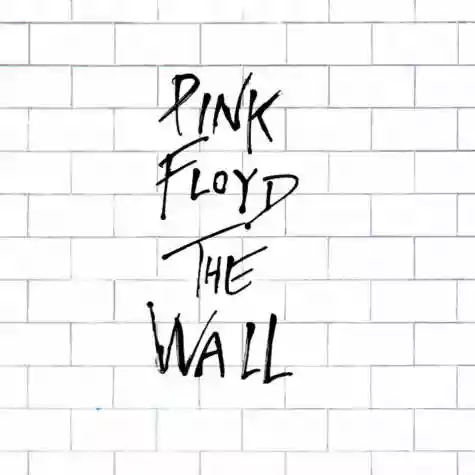
The Wall is perhaps the most popular and renowned album by the group, although not the best-selling, and it greatly contributed, also thanks to the film of the same name by Alan Parker and the concerts of the leader and bassist Roger Waters during the fall of the Berlin Wall, to bringing the band's language and poetics beyond the confines of the more or less narrow circle of music enthusiasts, to the point of becoming almost a news story.
It is a theme album, or Concept, in which all the songs are linked to each other in terms of lyrics, creating a single narrative fresco, and in which the music itself, understood as melodies and especially as arrangements, is compacted around themes that often recur, or otherwise atmospheres that give continuity to the entire (double) album.
I would prefer not to write too much on the genre and musical style, also because the album is well-known and already reviewed: if you listen to it and compare it to the group's earlier works, the sound has become much leaner and the textures of Richard Wright's keyboards are absent, yielding to a more compact and cohesive sound that revolves around the bass-drums rhythm, which sometimes adopts almost disco rhythms (Another Brick..., Run Like Hell) and the guitar interventions of David Gilmour, which stand out especially in some long solos (Comfortably Numb).
What is a substantial rhythmic and melodic poverty of the album is compensated by careful production that dramatizes the entire narrative saga and results almost in a theatrical production, thanks to a Roger Waters who often recites rather than sings, assisted in the more melodic phase by the more flexible voice of David Gilmour.
The aspect I wish to highlight is that of the narrated story, which broadly mixes the biographical events of Roger Waters (childhood, rise in the music world, resulting problems between drugs and marital dramas) and partly those of the ex-guitarist from the band's early years, Syd Barrett (alienation, progressive withdrawal from active life), in a kind of mirror game where the author's present, at the end of the '70s, is characterized by a physical, mental, and artistic dissociation from the rest of the world, almost echoing Barrett's dramas, who became mentally ill after years of psychoactive substance abuse.
The album is thus a sort of account of Waters' perdition, amidst memories of a painful childhood due to the loss of his father, the presence of an obsessive mother, inability to weave harmonious and lasting relationships with women, artistic alienation, disdain for the show biz, creativity crises, and above all, latent awareness of the risk. A commercialization of art, a planetary success, music reduced to consumer entertainment for the masses, leads the artist and the man to become nothing, in a totalitarian society.
Only a careful self-examination, in search of a truth that is probably that of Love in the highest sense of the word (Agape), can help the artist to tear down this wall. And, with the haunting words that conclude the album, "The ones who really love you /Walk up and down outside the wall/Some hand in hand/Some gathering together in bands/The bleeding hearts and the artists/Make their stand".
A difficult album, therefore, but one that nonetheless opens up to a not easily attained final hope, to a conciliatory vision that cannot but depend on abandoning drugs, perdition, and violence towards oneself and one's partner, from an idea of art as a form of consumption solely geared towards profit, which feeds on the value of Love, and probably some form of Faith that the Anglican Waters does not fully realize or define but appears latent in the musical sweetness and vision with which the album ends, an implicitly religious Afterlife.
Certainly an album recommended to everyone, therefore, even if for the younger ones it is advisable to frame the events with the help of an adult and understand that the path of perdition outlined by Waters is not a necessary passage to understand Good but is a problem of the singer, who certainly does not pose as an example to follow.
Those who are already familiar with the album - and I imagine the majority of people subscribed or reading this review - reconsider the work of Pink Floyd also from the perspective of the values expressed and the interesting path that, with humility and style, the group takes to free their lives from the weaknesses and perdition that destroyed the life of their friend Syd Barrett, giving themselves a second chance.
Loading comments slowly
Summary by Bot
This review highlights Pink Floyd's The Wall as a landmark concept album blending symphonic rock with a theatrical narrative focused on Roger Waters' personal and artistic struggles. It discusses the album's leaner sound, thematic depth, and lasting cultural impact. The reviewer emphasizes the album’s message of hope and self-examination despite its difficult themes. Recommended for all listeners, especially with guidance for younger audiences.Tracklist Lyrics Videos
Pink Floyd
Pink Floyd formed in London in 1965 and became a defining force in psychedelic and progressive rock. The classic lineage spans Syd Barrett’s founding vision, Roger Waters’ conceptual leadership, Richard Wright’s harmonic textures, Nick Mason’s pulse, and David Gilmour’s arrival in 1968, shaping their signature sound.237 Reviews
Other reviews
By charles
"This is not an album, but a true 'masterpiece'; that no one will ever remove this album from the foundations, the 'Bibles' of music history."
"'The Wall' is irremediably in each of us, and it always will be. After listening to it once, it will never leave us."
By bogusman
one of the most unbearable monstrosities in rock history
the final result is a dull and colorless hodgepodge of worn-out stadium hard rock, techno-instrumental appendages, second-hand disco music, classical-like wallpapers, and fake 30s cabaret
By AngeloLecce87
The Wall is Roger Waters' outpouring, developed between the loss of his father during World War II and the deterioration of his friend Syd Barrett.
The songs must be heard in the context of the album and not individually; small details like a baby's cry and warplanes make this album so touching.
By Francesco123
"Watching the film, it’s not just the eyes that are working, nor the ears: what is most affected is our imagination, our fantasy."
"What is The Wall really?... on one side, the surrender to what life offers us... on the other, the opportunity to give something to life... two things separated by a huge wall..."
By jimi
The Wall, for me, is the ultimate work I’ve ever heard capable of conveying emotions.
When you think that in this album, everything about solos has already been said, here comes Dave, who turns everything upside down, with superlative bends and accelerations that are terrifying.
