
 •
Rating:
•
Rating:
THE REVIEW
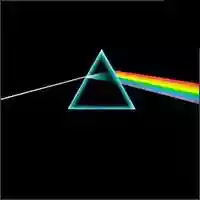
A few years ago, EMI celebrated the thirtieth anniversary of the release of the now mythical album: like a kind of black sci-fi monolith, a money-sucking black hole, this record, now in a CD box set, seems to have many lives, appearing and reappearing—a quirk it has already had in its eternal permanence on the American chart.
Amarcord that in the early eighties a blurb in Rockstar literally said that Dark Side had returned to the top 100: the Thriller of progressive rock then in vogue, multi-decorated, multi-billionaire, and... multi-hated. Yes, because it's a decisive pop turn for Waters and company, a premeditated conclusion of that much-desired commercial success, since the recording of Dark Side at that time cost as much as the budget of a small European state. No, Waters' crocodile tears on the subsequent Wish you were here don't convince me, crying over Barrett—but only Gilmour will endeavor to help Syd, never Waters—and he pities himself for the audience that doesn't understand him, feels like a prisoner of the Machine, and young people and old freaks of the 70s, stuffed with joints, are crazy about the Floyd's circus psychedelia. The Pink Floyd after Barrett are a big progressive band, and if in A saucerful of Secrets Syd's star sets, Waters' villain-slaying machine rises. More will be the farewell album to the old psychedelia, and even more so Meddle and Atom heart mother.
So, the most striking thing on Dark Side is the crystalline sweetness of Gilmour's slide guitars, the slick effects, the meticulous embellishment of impeccable choirs and saxes, with Waters' dark, pessimistic, materialistic lyrics. But have the freaks, ecstatic from trips to the space Hawaii evoked by guitars and keyboards, ever really heard the bassist's terrible lyrics? Lyrics that in this LP Waters highlights as it's the first time the lyrics are printed on one of their records.
The album's cosmogony begins with a rebirthing from a psychoanalytic session—the same will happen in The Wall—the heartbeat, then the dramatic screams of birth give the cue to Waters' existential paranoias, no longer the liberating screams of Piper's lysergic Indians but the hallucinated scream of Careful with that axe Eugene and Come in n.51 in Antonioni's film, Zabriskie Point.
The following Breathe is a potion of hemlock for breakfast, an apocalyptic metaphor without hope about the brevity of life: "Breathe, breathe in the air, don't be afraid to care... choose your own ground... Run rabbit run, dig that hole, forget the sun, long you live and high you fly... but only if you ride the biggest wave and run straight to an early grave." Cheerful, right?
Next comes On the run, a pompous electronic track with the VCS3 (an old analog synth wave generator) that had some success in advertising jingles along with the instrumental opening of Time, after yet another explosion (on Atom heart mother, then The Wall). The dances open with synchronized clocks and alarms—not as crazy as in Barrett's Bike—then Mason's tam-tam, the terrifying bass, the legendary Pink Floyd bass, the one that hits you in the stomach, and finally Gilmour's liberating voice and his epic solos.
With a "great variety of intentions," Time continues the Breathe conversation...Gilmour's cosmic blues guitar flashes break the song's rarefied atmosphere, and indeed with the gospel choirs we move to Breathe reprise—no, enough!—and we land in a church where the priest whispers magic spells.. and the angelic singing of A saucerful of secrets becomes the emphatic gospel of The great gig in the sky.
Side B: opens with Money, with the cash registers, perhaps foreshadowing the money the album would make, and Waters' funky-rock bass, which digs in with champagne socialist demagoguery: "Money is a crime they say, the root of all evil today, but don't be surprised if they kick you out when you ask for a raise" The contradictory fact is that then Pink's concerts and records were an apology for opulence, tickets with exorbitant costs, and of course, rock capitalism: the rumored purifying album of only sound effects supposed to follow Dark Side remained a legend.
Us and them is a delicate psychedelic waltz, in which war and capitalism are part of the world of corporals and us, we, as Totò would say, the ordinary men and the last hippies. Yet Wright's touch remains indispensable, and perhaps some blurred memory of the early albums when the keyboardist had more space.
Any cour you like is the blues interlude before Brain Damage, where there's said to be Syd's laughter, perhaps the album's most convincing episode, along with Eclipse, with its epic and martial gait...
"...all that you despise and all that you fight, all the present and all the future, every thing under the sun is in tune, but the sun is eclipsed by the moon." In other words, translating Watts' cosmic socialism hermeticism (!?), the reason sun is eclipsed by madness moon.
Read: Syd Barrett's Moon has taken us away with his creative vein from the ballrooms for the hit parades, and now we don't know what to do... I, Roger Waters, am the only one in the band who can bear its weight, and I will sometimes pretend to be crazy for the fame we have now achieved. My slow 4/4 will be the metronome of the new Enlightenment course even if sometimes I go mad.
One last note for genre enthusiasts: notice how Waters and Co. greedily eat oysters and champagne during the Dark Side registrations in the DVD with unreleased P.F. Live at Pompeii... The thing tickled a slightly naïve conversation I had with a guitarist friend of mine, Andrea Saolini, who lived in Australia during his adolescence: "Listen, André, but you told me that the first Pink Floyd album you bought was Animals when you still lived near my house in Montesacro (a district of Rome N.d.A)?"
-In fact, I was in Australia, but please let's not talk about Pink Floyd, those who criticized the system... if they are the system, they are the establishment. I'll tell you this episode.. we were smoking joints at a friend's house, Pink Floyd in the background, on TV there's a special, the VeeJay presents an interview with Roger Waters, for the Animals tour and there we see you... The journalist asks questions about the social stuff of Animals, and he, Waters, responding with a noble air while PLAYING GOLF, UNDERSTAND, with some billionaire big shots in a fantastic field!!? So I said, what the hell are you talking about, and we, like all these fools, are still there listening to them! I turned it off and left..." Sine ira ac studio, I would say.
Valerio Rivoli
Loading comments slowly
Summary by Bot
The review offers a detailed and nuanced perspective on Pink Floyd's 'The Dark Side of the Moon,' highlighting its lasting commercial success and its blend of progressive rock with mainstream appeal. It balances admiration for Gilmour's musical contributions with critical observations about Waters' lyrical pessimism and the band's contradictory role as both critics and beneficiaries of the music industry. The album's iconic tracks and rich thematic content are explored alongside reflections on its place in Pink Floyd's evolution and legacy.Tracklist Lyrics Videos
Pink Floyd
Pink Floyd formed in London in 1965 and became a defining force in psychedelic and progressive rock. The classic lineage spans Syd Barrett’s founding vision, Roger Waters’ conceptual leadership, Richard Wright’s harmonic textures, Nick Mason’s pulse, and David Gilmour’s arrival in 1968, shaping their signature sound.237 Reviews
Other reviews
By claudio12
THE DARK SIDE OF THE MOON is one of the top 5 most important albums in rock history.
An album that, more than an album, is undoubtedly a work of art in rock.
By AngeloLecce87
Madness, suffocation, excitement, fear, relaxation, adrenaline, and pleasure blend almost imperceptibly in this thing called an "album".
I gave this album 0 because 5 is too little.
By UcCaBaRuCcA
It would be a crime to listen to the album in pieces.
The texture of the music is rich in detail, and at the same time light, smooth, and it creates an environment, an atmosphere around you.
By Pepperism
I take my mind to distant places. And I feel the madness, finally.
Don’t tell me anymore that I am sane, the dark side of the moon changes everyone.
By AR (Anonima Recensori)
An album is great when it belongs to Led Zeppelin or Pink Floyd, or the Doors.
Amidst soft and unsettling tones, the journey unfolds of The Dark Side Of The Moon, which still ranks among the best-selling albums, 33 years later.
