
 •
Rating:
•
Rating:
THE REVIEW
I believe it is not easy to review an album that has marked the history of modern music, specifically Rock. One could write books and books about one of the most beautiful albums in the history of music in my opinion, but we will try to make a simple review, also attempting to convince and introduce some of you (who perhaps don't even know the band) to these psychedelic and, I would add, magical sounds.
So I will accept any criticism and advice. It could also be an additional reason for me to improve, as this is my third review and certainly of greater significance compared to the other two albums I reviewed (without taking anything away from the other two, equally important, being about Gillan and Allman Brothers Band). "The dark side of the moon" is part of, like some albums by the Beatles, Led Zeppelin, Deep Purple, The Doors, the history of rock music.
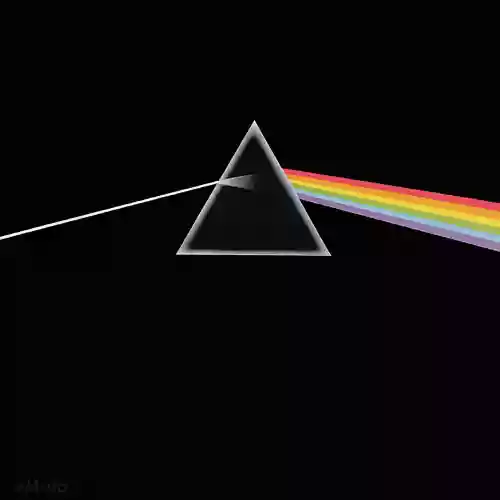
"The dark side of the moon" (literally "the dark side of the Moon") was released on March 24, 1973, and is one of the best-selling albums in the history of music: thirty-three years after its official release, it has sold over forty million copies and remained for 724 weeks (almost 14 years!!!) in the Billboard 200 chart of the American music magazine of the same name.
Syd Barrett (the singer of the band) has now left the band to embark on a one-way psychedelic journey (yes, curse that drug!!!). Remaining are David Gilmour (vocals, guitars, and synthesizer), Nick Mason (percussion), Richard Wright (keyboards, vocals, and synthesizer), and Roger Waters (bass, acoustic, vocals, synthesizer, and author of all lyrics and the true leader of the band).
The album is a concept album about the alienation and schizophrenia of contemporary society, with Death as the real and looming background.
- Speak To Me-Breathe In The Air : "I've always been mad, I know I've been mad, like the most of us... it's very hard to explain why you're mad, even if you're not... (Nick Mason).
The track flows into "Breathe", a true gem of sonic grace, where the slide guitars of an extraordinarily emotive David Gilmour shine and are absolutely enchanting in the magnificent vocal parts.
- On The Run: This piece was recorded at Abbey Road studios. Entirely instrumental, it's an "electronic" piece made with synthesizers. Hurry, fear, and anxiety are very "present" in this track.
- Time: Time is perhaps one of the most famous tracks by Pink Floyd. The introduction of the track is as famous as ever: a ticking of clocks interrupted by the thunderous sound of alarms and pendulums. Excellent guitar solo by David Gilmour. The track is closed by the phrase: "The time is gone, the song is over, thought I'd something more to say..."
- The Great Gig In The Sky: Perhaps this is the best track on the album, certainly the most unusual episode. The credit is shared between the melodies of Wright (achieved thanks to light piano and Hammond cycles) and the excellent vocal performance of Clare Torry, a backing vocalist friend of Alan Parsons (the producer and engineer of the album who will receive a Grammy for "Dark Side"). Her voice is heartbreaking, enough to give the listener goosebumps.
- Money: Musically speaking, the track doesn't shine for originality, although history delivers it to us as one of the most popular songs not only of the Floyd but even of rock. But if it's not the music that surprises in this episode, it's the extraordinary mastery in managing and programming the sound effects composed this time of sounds derived from cash registers and coins dropped to the floor and assembled in sequence. In "Money," there is also an excellent sax solo by Dick Parry, which delights the listener.
- Us And Them: It was part of the batch of songs that Pink Floyd had prepared for Michelangelo Antonioni for the soundtrack of "Zabriskie Point." The director from our country did not fully appreciate the track in question. "Us and them" highlights Waters' socialist ideology that opposes in his lyrics "us and them," the rich and the poor. Waters questions the cynical attitude of modern society, guilty according to the bassist of isolating and marginalizing those who don't share its systems.
- Any Color You Like: A colorful interlude by synthesizers and the rock-blues notes of David Gilmour take us to explore the dark side of the moon.
- Brain Damage : Initially entitled "The dark side of the moon" inaugurates the final part of the work. In this song, there are evident references to their friend Syd Barrett.
- Eclipse: The album closes with this short track. And it is certainly an epic ending.
The album ends with an old and resigned voice: "There is no dark side in the Moon. Really it is all dark." Regarding "Dark side of the Moon" Roger Waters states: "The album is driven by emotions... there is nothing artificial or forced. I think this is one of the reasons for its longevity."
This music is within you, within everything you listen to or play today.
Thank you, Pink Floyd.
Loading comments slowly
Summary by Bot
This review celebrates Pink Floyd's Dark Side Of The Moon as a monumental work in rock history. It explores the album's psychedelic soundscapes, thoughtful themes on alienation and death, and individual track highlights. The reviewer emphasizes the album's lasting impact and emotional depth, praising the musicianship and production. A heartfelt invitation to new listeners to experience the magic of this classic.Tracklist Lyrics Videos
Pink Floyd
Pink Floyd formed in London in 1965 and became a defining force in psychedelic and progressive rock. The classic lineage spans Syd Barrett’s founding vision, Roger Waters’ conceptual leadership, Richard Wright’s harmonic textures, Nick Mason’s pulse, and David Gilmour’s arrival in 1968, shaping their signature sound.237 Reviews
Other reviews
By claudio12
THE DARK SIDE OF THE MOON is one of the top 5 most important albums in rock history.
An album that, more than an album, is undoubtedly a work of art in rock.
By AngeloLecce87
Madness, suffocation, excitement, fear, relaxation, adrenaline, and pleasure blend almost imperceptibly in this thing called an "album".
I gave this album 0 because 5 is too little.
By UcCaBaRuCcA
It would be a crime to listen to the album in pieces.
The texture of the music is rich in detail, and at the same time light, smooth, and it creates an environment, an atmosphere around you.
By Pepperism
I take my mind to distant places. And I feel the madness, finally.
Don’t tell me anymore that I am sane, the dark side of the moon changes everyone.
By AR (Anonima Recensori)
An album is great when it belongs to Led Zeppelin or Pink Floyd, or the Doors.
Amidst soft and unsettling tones, the journey unfolds of The Dark Side Of The Moon, which still ranks among the best-selling albums, 33 years later.
