
 •
Rating:
•
Rating:
THE REVIEW
Some time ago, a man collectively recognized as a sinner told me that madness is one of the natural components of human disposition, and I pitied him as he struggled to convert me to his doctrine, which had no other purpose than to justify his excesses. I wondered if it was right to place in such a radical perspective a concept so unknown to me. Madness. I realized I was lost. I tried to put order in my mind to understand the meaning of the term madness, but I clearly couldn't find a starting point for my research. I could have started by considering the main manifestations that involve the eclipse of reason, but then I realized that, like every dualism, rationality/madness could never transcend the relative. I was ashamed of the useless mechanics of my brain and opted for a much simpler reasoning: if rationality has the ultimate goal of guaranteeing a subject's well-being and if madness is its negation, then madness materializes in everything that directly leads to discomfort. Something had moved, even if this "something" was easily classifiable as scarce and questionable. I proceed anyway.
What behaviors are usually considered harmful by logic? Dropping acid is alienation or at least stupidity if there is no need for the individual to escape from anything; dedicating one's existence to provocation, with all the hypothetical physical and mental risks it entails, can be qualified as unconventionality, which is hardly mad at all if you consider that the march of time will render the unconventional pure everyday life, and the excuse of the generational conflict will trivialize any protest posed as nonconformity. Someone help me.
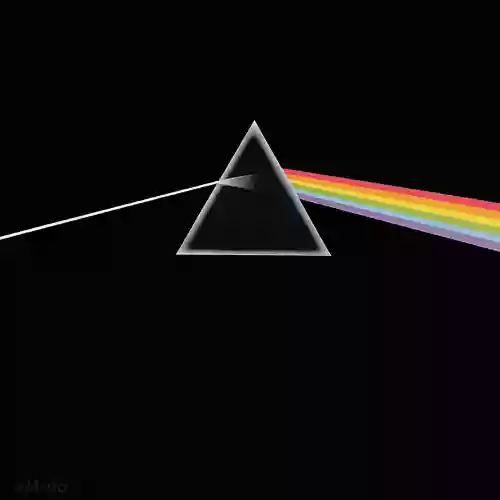
The beats of a human heart that open "Speak to me", the first track of the eleventh studio album by Pink Floyd, "Dark side of the moon" (1973) suggests a fundamental aspect hidden under apparent banality: madness has nothing abstract, it's a prerogative that belongs to us completely. I connect everything to the traced heartbeat reproduced in the booklet and I have confirmation. That man collectively regarded as a sinner was right, at least about this. Suddenly I stop. What assures me that they have certainties about madness? What assures me that their theories are truthful and that madness is not an experience full of subjectivity? I listen to the continuation of the first song and receive an answer: a perfect combination of the traditionality of the instruments and an experimentation that is still a paradigm for modern musical avant-garde over thirty years later, which does not produce compromised and confused results but, on the contrary, lives on its clarity. Those who managed to conceive this were far from mediocrity, distancing themselves from any academic expression of their being, of their thought. It was brilliant. A scream marks the boundary between the end of "Speak to me" and the beginning of "Breathe" and I understand that we're there: madness is losing sight of one's basic intellectual functions to surrender to a concentrate of primordial fears and anxieties. What induces us to this. Waters and Co. provide me with an explanation for this as well.
It is the passage of time ("Time") that the modern era has forced us to parcel. Every moment equates to a span of time whose purpose must be productivity. Producing means having something to offer, something from which to derive money, and from money to derive a status. "Time" is a slow and explicit composition, hence the absence of a text that gives way to a deafening sound of alarms and clocks preceded by a nerve-wracking ticking. "On the run" introduces what the group wants to affirm with "Time" and leads to the center of a splendid musical architecture structured on the pulsating pace of Mason's drums and sounds produced by a synthesizer that seem ahead of their time (Just so). Clear, effective, perfect. "The great gig in the sky" arrives and you are bewildered by the delicate sound of a piano and understand that madness also becomes unpredictability, but you forget about the speech for a moment, completely captivated by Clare Torry's performance, and before allowing the record to move on to its fifth track, you listen to it at least three more times (Psychiatry teaches us that one of the most common behaviors among "the living dead" is the obsessive routine of certain attitudes. A sign?).
We move on, and the emphasis is placed on the main goal of this marathon of the contemporary era: money ("Money"). The track is one of the most famous of Pink Floyd, even if among the other songs of the album, this one tends to pale since musically it is not particularly exciting. On the contrary, "Us and them" is a social manifesto that lashes out against the opportunities available to the wealthier classes, unlike the vast majority of the populace. Yet the same "Us and them" does not diverge from the tones that compose the album as it maintains that atmosphere at the limits of the dreamlike, despite the concreteness at the base of the tackled theme. The contingencies deriving from the social once again appear in "Eclipse", the last song of the album, which some have wanted to interpret as a reference to Syd Barrett: there is no room in the real world for those who cannot hide their more emotional side.
As can be clearly understood, "Dark side of the moon" is not just a journey through paranoia, the tension of modern times. It is a varied work both musically and conceptually, never losing sight of the recurring theme of the unknown, the void, the oblivion that serves as the thread that runs through the entire work.
Sublime.
Loading comments slowly
Summary by Bot
This review deeply explores Pink Floyd's Dark Side of the Moon, interpreting madness as a human condition and linking it to themes of time, anxiety, and societal pressures. The album's innovative music and timeless conceptual depth receive high praise, highlighting its lasting impact. Particular attention is given to standouts like 'The Great Gig in the Sky' and 'Us and Them.' The review concludes that the album is a varied and sublime masterpiece.Tracklist Lyrics Videos
Pink Floyd
Pink Floyd are an English rock band formed in Cambridge in 1965, known for pioneering progressive and psychedelic rock and for landmark albums such as The Dark Side of the Moon, Wish You Were Here and The Wall.236 Reviews
Other reviews
By claudio12
THE DARK SIDE OF THE MOON is one of the top 5 most important albums in rock history.
An album that, more than an album, is undoubtedly a work of art in rock.
By AngeloLecce87
Madness, suffocation, excitement, fear, relaxation, adrenaline, and pleasure blend almost imperceptibly in this thing called an "album".
I gave this album 0 because 5 is too little.
By UcCaBaRuCcA
It would be a crime to listen to the album in pieces.
The texture of the music is rich in detail, and at the same time light, smooth, and it creates an environment, an atmosphere around you.
By Pepperism
I take my mind to distant places. And I feel the madness, finally.
Don’t tell me anymore that I am sane, the dark side of the moon changes everyone.
By AR (Anonima Recensori)
An album is great when it belongs to Led Zeppelin or Pink Floyd, or the Doors.
Amidst soft and unsettling tones, the journey unfolds of The Dark Side Of The Moon, which still ranks among the best-selling albums, 33 years later.
