
 •
Rating:
•
Rating:
THE REVIEW
The one with the fire or The wrecks of memory.
This is an occasional piece of writing. The occasion is a memory, which, as always happens, comes from who knows where. It is a writing devoid of any rhetoric. Like when you dream of finding yourself naked, both embarrassed by what nudity brings: the lack of hidden compartments. Probably, it is also an ugly and banal piece of writing, like the life it mirrors. Like the life each of us often knows.
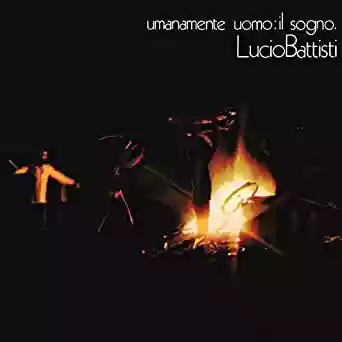
That said, there was a staircase, right in front of the house door. The eyes of the child I was saw a magical world in it. It was just a basement, with a kind of wine cellar. Sometimes, I insisted on going there to draw. There, a record player with a handful of records: the blue one (His Master's Voice), the one of Captain Hook (Sono solo canzonette), the one of Pinocchio (Burattino senza fili), and three records of Battisti: Il mio canto libero, La batteria, in contrabbasso, ecc. and the one with the fire. The one that, if I could have read, I could have called Umanamente uomo: il sogno.
"The one with the fire," I would ask. It must be strange, for a child, to prefer a record like that, oozing melancholies. Yet it was so. Not that I understood much, in fact. I would say I didn't understand a thing. I simply liked drawing with The one with the fire. That whistle, that last instrumental track, that hen in the middle of the yard.
And then the cover.
I hadn't listened to this record for decades. Just last night, by chance, I set foot in my inner attic. And there I found someone I struggle to relate to myself. Of all those gestures, only tracing marks on a sheet of paper do I recognize as my own.
.
And so what? With this cheap nostalgia, what do you want to do?
Nothing.
Just toss aside any pre-made ranking.
Objectivity, in this case, is mute in the face of the unpredictability of a choice. In light of my asking for "The one with the fire."
And so, dear rankers, dear accountants of music, feel free to weigh everything, if that pleases you.
But do not make the mistake of believing that your pastime has value: philately is fine, but sending a letter with a stamp is a whole other satisfaction.
Sincerely Yours,
S.
Loading comments slowly
Summary by Bot
This review offers a heartfelt and nostalgic reflection on Lucio Battisti's album Umanamente uomo: il sogno. The author recalls childhood memories connected to the music, emphasizing its melancholic beauty and personal significance. Rather than an objective critique, the piece celebrates the unpredictable emotional bond between listener and album. It ultimately questions the value of strict rankings in appreciating music.Tracklist Lyrics Videos
Lucio Battisti
Lucio Battisti (1943–1998) was an Italian singer, composer and producer from Poggio Bustone. He rose to prominence in the late 1960s and 1970s with lyricist Mogol, crafting many of Italy’s most beloved songs, and later pursued a radical electronic and linguistic shift with Pasquale Panella (1986–1994). From 1980 onward he withdrew from concerts, TV and interviews, insisting the art should speak for the artist.104 Reviews
Other reviews
By the clash
A man, indeed, melancholic, nostalgic, naive, and defeated.
The dream has turned into a nightmare.
By Viva Lì
"'Umanamente uomo: il sogno' is a fundamental album to understand and analyze the Battisti phenomenon."
"Battisti goes beyond his own ideas and convictions: he invents sweet and rarefied melodies and breaks the chains of monotony."
