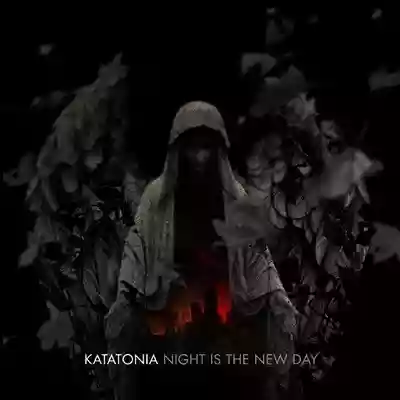

 •
Rating:
•
Rating:
THE REVIEW
I really don't feel like starting for the second time a half-critique (not even a half really) with nostalgic musings about a great band's glorious past; it would seem almost hypocritical. After all, we're talking about Katatonia, and I certainly don't need to remind fans, or anyone who has followed the band up to now, of the great things our Swedish friends have given the metal audience (and beyond) in their eighteen years of career, practically free of setbacks.
This was at least until today...
... November 2009: Katatonia returns, returns with "Night is the New Day", the successor to the immense (in the humble opinion of yours truly) "The Great Cold Distance"; they return riding the crest of the wave alongside other well-known bands that have populated the year with good or less successful releases; Mister Akerfeldt, a compatriot and great friend of Katatonia, teases our ears with some advance, defining the album in question as <<... The greatest "heavy" record I've heard in the last 10 years... Truly a masterpiece>> and many other nice things that indeed, rather than arouse curiosity, instill skepticism; if we also consider that the exquisite single-appetizer "Forsaker" did nothing but keep every good fan on their toes, it's easy to see that "Night is the New Day" had all the right cards and the red carpet already laid out to be welcomed at the top of the album of the year ranking (at least as far as the metal scene is concerned).
Well.
Or rather, no, it's not good at all, because this album is, to put it bluntly, extremely boring, a work that largely offers a string of tracks that are neither fish nor fowl and have neither head nor tail. Wait a moment... Am I really talking about Katatonia? It seems so. Yet who would suspect anything when listening to the aforementioned opening big single, "Forsaker", with its majestic and expansive chorus, with that nocturnal and even slightly serene atmosphere? Not even "The Longest Year" leaves one dissatisfied, as it roughly follows the twilight trail of the previous track, making a good impression; however, like a bolt from the blue, comes the first real misstep, which is the flattering, baroque, and sugary ballad "Idle Blood", where Katatonia seems to want to mimic the mannerism of the latest Opeth.
From this point on, unfortunately, one will have to endure a disheartening rollercoaster of boredom, confusion, and bewilderment: while a bit puzzled by ethereal but fundamentally tasteless refrains ("Onward Into Battle"), going on with the listens we'll have to put up with insignificant whines supported by equally empty riffing ("New Light"), disordered attempts to break through with mighty but monotone chugga-chugga guitar work ("Liberation") and, as if that wasn't enough, further doses of diabetes after the already nauseating "Idle Blood" ("Inheritance", complete with violins and cellos as icing). And what about "Nephilim"? It almost seems to come out of "Viva Emptiness," too bad it's excruciatingly slow, not to mention incredibly tedious and annoying. An agony, and not the kind of agony one expects from Katatonia.
The rest of the album, alas, hovers at these levels, with few exceptions: everything flows slow, slow, slow [...], slow like molasses without anything surprising happening; everything drags on without much dynamism between inconsistent/non-existent "heavy" passages and lengthy more relaxed and autumnal moments that, while initially seeming intriguing, will soon end up boring holes within tracks, thus becoming flat and exhausting. Of the inquietude, anguish, resignation, and other peculiar atmospheres of any other album by the Swedish combo, there's no longer a trace except in the concluding "Departer,” a desolated journey that fades into a thick fog; it's certainly an inspired and rarefied closure that, however, doesn't alleviate the overwhelming sense of emptiness that afflicts "Night".
I'll stop here.
Probably those who have read the review up to this point have remained a bit skeptical in front of such a sharp and negative judgment, still debatable and, I hope, alleviable. Surely no one expected a "The Great Cold Distance – Part 2", it would have been too easy and in any case, it's not the Kata's nature to repeat themselves over the years; it's just a pity that this new footprint left by the band is far from being indelible (especially compared to previous ones), although remaining unique and unmistakable compared to today’s standards, as only Katatonia's brand has always sounded and still knows how to sound. Let's console ourselves.
[Rating 5/10]
Loading comments slowly
Summary by Bot
This review critically examines Katatonia's 2009 album 'Night Is The New Day,' expressing disappointment despite the band's strong legacy. While opening tracks show promise, much of the album is described as boring and inconsistent, lacking the band's signature emotional depth. The reviewer laments the overuse of uninspired ballads and slow, dragging passages. Only the closing track 'Departer' offers a glimpse of the band's earlier atmospheric qualities.
Katatonia
Katatonia is a Swedish band formed in 1991 by Jonas Renkse and Anders Nyström. They began in death-doom and over decades evolved toward melancholic gothic, alternative and progressive sounds, noted for atmospheric production and Jonas Renkse's distinctive vocal style.37 Reviews
Other reviews
By Raiden7.0
"The Longest Year" has one of the most moving choruses ever conceived by the band!
"The Promise Of Deceit" and "Nephilim" dig into your heart, making you forget previous regrets.
By ElectricOne
Once you get in sync and slow down your heartbeat to better synchronize with the mood of the album, a new facet of Katatonia’s multifaceted personality opens up: and it is truly splendidly dramatic and touching.
Ultimately, a controversial but ultimately pleasant album, after all the above-mentioned listening preparation preambles, which does not hit the big target but opens new scenarios for the Swedish combo.
By Taurus
"Night is the new day" is a softer record compared to the previous one, painting desolate and decadent environments veiled by melancholy and bewilderment.
Their music manages to be very evocative when listened to in the right conditions, revealing new details with each listen.
By Hellring
"Dead end kings turns out to be, all in all, the musically flattest and 'weakest' CD from the Swedes."
"'Lethean,' in the writer's opinion the only true highlight of the record, could very well have appeared in 'The Great Cold Distance.'"
