
 •
Rating:
•
Rating:
THE REVIEW
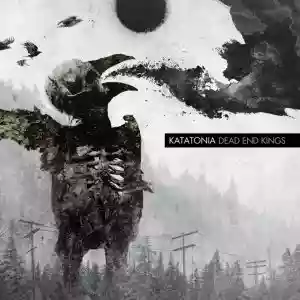
For many metal lovers, "Dead end kings", the new release from the Swedes Katatonia, was the album of 2012, or at least one of the most anticipated, one of those you wait for, counting the days until the official release. Also because we are not talking about newcomers, but rather a crucial entity for the entire slice of the darker metal, the kind that is somehow encoded in the subgenres of gothic, doom, depressive, dark. Expectations were further "magnified" by Renkse and company's previous work, that "Night is the new day" welcomed in a somewhat lukewarm manner by a large part of the critics. The fears were linked to the possibility (not so remote), that the Stockholm combo could propose, with slightly modified canons, what had been offered in NITND: namely, a more accessible and "polished" gothic, less intricate and oppressive compared to the psychological complexity of a masterpiece like "The great cold distance".
A few days ago, on August 27, "Dead end kings" was published, the ninth chapter of a discography destined to grow. Impressions, sensations, judgments: by now, after a few listens, perhaps we can throw out some words on the content and its validity.
Katatonia, perhaps for the first time, create an album that doesn't break with its predecessor, but rather retraces its sound and atmosphere, with small variations on the theme. That's why DEK results in being less aggressive than some previous works: referring to the less sustained rhythms of "Night is the new day", it comes across as a reflective gothic album like the band had never produced. The only track that "hits" the accelerator is "Buildings", while for the rest the blows of the two guitars of Anders Nystrom and the new entry Per Eriksson remain decidedly in the background. That's why "Dead end kings" turns out to be, all in all, the musically flattest and "weakest" CD from the Swedes, who demonstrate their progressive departure from the heaviness of the gothic/doom of their beginnings, also in the massive use of Frank Default's keyboards. Already the first tracks of the album clarify this to us, with Renkse's voice dominating in songs like "The parting" and "The one you are looking for is not here", while the soundscape proves to be immediately excessively laconic, subdued. It is perhaps precisely this "lack" that is the major flaw of the CD, which lacks the emotionality that had always distinguished their music-making.
Album to discard? Fortunately not, given the undeniable and crystal-clear class of the band, capable of also turning out very successful and engaging songs in their aura of gothic depression. "Hypnone" is one of these, where the blend of keyboards/voice works well, but what convinces is the totality of the performers: the same can be said for "Ambitions" and especially for "Lethean", in the writer's opinion the only true highlight of the record. A track that for incisiveness and final result could very well have appeared in "The great cold distance".
At the end of this journey, which it must be said, retains the characteristics of darkness and pessimism that Katatonia has well encoded in their past works, one is left with a sufficient gothic rock CD. An adjective that is not in the Scandinavian's chords, accustomed to delighting their fans with more intense and successful works than this "Dead end kings". The impression given by bands like Paradise Lost and Saint Vitus, that is important names in the world metal scene, is the same for Katatonia. Which one? Once established, perhaps it's better to limit oneself to the "homework"...
1. "The Parting" (4:52)
2. "The One You Are Looking For Is Not Here" (3:53)
3. "Hypnone" (4:07)
4. "The Racing Heart" (4:05)
5. "Buildings" (3:28)
6. "Leech" (4:23)
7. "Ambitions" (5:07)
8. "Undo You" (4:56)
9. "Lethean" (4:39)
10. "First Prayer" (4:28)
11. "Dead Letters" (4:29)
Loading comments slowly
Summary by Bot
Dead End Kings is Katatonia's ninth album, continuing the sound of its predecessor but with less aggression and more reflection. While it lacks some emotional intensity and musical complexity, it still features engaging tracks like 'Lethean.' The album marks a clear shift from their heavier gothic/doom origins, appealing to fans who appreciate a more subdued and polished style.
Katatonia
Katatonia is a Swedish band formed in 1991 by Jonas Renkse and Anders Nyström. They began in death-doom and over decades evolved toward melancholic gothic, alternative and progressive sounds, noted for atmospheric production and Jonas Renkse's distinctive vocal style.37 Reviews
Other reviews
By Raiden7.0
"The Longest Year" has one of the most moving choruses ever conceived by the band!
"The Promise Of Deceit" and "Nephilim" dig into your heart, making you forget previous regrets.
By Hell
This album is, to put it bluntly, extremely boring, a work that largely offers a string of tracks that are neither fish nor fowl and have neither head nor tail.
Everything drags on without much dynamism between inconsistent/non-existent 'heavy' passages and lengthy more relaxed and autumnal moments that... end up boring holes within tracks.
By ElectricOne
Once you get in sync and slow down your heartbeat to better synchronize with the mood of the album, a new facet of Katatonia’s multifaceted personality opens up: and it is truly splendidly dramatic and touching.
Ultimately, a controversial but ultimately pleasant album, after all the above-mentioned listening preparation preambles, which does not hit the big target but opens new scenarios for the Swedish combo.
By Taurus
"Night is the new day" is a softer record compared to the previous one, painting desolate and decadent environments veiled by melancholy and bewilderment.
Their music manages to be very evocative when listened to in the right conditions, revealing new details with each listen.
