
 •
Rating:
•
Rating:
THE REVIEW
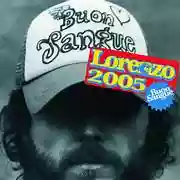
BUON SANGUE (2005) 7/10
From 2000 to 2005, Jovanotti went through a period of total irrelevance: during the heated years of the Iraq war and the no-global movement, the Genoa G8, and the long Berlusconi Bis government (2001-2005), our artist—hailed as a guru by the center-left—failed to carve out a place for himself either in the music market or in the national cultural debate (aside from an argument with his old nemesis Vittorio Sgarbi on Porta a Porta), mostly due to the flop of “Il quinto mondo”, 2002, one of his least inspired and most confused albums (though, listening to it today, there are some interesting bits—but we’re talking bare minimum). He went to Los Angeles (comme d’habitude, so much for all his third-world rhetoric), but this time the results showed, and the release in May 2005 of “Buon Sangue” seemed to realign him to a more suitable territory: rhythm. The album went to no.1 in the hit parade, stayed there for only one week but didn’t leave the charts for almost a year, serving as a precursor to the sensational (and unexpected) success of the next album, “Safari”, 2008, less accomplished but featuring the mawkish “A te”.
So, "Jova" is fantastic when he sticks to rhythm (he has a sense of musicality that’s pretty unique in Italy); when he tries to walk in the footsteps of singer-songwriters like De Gregori (or thereabouts), he’s irritating. “Buon Sangue” is an album that's too long (62’), with too many tracks (13), though his desire to make music after a five-year crisis is obvious and encouraging. However, sometimes he overdoes it. The single “Tanto3” kicked things off: it was a bit of a shock (partly for Jovanotti himself who returned to the charts), thanks to, and because of, that bassline by Saturnino which carries the whole track and really sounds like it’s saying the word “tanto”. The idea for the self-interview (“Come va il mondo? Bene. Come va il mondo? Male. Di dove sei? Toscano. Qual è il tuo aspetto? Meno sereno di un tempo ma non per questo stanco”), said "Jova," came from reading none other than Petrarch (“rido di te di me di tutto ciò che di mortale c’è” is by the Tuscan poet, not Jovanotti): a track that definitely works, maybe not the best but a step (or two) ahead of his previous efforts. As I was saying, rhythm is the soul of the album, and indeed the best tracks are those at “marching pace”: “Falla girare”; “Penelope”; “Coraggio”; “Bruto”—with the only truly successful ballad being “Mi fido di te”. Somewhat unexpectedly, this track became a massive hit in the winter of 2005 and gained even more popularity the following year, enough to become the title of a film starring Ale and Franz (it has some of his best lines: frog meetings; old ladies dancing in Cadillacs; children in tuxedos; the Goddess of love in jeans; having to pay the rent for the sun in advance, please). Perhaps, the strength of a track like this lies in its total and indisputable “classicism”: it “lives” firmly within the tradition of Italian music but knows how to remix itself in a modern way. “Jova” hadn’t managed this in quite some time.
It’s a pity that the singles chosen are (almost) always the least effective ones. “Per me” is the usual dedication to his partner (and the chosen images are neither the brightest nor the most original), though “Una storia d'amore” does even worse—it’s all about imitating De Gregori, and we all know that as long as Jovanotti raps he’s fine, but if he starts singing it’s hair-pulling time. Sometimes, he simply goes over the top (“Un buco nella tasca”; “La voglia di libertà”) or dives into worlds already explored elsewhere and more successfully (the almost mariachi “La valigia”), not to mention the mess that is the disorganized “Mi disordino.” Luckily, he then finds his best “vein” with the final title-track, which in about seven minutes spans the whole of human history (from prehistory to the Middle Ages, from Savonarola to the French Revolution, from Brittany to the Trojan War), proving that all humans are connected—and in some way, we could all call each other “relatives.” “...Si nasce senza esperienza, si muore senza assuefazione” is a great curtain call.
No, this isn’t the long-awaited rebirth. The “Jova” of his maranza phase (his best) or the early ‘90s (almost his best) will never return, and his later albums will prove it (increasingly monstre, increasingly ambitious), but here, it has to be said, he didn’t derail. Well done.
Loading comments slowly
Summary by Bot
This review assesses the strengths and weaknesses of Jovanotti's album 'Buon Sangue.' The critic provides a balanced take, acknowledging both notable qualities and shortcomings. The musical style and artist's performance are examined, resulting in a moderate rating. The album is seen as neither outstanding nor disappointing. It's a reflective perspective on the artist's creative output.Tracklist Lyrics
Jovanotti
Jovanotti (born Lorenzo Cherubini) is an Italian singer‑songwriter and rapper who debuted with Jovanotti for President (1988). Evolving from a radio‑DJ/rap persona to pop, world and electronic hybrids, he’s known for chart staples like Penso positivo, L’ombelico del mondo, Ragazzo fortunato and A te, plus high‑energy tours and festival shows.40 Reviews
Other reviews
By Gonzo
Buon Sangue is truly a beautiful album, the main concept is experimentation, both from a musical perspective and from the perspective of words.
Perhaps it will truly remain in the history of Italian music.
By Il Tarantiniano
"Buon Sangue" is a mature, aware, energetic, and above all original album that marks Jovanotti's move towards electronics.
"Un buco nella tasca," with its Gorillaz-inspired production and powerful electric guitar interlude, is the best episode of the album, deserving more live presence.
