
 •
Rating:
•
Rating:
THE REVIEW
There are two phases of Jovanotti: the more carefree and criticized period of the positive "rapper" from the '90s, and the songwriter phase that moves towards more complex and musically broader shores. Although initially he was Cecchetto's protégé, a child of a type of pop rap that often smelled of fake moralism with fortunately short-lived rhetorical feel-good messages (except for a few singles still played in stadiums today), over the years Lorenzo has grown and has managed to amaze, leaving behind the YE-YE persona that brought quite a few troubles to the concept of hip hop in Italy from the perspective of the general public, and finally showcasing his true soul, giving meaning to the words for which he has always been a sort of "spokesperson" in Italy for the past 20 years. "L'albero," a 1997 album, was the first chapter of a long career still ongoing today, in which Jovanotti shows interest in continuous musical exploration, aside from the fact that we are talking about an artist who moves in mainstream pop with talent, yes, and on the other hand with great cunning (like all those who are at his level of popularity).
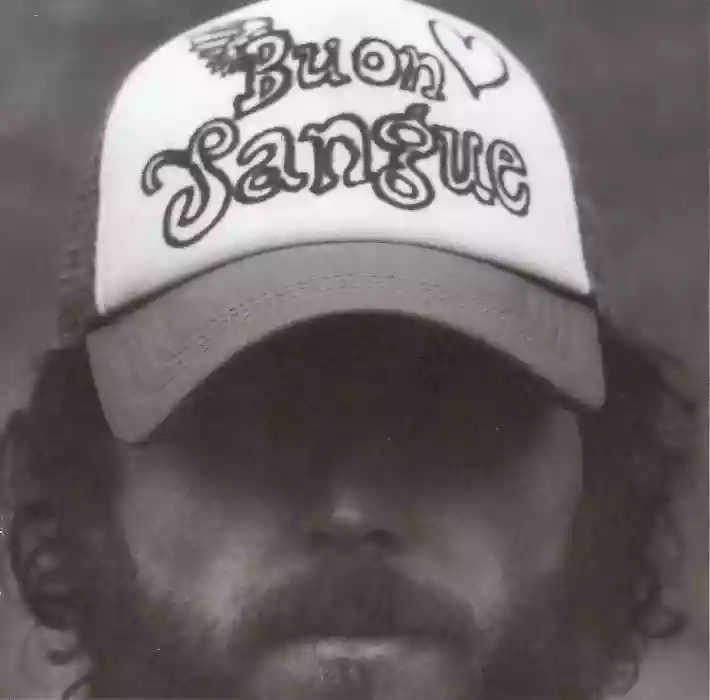
"Buon Sangue" sees the light in 2005, and even more so than in "L'albero," the artist moves towards a trend that in the coming years will take more and more hold in his repertoire: electronics. An album composed of 12 songs, where the underlying concept is strong and clear. Once again, he talks about humanism but seen through multiple personal lenses, through an internal journey where the music becomes the voice of his lyrics, giving life to a mature, aware, energetic, and above all original album. Just consider the opening "Tanto(3)," released as the lead single, to understand that the times of "Non m'annoio" and "Penso positivo" are now distant. This first track is a kind of psychological session, with surreal moments within the lyrics, featuring a simple but ingenious chorus in its intent. The production is entrusted to Stefano Fontana, and the result is a fun hit but at the same time impossible to listen to while sitting still, with a rock interlude similar to a spiral (the video is absolutely fitting). Another piece in this mood is "Falla girare," an electronic pop frenzy where Jovanotti reveals a mix of uncomfortable truths and clichés, all wrapped in an orgy of sounds, choruses, electronic synths, and dizzying effects. Overall, a blast. Following in this vein are "Penelope," "Mani in alto," "Coraggio," and "Mi disordino." The first is a funk rap track where Saturnino once again takes control of the musical base, somewhat reminiscent of the Lorenzo of his first albums but with the lyrical maturity of the latter. The second is a sort of nursery rhyme that embraces oriental sounds in the chorus, overall not exceptional but enjoyable. The third is a danceable track with African elements like percussion, almost an appetizer before "Safari," while "Mi disordino" is a track with rock elements, which then evolves into a ghost track that encapsulates the album's essence.
However, Jovanotti does not abandon his more inspired songwriter side: in fact, "Mi fido di te," another successful single, is one of the highest moments: the lyrics are beautiful, deep, and melancholic but at the same time hopeful and reassuring, despite the criticisms of plagiarism towards the Red Hot Chili Peppers by many of the artist's haters. Following "Per me" is a ballad between songwriter music and rap, although with an unsuccessful chorus and a somewhat excessive length that makes it boring in the long run; "La valigia," another good text although the musicality is not up to par, while "La voglia di libertà" embraces more the sounds of previous albums but almost passes anonymously. "Bruto" is musically a respectable funk episode, but with the same issue as "La valigia." I'll conclude with what, to me, is the best episode of the album: "Un buco nella tasca," with production sampling Gorillaz, and at the same time, lyrics finally living up to the musical base, plus an interlude with an electric guitar in a crescendo of great effect. It's a pity it's one of the songs forgotten by Jovanotti fans, deserving to be performed live instead of some of the crude hits of recent years.
Overall, "Buon Sangue" is one of Jovanotti's best albums, certainly not a masterpiece, but in the realm of Italian pop, it's a work of great respect that has brought quite a few new sounds into his repertoire over the years on which to start taking his steps.
Loading comments slowly
Summary by Bot
The review explores Jovanotti's transition from his early rap persona to a mature, musically rich artist. Buon Sangue (2005) showcases a strong electronic influence combined with humanistic and introspective lyrics. The album balances energetic tracks with thoughtful songwriting, highlighting standout songs like "Mi fido di te" and "Un buco nella tasca." While not flawless, the album is praised as one of Jovanotti's important and original works within Italian pop.Tracklist Lyrics
Jovanotti
Jovanotti (born Lorenzo Cherubini) is an Italian singer‑songwriter and rapper who debuted with Jovanotti for President (1988). Evolving from a radio‑DJ/rap persona to pop, world and electronic hybrids, he’s known for chart staples like Penso positivo, L’ombelico del mondo, Ragazzo fortunato and A te, plus high‑energy tours and festival shows.40 Reviews
Other reviews
By Gonzo
Buon Sangue is truly a beautiful album, the main concept is experimentation, both from a musical perspective and from the perspective of words.
Perhaps it will truly remain in the history of Italian music.
By JpLoyRow2
Jovanotti's 'Buon Sangue' never truly disappoints, yet never fully excites.
The album offers some highlights, but overall feels somewhat inconsistent.
