
 •
Rating:
•
Rating:
THE REVIEW
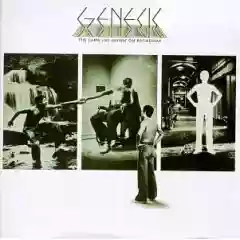
A great band, a tri-form masterpiece, "Foxtrot - Selling England By The Pound - The Lamb Lies Down On Broadway", and it is precisely on this last album that today's attention falls because it will close the tortuous union with the group's soul, namely Gabriel. Now muddied by several external pressures, he will shoot off like a meteor on a long journey into an undiscovered universe and will become the precursor of the personal atomic theory called Peter Gabriel (and which for many will represent the first solo release), genius of geniuses, in a way militant, narrator of his soul and the freest feelings, a musician attentive to various innovations from the most remote corners of the world, whimsical and chameleon-like, his disguises become history to the point that people will go to concerts because captivated by the continuous transformation linked to his lyrics and creativity, managing and moving at his pleasure often improvising and heavily clashing with his bandmates to the point of becoming unbearable and vice versa, but then thinking about it, how is it possible to cage a stage animal with a rebellious soul screaming for freedom, I would say it is categorically impossible and inevitable.
"Don't cover my eyes, while I write, I want to be able to take a look at the glass butterflies that have settled on the walls."
This double album is astonishingly difficult, progressively dilatable and becomes unique because it is full of merits, flaws and double meanings both for the lyrics and the music, it is a true and monumental progressive rock opera, a story narrated and sung with such genuineness where the voice shatters eardrums and the music is of a compromising stasis thanks to the skill of the musicians, the listening must be perpetual for all four sides, to glimpse the total essence of such beauty.
"The Lamb Lies Down On Broadway" oneiric opening invested with piano and percussion and a lot of vocal charge - "Fly On A Windshield" an open sky tale, the instruments are distressed - "Broadway Melody Of 1974" more complete narrative accompanied by harp - "Cuckoo Cocoon" flute and instruments are guardians of eternal secrets - "In The Cage" such a sweet and violent instrumental metamorphosis - "The Grand Parade Of Lifeless Packaging" sneaky mixings - "Back In N.Y.C." progressive and luminescent sound - "Hairless Heart" instrumental and monumental - "Counting Out Time" cheerful, naive and impish - "Carpet Crawlers" fantastic and very intimate - "The Chamber Of 32 Doors" percussion, guitar and voice are teeming - "Lilywhite Lilith" vehemence in zimology - "The Waiting Room" vibrating bells, castrated instrumentations, stressful meows and a predicted storm - "Anyway" propelling piano - "Here Comes The Supernatural Anaesthetist" guitar walkover - "The Lamia"extraordinary metaphor of sex, the piano and Peter's deep voice are fundamental - "Silent Sorrow In Empty Boats" heterogeneous - "The Colony Of Slippermen (The Arrival/A Visit To The Doktor/Raven)" divided into three different parts - "Ravine" bewitching - "The Light Dies Down On Broadway" revisits the dialogue of The Lamb Lies Down On Broadway and The Lamia excellently merging them - "Riding The Scree" completely instrumental and grating - "In The Rapids" introduces the concluding and explosive"It".
Indelible imprint, milestone of a confusing, eclectic and mesmerizing density never generated in the '70s.
And if you want to know the story of Rael = Real = Reale = Peter Gabriel...
Rael is a New York slum hooligan who one morning is struck by the vision of a lamb lying on the Broadway sidewalk. While staring at the lamb, a kind of screen projecting images of the Big Apple descends from the sky advancing on him. Paralyzed by fear, he can no longer flee and the screen strikes him making him faint. He wakes up in a strange underground world where he will live a staggering series of adventures between the mystical and the symbolic, learning to know himself and his limits. At first, it is like a cocoon that makes him feel calm, so much that he sleeps in serenity but wakes up in a cave with his heart in his throat because he has to fight against a rock cage that moving squeezes him to almost suffocate him. Outside the cage, he glimpses his brother John who, despite invoking his help, abandons him and when he thinks he will die, the cage disappears, and he returns to freedom. Wandering, he arrives at a factory where human beings are assembled, all with a predetermined and forced destiny, and finds other people who had significance in his life and finds his brother. These visions of known people make him think about his past and what his present life is. Continuing his journey, on an apparently obligatory path, he arrives at a long corridor where many people crawl towards the opposite end where there is a huge wooden door. Only he can ask questions to these people and when he reaches the door, he opens it and finds an enormous table set and a spiral staircase disappearing into infinity and he will start to climb it. At the top, he will find the entrance to a huge cave full of people openly discussing which of the 32 doors will give freedom. In this crowd, Rael will find Lilith, an old blind woman who promises to help him find the right door and, trusting her, he lets himself be left in a room where she promises that another person will come to pick him up, but he fears it might be a trap and at that moment two huge spheres of light enter almost attacking him. Frightened, he gathers some rocks and hits them shattering them, causing the wall above to collapse, and it seems to be the end for him. However, he finds space between the rocks and saves himself again. Thus, he enters a huge room with a pool and dreams a little of rest, but instead sees three strange figures swimming towards him. They are the wonderful Lamia, half snakes and half women with whom he has an ecstatic sexual experience. But as soon as they bite Rael's flesh, they die, and he, distraught, feeds on them, then decides to continue reaching a colony of deformed beings, the Slippermen, who welcome him well, telling him they became like that after eating the Lamia, which regenerate each time forcing them into continuous sexual activity, which will also involve Rael, making him a slave for life, but he can reunite with his brother who is also transformed into a huge mass of flesh, and thus he despairs, but a Slipperman encourages him because perhaps there is a solution, castration. Dr. Dyper performs it, and after the operation delivers a pendant containing the "fruit of sin" to be used only in case of need. While the two talk, a huge raven descends from above and steals the precious pendant. Rael asks John for help, but he, fearing to lose his pendant, abandons him again, so he chases the crow, which will throw the pendant into an underground river, but while trying to retrieve it, he hears his brother's cries struggling in the river and simultaneously sees a crack in the wall that would lead him to freedom and his previous life, which is slowly closing. He must decide whether to escape saving himself or stay and save John, and he decides to save his brother. He fights against the current and finally reaches the shore realizing his brother has his same face and while he stares in amazement, a purple mist envelops them dissolving them. Have you entered between reality and the essence of the story? If you understand the mechanism of the narrative, then you will enter a surprising and reflective world but above all full of personal surprises. Rael and John dissolve because maturity will have been reached due to a fundamental choice transforming them into a single complete man, the underground journey is one's unconscious and is the unconscious of each of us, it's just about understanding what is better to do, escape to live or stay to grow? You are free to interpret, and this is what Peter Gabriel wanted to convey to us.
Loading comments slowly
Summary by Bot
The review celebrates Genesis' 'The Lamb Lies Down On Broadway' as a monumental progressive rock double album and a crowning achievement alongside 'Foxtrot' and 'Selling England By The Pound.' It highlights Peter Gabriel's role as a creative force whose departure marked a new era. The album's complex narrative and intricate music unfold across four sides, telling the surreal story of Rael's underground journey. The reviewer emphasizes the album's emotional depth, musical craftsmanship, and lasting influence.Tracklist Lyrics Videos
Genesis
English rock band formed in 1967, celebrated for landmark early-1970s progressive albums (Foxtrot, Selling England by the Pound, The Lamb) and a later, more pop-oriented phase led commercially by Phil Collins.116 Reviews
Other reviews
By Mr_Iko
I love to call it 'Music-All': a watershed between a rock opera and a musical to be performed on a Broadway stage.
Should you not like this album, I recommend consulting a good doctor for an otoscopy.
By Old King Cole
"The Lamb is something more... too varied, containing too many different elements to be classified in a genre that is undoubtedly open but still has boundaries that delimit it."
"The main instrument in 'The Lamb' is [Peter Gabriel's] voice, which finally reaches its peak of technique and, above all, of expressiveness."
By STIPE
"Gabriel was Genesis and Genesis was Gabriel."
"A courageous work, completely different from their discography and also the last one by Gabriel with his old companions."
By paolofreddie
The album ranks among the most interesting in progressive and rock music in general.
The Lamb is one of the most complex and difficult to analyze albums in the history of prog and that is what enhances its intriguing nature.
By EverardBereguad
"The result was a carpet of 'pure anxiety' on which all the songs were built."
"It is a mistake to look for what Genesis had to say with this album in the moral of the story or the meaning of the lyrics."
