
 •
Rating:
•
Rating:
THE REVIEW
The Lamb Lies Down On Broadway, released in 1974, is the last album by the band in its original lineup before the departure of Peter Gabriel and very likely represents their most modern and "progressive" album, although, in some sections, especially in the second disc, it becomes a bit lengthy.
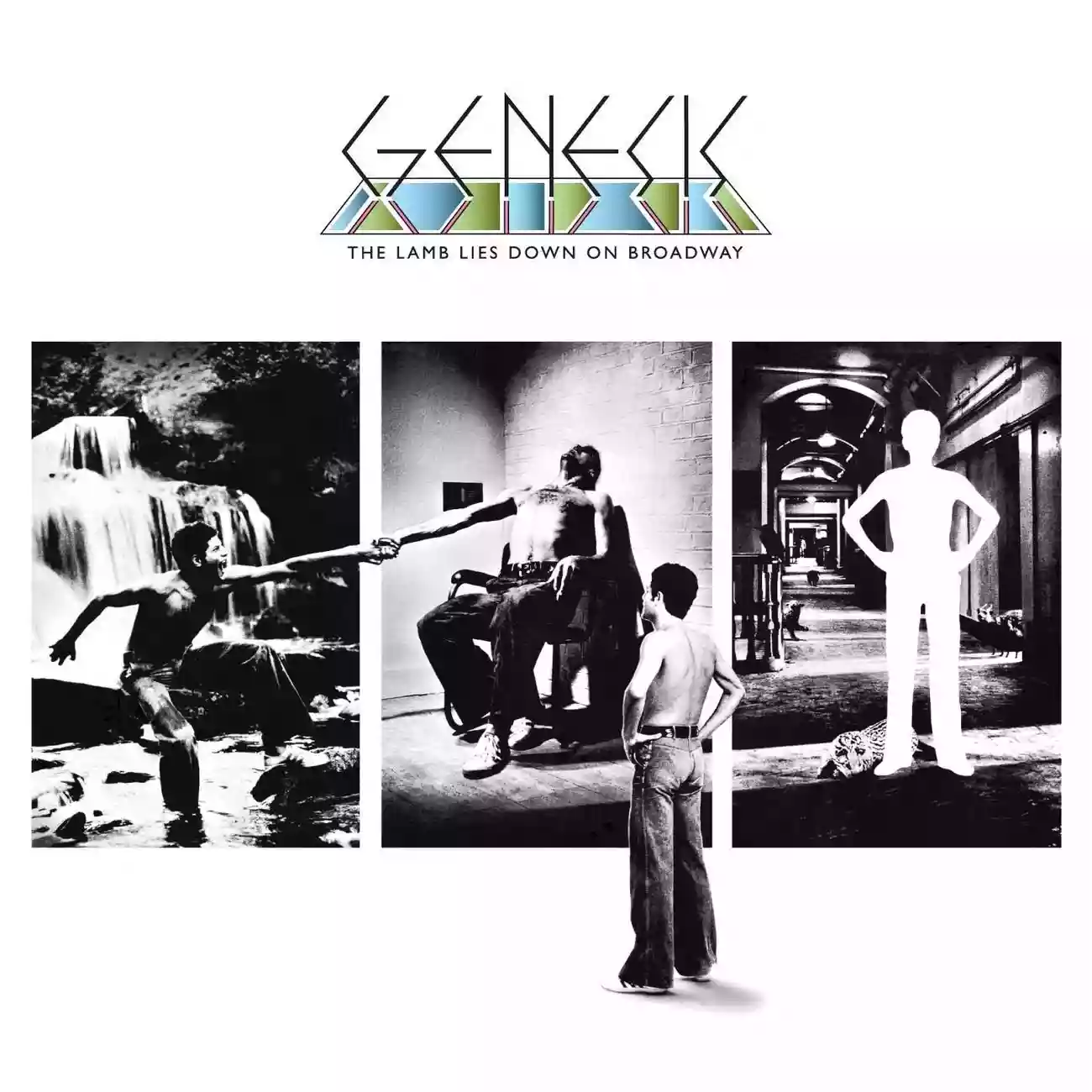
To talk about the album, one must start with the cover, a masterpiece by the Hipgnosis studio, which immediately throws us into the labyrinthine, claustrophobic, and Dantean world of the concept on which the album is based. Here, Rael (created by Gabriel and an anagram of Real), the protagonist, finds himself in an underground and dreamlike world where he will meet various bizarre and frightening characters and will have to confront his own weaknesses and his own self, ultimately dissolving into a purple haze. Peter Gabriel, in drafting the concept, was undoubtedly inspired by the Divine Comedy in terms of the setting of the work, Greek mythology for the characters, and even the surrealism of Jorodowski's film El Topo. I would like to dwell again on the modernity of the sound; after listening to The Waiting Room, thinking that Genesis is the same band that released Selling England by the Pound the previous year makes evident the band's, and especially Peter Gabriel's, desire to expand their musical horizons and in some sense move away from those characteristics that make symphonic progressive rock prolix, namely long instrumental passages and lyrics (in the case of Genesis) sometimes too pretentious or too ironic. Most likely, this type of sound is due to the presence of Brian Eno in the recording studio, who certainly contributed to crafting the more innovative pieces of the album, but primarily, the main contribution is from Peter Gabriel, who, despite not participating in the album's recordings as he was busy transcribing the concept, in a sense anticipates with this album the experimental path he would embark on in his solo career. Suffice it to say that the album in question represents just an interlude in the band's stylistic journey, which with Gabriel's departure will return to the sounds preceding The Lamb with A Trick of the Tail.
The Genesis at this point are at the peak of their career: Peter Gabriel freely unleashes his genius by writing some of the most original and symbol-rich lyrics of his career, Tony Banks and especially Phil Collins are impeccable, Hackett, despite his few interventions, manages to insert one of his best solos in The Lamia. The band's creative peak surfaces especially during the concerts, where they depict the concept with a show of lights and costumes worn by a Gabriel never so histrionic again.
As you probably already know, the album is a double: the first disc opens with Tony Banks' piano intro, which instantly transports the listener into the atmosphere of the concept and continues with some of the most known and beautiful pieces of the album such as In The Cage, Carpet Crawlers, and The Chambers of 32 Doors, and is certainly the most immediate; in contrast, the second disc features Eno's touch and some instrumentals, which primarily allowed Gabriel to change costumes during the concerts. Despite this discontinuity and some decline in quality mainly on the last side, taken as a whole, the album stands out among the most successful concepts of the '70s and of all time, containing some of the most beautiful songs in their discography. Among the many tracks, I would like to highlight Back In N.Y.C., a raw and direct song, which, even more than The Waiting Room, makes us understand the path Genesis with Gabriel could have taken, with the now end of the golden age of progressive rock.
Loading comments slowly
Summary by Bot
Released in 1974, 'The Lamb Lies Down On Broadway' is Genesis' last album with their original lineup and their most progressive work. The concept, inspired by Dante and mythology, follows Rael’s surreal journey, highlighted by Peter Gabriel’s visionary lyrics and Tony Banks’ evocative compositions. The album combines innovative sounds influenced by Brian Eno with unforgettable performances, despite some lengthiness in the second disc. Overall, it marks a peak in Genesis’ career and a milestone in 1970s progressive rock.Tracklist Lyrics Videos
Genesis
English rock band formed in 1967, celebrated for landmark early-1970s progressive albums (Foxtrot, Selling England by the Pound, The Lamb) and a later, more pop-oriented phase led commercially by Phil Collins.116 Reviews
Other reviews
By Mr_Iko
I love to call it 'Music-All': a watershed between a rock opera and a musical to be performed on a Broadway stage.
Should you not like this album, I recommend consulting a good doctor for an otoscopy.
By Mariaelena
"This double album is astonishingly difficult, progressively dilatable and becomes unique because it is full of merits, flaws and double meanings both for the lyrics and the music."
"Rael and John dissolve because maturity will have been reached due to a fundamental choice transforming them into a single complete man... You are free to interpret, and this is what Peter Gabriel wanted to convey to us."
By Old King Cole
"The Lamb is something more... too varied, containing too many different elements to be classified in a genre that is undoubtedly open but still has boundaries that delimit it."
"The main instrument in 'The Lamb' is [Peter Gabriel's] voice, which finally reaches its peak of technique and, above all, of expressiveness."
By STIPE
"Gabriel was Genesis and Genesis was Gabriel."
"A courageous work, completely different from their discography and also the last one by Gabriel with his old companions."
By paolofreddie
The album ranks among the most interesting in progressive and rock music in general.
The Lamb is one of the most complex and difficult to analyze albums in the history of prog and that is what enhances its intriguing nature.
