
 •
Rating:
•
Rating:
THE REVIEW
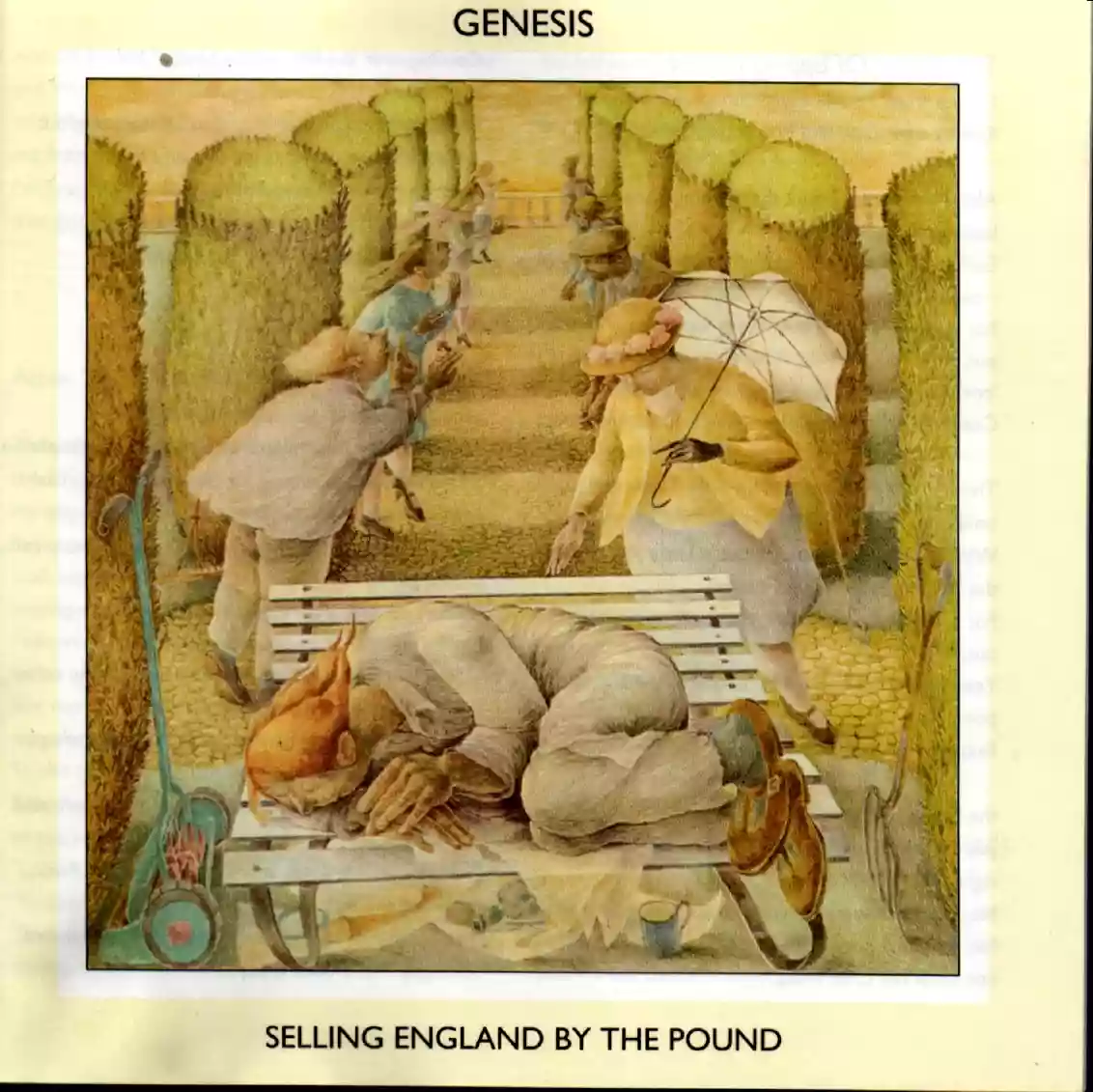
Yes, I know, yet another review of "Selling England By The Pound," but this time I believe I have a reason. Essentially, this album disgusts me, I consider it the worst of Genesis, at least those from the '70s.
Genesis saw a rapid rise within the progressive scene. After a passable first album, they created their true masterpiece: "Trespass," an album full of emotional tension and a desire to communicate. This was followed by "Nursery Cryme," which hardened the sound and was likewise a masterpiece. Then came "Foxtrot," the album that put them before a choice: "do we continue with suites of jazzy refinement, or go back to the rawness of Nursery?" They chose the former.
In 1973.
This should explain everything. All the useless content in this true classic.
The album begins with Dancing With The Moonlit Knight, one of the most beautiful tracks, no doubt about it. The piece is well placed, and besides, it doesn't even excessively go over in length (7 minutes is ideal) with a central break of absolute virtuosity in drumming. Kudos as usual to Phil Collins, undoubtedly the best musician of the group and the only virtuoso in the strict sense of the term. Although some scales could indeed have been cut in favor of immediacy, the track is fine, does not tire, and flows naturally.
Next is I Know What I Like (In Your Wardrobe). A track of outlandish pop, dominated by an organ that is very much Manzarek-like but remains of good quality.
Here we arrive at the meatloaf. Firth Of Fifth is a track ridiculously pumped to the absurd, with myriad solos and a somewhat ridiculous pastoral text. Hackett's solo is saved, but it's 2 minutes out of over 9 of absolute self-reference and self-indulgence.
More Fool Me is the second pop moment of the album, here Collins sings, and I must say I don't dislike the track, it is well placed and intimate. At least it allows one to catch their breath after that indigestible stuff earlier.
With the second side, peaks are reached that I would define as pure idiocy.
The Battle Of Epping Forest is a concoction of broccoli raab, various stir-fries, and industrial quantities of tempo changes. The lyrics are a kind of urban poem, and the track is a jumble of ideas randomly thrown together and really poorly linked. After dozens of listens, it leaves nothing, just a sense of confusion, but not the confusion of a Starless or a Heart Of The Sunrise, the confusion of someone who hasn't understood a damn thing. 11 minutes of furrowed brow. Even though I have always found the track somewhat likable, it is undeniable that it remains totally incomprehensible even to the most seasoned fans.
After The Ordeal is another nice semi-acoustic moment that, believe it or not, was almost cut from the album in favor of who knows what else!
The Cinema Show inexplicably became a concert staple. The track is, at least, more cohesive and catchy than The Battle, but shines with the same bourgeois self-importance as Firth Of Fifth. The first five minutes are saved, but as soon as the 7/8 solo begins, it's instantly clear that they’ve gotten a big head. An endless series of scales, keyboard crescendos, and obsessive rhythm. As if I were listening to a Disco-Trance album!
The album is considered among the most representative of progressive, no doubt about it. It carefully reproduces every single stereotype and the most irritating aspects, resulting in something heavy and self-indulgent, lacking the narrative strength of "Nursery" and the raw emotions of "Trespass." There is much refinement, an incredible level of executive refinement, a refinement that surpasses the already regal "Foxtrot," a refinement that hides a total lack of restraint, not of ideas. There were ideas. They could have been used better, in more tracks, with fewer stuffed meatloaves and a few more sandwiches.
Loading comments slowly
Summary by Bot
This review critically examines Genesis' 1973 album Selling England By The Pound, considering it their weakest 70s work despite moments of technical virtuosity. The reviewer praises select tracks but condemns the album's overlong solos, self-indulgence, and lack of cohesion. While musically refined, the album lacks the raw emotion and narrative strength found in earlier Genesis works.Tracklist Lyrics Videos
Genesis
English rock band formed in 1967, celebrated for landmark early-1970s progressive albums (Foxtrot, Selling England by the Pound, The Lamb) and a later, more pop-oriented phase led commercially by Phil Collins.116 Reviews
Other reviews
By Dario Pierini
The piano intro alone is worth the price of the record.
The unmistakable dreamy and romantic atmosphere, with a medieval and baroque flavor, makes them at once so modern and ancient, so innovative and tied to tradition.
By rebel1
The history of music will never be able to forget pieces like "Dancing With The Moonlit Knight" and "Firth Of Fifth."
Undoubtedly one of the most extraordinary albums of the immense Genesis (clearly, with the presence of Gabriel and Hackett).
By Breus
"Selling England" unfolds like a fable-like and epic fresco between the unifaun and the Queen of May Be, singing the fate of a land that has become prey to commerce and lost its nobler ambitions.
"The Cinema Show" remains the most spontaneous and authentic testament of their original group career, with a succession of phrases that engage all the musicians without ever detaching from the typical style.
By lukather88
"Selling England By The Pound is an extraordinary album that perfectly represents progressive rock alongside King Crimson and Yes."
"Hackett’s guitar solo on 'Firth Of Fifth' is a gem perhaps unparalleled in progressive rock, leaving one enchanted and lulled into a dreamlike dimension."
By XBend
"53 minutes of real delight, of pure art exposed by those who know how to do art well."
"It marks the absolute consecration of the group that had already made waves with monumental works."
