
 •
Rating:
•
Rating:
THE REVIEW
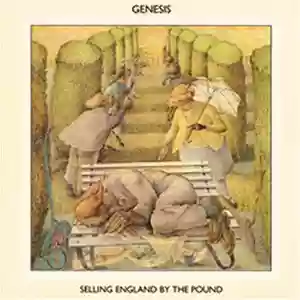
I chose this great album for my first review because I know it quite well and have known it for a long time, and also because it is one of my favorite albums.
Fifth studio album for one of the best Progressive Rock formations ever: Genesis. Many define "Selling England By The Pound" as the best Genesis album, and I fully agree; released in 1973, it marks the absolute consecration of the group that had already made waves with other monumental works like "Foxtrot," "Nursery Cryme," and "Trespass."
"Selling England By The Pound" presents itself with a more innovative sound, an absolutely fresher composition style where the commitment, originality, and consistency of the five musicians who composed it can be glimpsed.
It is precisely Peter Gabriel who is entrusted with the album's opening in the first track: "Dancing With The Moonlit Knight," a solemn, declamatory, expressive opening to which the elegant notes of Steve Hackett soon add, announcing the album's theme, the piano arpeggios of the great Tony Banks, a few flute notes to give a supreme touch, and then Phil Collins' roll, which gives the impetus for a vigorous entry of the entire quintet. An unleashed rhythm with a Phil Collins in great shape who doesn't limit himself to normal patterns, the vocals become even more solemn and declamatory, alternation of solos between keyboard and guitar, well-thought-out bass lines: all of this constitutes an excellent opening to this outstanding album.
Psychedelic intro and then: "It’s One O'Clock And Time For Lunch, (On Di Don Di Don) / When The Sun Beats Down And I Lie On The Bench / I Can Always Hear Them Talk" and one of the most famous pieces of this incredible formation starts: "I Know What I Like (In Your Wardrobe)" performed in almost every concert since 1973. The rhythm becomes simpler compared to the previous track, but the energy that Genesis wanted to impart is not lacking.
But let’s move on to one of the most famous tracks in Progressive Rock in general: "Firth of Fifth," whose riff is introduced by an exceptional Tony Banks on piano who meticulously studied perfect parts for both the right and left hand. The track continues with a sharp entry of all instruments; then a very calm instrumental part on flute, where Peter Gabriel shows his skill; then a crescendo of piano and the return to the initial riff exposed in grand style by the whole band where Phil Collins studies crazy timings. After the riff, it moves to one of the most beautiful and famous solos of Steve Hackett who, as usual, knows how to delight the listener with his notes and exquisite passages. A very interesting and, in my opinion, more exciting version was performed at the 1977 concert, a double album titled "Seconds Out."
In the next piece, "More Fool Me," we find a surprise: Phil Collins on vocals. Perhaps it's the first time in history we hear Phil Collins sing a song in its entirety. It's an acoustic piece performed with acoustic guitar and voice. Our Phil already shows his talent as a singer, for which he will become famous both as the future singer of Genesis and as a solo artist. He opts for a sweet singing, sometimes resorting to falsetto, other times to full voice in the high notes, taking ample time, without following a true metronomic rhythm.
It's time to talk about perhaps the craziest and most difficult piece in the history of Genesis: "The Battle of Epping Forest" which stands out right from the start with a snare drum and flute crescendo entry to perhaps give the idea of a band performing a military march. Another sharp entry, 7/8 time, maintained with absurd rhythms on the keyboard, bass, and drums. At first listening, it’s impossible to understand the time and flow because there are numerous speed changes. Excellent synth solo (which could remind one of a French horn or even a Baritone horn) by Tony Banks, very engaging. The lyrics talk about a battle in the Epping Forest (a journalistic crime story) where two rival gangs clashed because they couldn’t agree on a territory boundary. Peter Gabriel tells this story, describing it in a ghastly manner as if it were a civil war.
After this forest battle, it calms down a bit to give space to the epic instrumental track titled "After The Ordeal." It starts with piano and ends with a magnificent guitar solo, to which a flute line perfectly intertwines with the rest. Absolutely worth listening to. The calm doesn't last long because right after, there’s another very important piece in the history of Progressive Rock: "The Cinema Show," a suite of 11 minutes and 6 seconds. The beginning is acoustic, calm but it's just a prelude to what will happen in the middle and final phase of this magnificent piece. The initial guitar arpeggio is really beautiful, Peter Gabriel remains always solemn and declamatory (as throughout the album, after all). After the whole band comes in, it stops again with an acoustic minor phase, a darker phase, which gives a sense of suspension, as if to represent “the calm before the storm”; a few flute notes make us seem to be in a limbo but then comes a chorus with voice and counter-voice, perhaps the most beautiful choral duet in the entire Genesis career, which leads us to the central phase of the piece, a phase where each member plays their instrument at the limits of the imaginable: Tony Banks launches incredible solos, Phil Collins dictates the time with great mastery, then reaching the major key theme of this piece which is played first softly, then louder; it returns to the minor mode with other stunning solos always by Tony Banks where the rhythm becomes increasingly strong and difficult, shortly after Steve Hackett joins, at the end duetting with the keyboards until remaining alone with a rather calm arpeggio introducing "Aisle of Plenty," the last track of this album, where Gabriel shows us for the last time the general theme of this album, continued by a leading Hackett, a rhythm almost in the background of bass-drums and a light synth accompanying everything to the complete fade out that closes this absolute masterpiece.
53 minutes of real delight, of pure art exposed by those who know how to do art well. My rating is 5 stars out of 5. It's an album that all Progressive Rock enthusiasts absolutely must listen to.Loading comments slowly
Summary by Bot
This review highlights Genesis’ 1973 album Selling England By The Pound as a landmark in Progressive Rock. Praised for its innovative sound, complex compositions, and outstanding musicianship, the album showcases the talents of Peter Gabriel, Phil Collins, Tony Banks, and Steve Hackett. Key tracks such as ‘Firth of Fifth’ and ‘The Cinema Show’ exemplify the band's artistry. The reviewer awards it five stars, recommending it to all prog rock enthusiasts.Tracklist Lyrics Videos
Genesis
English rock band formed in 1967, celebrated for landmark early-1970s progressive albums (Foxtrot, Selling England by the Pound, The Lamb) and a later, more pop-oriented phase led commercially by Phil Collins.116 Reviews
Other reviews
By Dario Pierini
The piano intro alone is worth the price of the record.
The unmistakable dreamy and romantic atmosphere, with a medieval and baroque flavor, makes them at once so modern and ancient, so innovative and tied to tradition.
By rebel1
The history of music will never be able to forget pieces like "Dancing With The Moonlit Knight" and "Firth Of Fifth."
Undoubtedly one of the most extraordinary albums of the immense Genesis (clearly, with the presence of Gabriel and Hackett).
By Breus
"Selling England" unfolds like a fable-like and epic fresco between the unifaun and the Queen of May Be, singing the fate of a land that has become prey to commerce and lost its nobler ambitions.
"The Cinema Show" remains the most spontaneous and authentic testament of their original group career, with a succession of phrases that engage all the musicians without ever detaching from the typical style.
By lukather88
"Selling England By The Pound is an extraordinary album that perfectly represents progressive rock alongside King Crimson and Yes."
"Hackett’s guitar solo on 'Firth Of Fifth' is a gem perhaps unparalleled in progressive rock, leaving one enchanted and lulled into a dreamlike dimension."
By SydBarrett96
"Selling England by The Pound remains and will forever remain the Masterpiece."
"Consolidates them as a legendary band in the rock Olympus. Immense, deep, intense."
