
 •
Rating:
•
Rating:
THE REVIEW
Until January 19, I considered Capossela as a skilled disciple of the immense Waits. Talented, sometimes very talented (as in "Canzoni a manovella" and sometimes in "S. Vito e Camera a sud"), but always a disciple, the product of a certain way of playing invented by others. Already in "Canzoni a manovella," sweet preludes of a growth in charisma and personality were sounding, but there remained some songs, albeit splendid, whose origin, whose inspiration was easily identifiable.
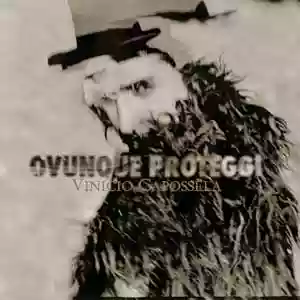
Now, after a five-year silence, "Ovunque Proteggi" falls into our arms, a challenging, inconsistent, dense, noisy album... all this on the surface... all this upon first listen, to say the least disorienting... but "Ovunque Proteggi" is a work of art, and like true works of art, it waits for those who benefit from it, it waits for the listener to get used to it, to manage to give an order, an interpretation to the whole, an identity to the various poetics that emerge from this gothic cauldron. It is said that art is for few, only for the most brilliant minds: that's not true, art is for few because the rest are in a hurry. "Ovunque Proteggi" is an album that isn't beautiful, but it becomes so, becomes splendid, perfect: a sound gallery that contains the entire emotional climax of the human soul. A definitive album, which, if it gets deep into your ears, risks monopolizing your CD player, because for a while you won't be able to listen to anything else. It is said that the key moments of life can be linked to a song: it almost seems like this album wants to be the soundtrack of an entire existence. Because once you manage to tame the ear, the "Inno alla gioia" truly expresses joy, pure joy, becomes the most vital band piece you have ever listened to; "Al Colosseo" becomes a truly visceral text, violent... and even brilliant, considering it's a unique case of a song with a chronological path, where time flows from phrase to phrase to end with the historic arrival of the barbarians; "Nutless" becomes tangibly and epically melancholic, a "Once Upon a Time in America" in four minutes; the lightness, the majesty of "Nel Blu," the perfect playfulness of "Medusa cha cha cha," the desperate, primordial scream of "S. S. dei naufragati," a powerful reference to Coleridge and the supernatural power of a living nature; the grace of the title track, which gives purpose, the meaning of a life, the meaning of everything that has happened. Maintain position, keep the heart, for the future, keep it even when you're in deep trouble; the childish and Fellinian references of Spessotto and the feral and biblical theology of "Non Trattare," in this gallery of poetics that in an entire life sooner or later all follow each other, highlighting our fragility, our grace, redemption, sung with passion in the final track.
Don't be in a hurry, don't file this album with a star-rating judgment from experts, because we are all experts, but wait for it, you will be astonished, you won't believe your ears realizing that after a millennium of music, it is still possible to write a work that, in soul, resembles nothing. A masterpiece.
P.S.: The previous review by Lazzaroblu was very valid and well-written. The reason that prompted me to add my text is precisely the factor I talked about in the review: that "Ovunque Proteggi" is an album that grows over time, and in the two reviews, the effects can be seen in the short and long term.
Loading comments slowly
Summary by Bot
Ovunque Proteggi marks Vinicio Capossela’s transformation from a disciple of influential musicians into a master of his own distinct artistic voice. The album is dense, challenging, and emotionally rich, rewarding listeners with time and attention. Each track offers unique poetic and musical qualities, creating a profound and lasting impact. It’s an album that becomes indispensable once truly embraced.Tracklist Lyrics Videos
Vinicio Capossela
Italian singer-songwriter and performer, born in 1965 in Hannover, Germany, known for theatrical, eclectic albums and live shows that mix folk, Mediterranean and world influences. Active since the early 1990s.42 Reviews
Other reviews
By Lazzaroblu
Ovunque Proteggi is an epic album in epic proportions; it sometimes approaches, in a cryptic way, some completely unusual biblical and mythological themes.
'Ovunque Proteggi' disappoints at first listen but could gradually reward the listener significantly, introducing them to the new Capossela.
By clako
Every song is enveloped in an aura of classicism, beauty, and eternal epic quality.
It is all too easy to define this album as one of the best ever produced here in Italy.
