 •
Rating:
•
Rating:
THE REVIEW
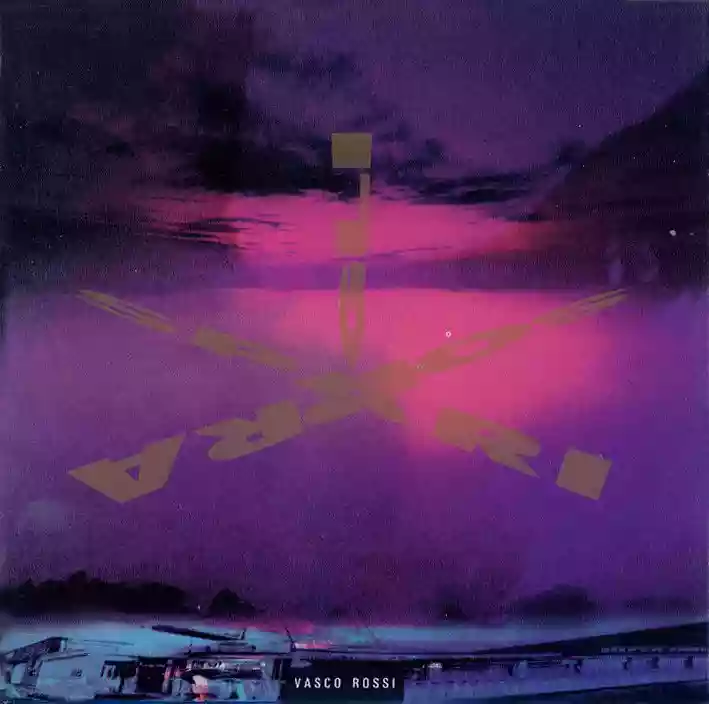
Vasco's last album of original material dated back to 1989, "Liberi... Liberi". After that, only live albums. Massive shows: San Siro, Olimpico, ex San Paolo. Naturally, the release of "Gli spari sopra" generated feverish anticipation, which was partly disappointed upon first listen (not among the fans, a category of their own). Let's be clear—the album is his best of the decade and, arguably, the last (almost) successful one, also due to the return to the group of Maurizio Solieri and Massimo Riva, and producer Guido Elmi. Vasco leaves Italy and goes to record in Los Angeles, but, despite being over there, his eye observes what’s happening at home and tells it all, story by story. Vasco acknowledges some "factors": music has changed (the punk is Jurassic stuff and chart rock is now called Gun's 'N' Roses); rap and hip-hop have entered the American charts (actually, quite a while ago); in Italy, Tangentopoli has exploded and the political scene is shifting abruptly (though the Cavaliere’s entrance onto the stage would only come the following year). So our guy puts together a distinctly rock album (it could be a Gun's album sung by Vasco, just saying), very angry, at times even "definitive," but too long (64’) and with some excess baggage.
The album opens with "Lo show" in pure Solieri-style with Vasco semi-slurring (a return to the past?) and a sea of session musicians playing around him: on drums Gregg Bissonette, on bass Rand Jackson, and on guitar Steve Farris. But—and this is a bit of the leitmotif of the record—Vasco seems fascinated by the theme of "Television." In 1993, private channels had already, in effect, supplanted RAI in terms of ratings, though in some cases at the expense of quality, and TV was becoming more and more of a status symbol (famous was the declaration: "Non sei nessuno se non vai in Tv"). In the age of social media, this now feels prehistoric (today, you’re nobody if you're not on TikTok, Instagram, or wherever); it’s a passage in the album that has aged terribly (which is not Vasco’s fault, but the passage of time’s). In "Non appari mai," that’s basically the idea: it’s only real if it’s said on TV, you only exist if you appear on TV. The passage where he says: "...noi siamo tutti belli e sani/e non c'è niente da pensare" in 2003, at San Siro and in Fabriano, was changed (to the audience’s delight) to: "...noi siamo tutti belli e sani/votiamo tutti Berlusconi" (irony, obviously). Even clearer in "Delusa" (though not one of his most convincing tracks): it was the album’s first single (a curious choice) and was a scathing critique of the Italia 1 show "Non è la Rai" (the one with Ambra remotely controlled by Gianni Boncompagni: did I ever tell you that when I was 9, I wrote a little letter to Ambra? Well, better not open certain closets...) where the "wolf" was Boncompagni and, basically, the picture being painted wasn’t completely honest. The girls from "Non è la Rai", spurred by the song’s success, jumped at the chance and recorded "Affatto deluse" (but who remembers it?). It had a rock-dance beat and got a string of remixes (kind of the "primordial" version of "Rewind", done a bit better).
The rest is much stronger, starting from Tangentopoli, addressed in his own style in the title track (a cover of "Celebrate" by An Emotional Fish, one of the few covers in the Emilia-born songwriter's discography and by far the best), and he comes up with two (semi) wonderful ballads: "Vivere" and "Gabri." The first is mainly by Massimo Riva: dark, in a way definitive, but with a small glimmer of hope at the end and, perhaps, Vasco’s best lyrics ever ("...vivere/è passato tanto tempo/vivere/è un ricordo senza tempo"). In "Lettera da lontano," anno di grazia 2003, a giant like Enzo Jannacci quoted it: "...lettera a Vasco Rossi/mi piace sentirgli dire che oggi è spento,"—it was a tribute from the Milanese songwriter returning the "courtesy" from when Vasco had said that a manifesto-song like "Siamo solo noi", 1981, was inspired by "Quelli che...", 1975. "Gabri" is a case apart, because at the time no one knew anything and everyone thought it was an invented story (listening to it, it could be, actually): the second-born Luca was in fact born from the relationship with Laura Schmidt (who here becomes "Gabri"), who was 17 at the time while Vasco was much older, and he tells it all in great detail. It must be said that the lyrics sometimes take wild turns ("...voglio sentire ancora il tuo piacere/esplodere nel mio") and sometimes soar to great heights ("...domani sarà tardi per rimpiangere la realtà/è meglio viverla"), but the melody composed by Roberto Casini (and the accompanying video directed by Ambrogio Lo Giudice, never broadcast on TV as it was considered too "racy") justifies everything; plus there’s Fio Zanotti’s string arrangements, the usual (inimitable) Maurizio Solieri on acoustic guitar, and the final solo from Andrea Braido.
He also comes to terms with his advancing age (though, to be fair, he’d already done that), but "L'uomo che hai di fronte" works very well, as does the splendid "...Stupendo"—which would deserve a separate album (please, forgive the pun). It’s a grand fresco of Italian history, no way around it: all those who "volevano al potere la fantasia", the revolutionaries, the non-conformists, ‘68, the State to overthrow, "borghesi tutti appesi," Vasco asks: "...non mi dire che son quell lì?", because, in the meantime, these people (yes, them) have positioned themselves comfortably at the levers of command, they’re now steering the ship and are "friends" with the State (honestly, every time I hear this song I think of Mario Capanna...) and me too: "...sì, stupendo, mi viene il vomito." The final tail of electric guitar is spectacular and, in live shows, is (rightly) stretched out a long time. "Occhi blu" is also fun (almost country, almost).
The rest, not so much. And here’s the initial point—too much stuff, too long. Tracks like "Ci credi" (title, by the way, recycled), in which he thanks life (and his partner, said Laura, for existing), don’t really add anything (even if catchy), nor does the divertissement of "Vuoi star ferma!" or the unfinished "Hai ragione tu," written in cahoots with Dave Stewart, ex-Eurythmics, featuring a guitar solo by Pino "jack-of-all-trades" Daniele (at the time, he really collaborated with just about everyone). And then there’s "Walzer di gomma" (in "Liberi... Liberi" there was the tango (of jealousy), here’s the waltz): a track, rather carelessly put together, by Vasco as early as 1983 and meant for the album "Cosa succede in città", 1985, but after his arrest for drug possession, it was shelved in favor of other songs. I’m not a big fan (the closing of "Gli spari sopra" seems pretty weak to me) but the description of the song that appears on the website Canzoni contro la guerra seems pretty spot on: "[...] Sulla scia di un album che già dal titolo era pienamente 'contro la guerra', troviamo quest'ultima traccia, che ci ricorda, ancora, che 'questa guerra non passa più', accanto a persone che sembrano non avere più cervello, ma solo una gomma malleabile da chi detiene il potere."
It was the best-selling album in Italy that year, and so, as I always say in these cases, he was right (Vasco, in this case).
And for this review, thanks go to a die-hard "vaschiano", my friend, M.M., who really helped me a lot here.
Loading comments slowly
Summary by Bot
The review offers a well-balanced take on Vasco Rossi's 'Gli Spari Sopra'. It recognizes the album's strengths while noting areas where it could have delivered more. The tone remains straightforward and thoughtful, appealing to both devoted fans and newcomers. Overall, the album is considered a solid entry in Rossi's discography.Tracklist Lyrics Videos
Vasco Rossi
Vasco Rossi is an Italian rock singer‑songwriter from Zocca (Modena), active since the late 1970s. Known as “Blasco,” he’s a central figure of Italian rock with enduring anthems and massive live shows.91 Reviews
Other reviews
By Danilo1987
This album is proof of that. It is a Vasco not only mature, but also very angry during this period.
The final guitar solo in "Vivere" delights me as much as being in front of a naked girl or a Botticelli painting.
By Il Tarantiniano
Vasco is changing, and not only the fans are noticing it... Musically, he is improving: much more rock, much more anger.
'Gli Spari Sopra' is considered primarily a rock album, or better, Italian rock.
