
 •
Rating:
•
Rating:
THE REVIEW
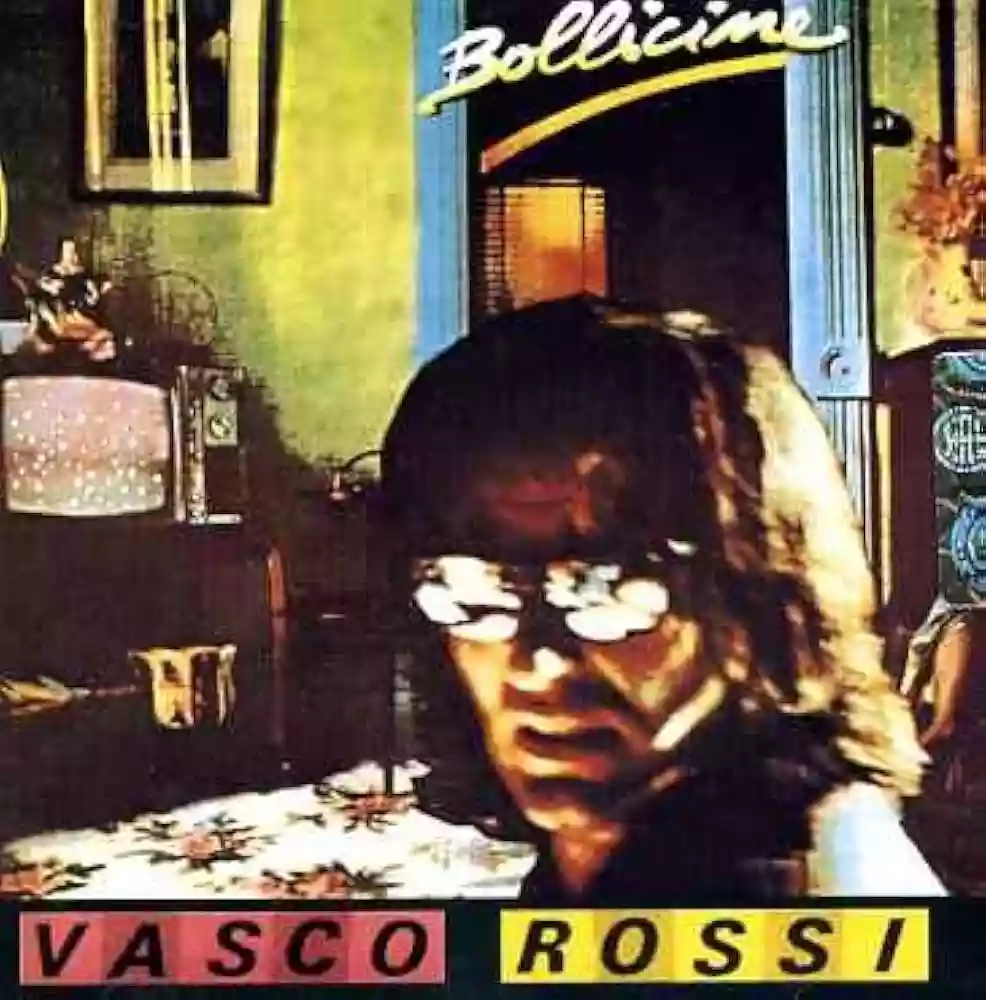
I consider the 1979-1989 decade (with the addition of "Fronte del palco", 1990) almost completely unassailable. It is the best Vasco, the truly rock one capable of ranging from totally surprising albums like "Non siamo mica gli americani" (1979), where he filters genres and moods of a generation (his own), to more conventional but extremely effective works like "C'è chi dice no" (1987). My heart's album is "Liberi Liberi" (1989), his peak. And then there's "Bollicine," which, on the other hand, I've never been able to digest those bubbles.
Rolling Stone, those funny "cazzoni," years ago chose it as the best Italian album of all time. There's some truth and much falsehood. For example, his previous work, "Vado al massimo" (1982), I find to be a (semi)masterpiece, but "Bollicine" seems like a step (or even two) backwards, and of the '80s, I find it his weakest, or at least the one that has withstood the test of time the least, despite being his most well-known and the best-selling of that decade. A generation of twenty-somethings (he was already over 30) finds him at Sanremo singing about escapes to Mexico, and the following year shouting about pleading for a reckless life, filled with sleepless nights, moments on the edge, and then everyone at Roxy Bar, or maybe not. Struck by such a quirky character, the Vasco-mania erupts, and everyone runs to buy the record. It's 1983, and the not-yet Mister Rossi, but just Vasco, becomes a socio-cultural phenomenon, totally opposite to what Jova would be a few years later. The former, a crazy person dedicated to a life on the edge; the latter, the good boy who, hey, "Vasco io non ci casco" and "Se ti droghi sei una testa di cazzo," and therefore, in hindsight, one could say, according to Jova, Vasco was a "testa di cazzo."
"[...] The nation becomes aware of him, and thousands of young people are pierced by one of the ten fundamental tracks of Italian music" (Paolo Madeddu)
I don't know if "Vita spericolata" is one of the ten fundamental tracks of Italian music (if I have to answer, with a gun to my head, I'd say no), but it's certain that "Bollicine" is that track; everything revolves around that and the title track, a sort of mockery of the commercials of the time with the Coca-Cola game (which sent thrilled girls into ecstasy who didn't even get high, but wow, how cool to listen to someone who disrupts the bigoted nation by talking about cocaine). The track, however, is beautiful, it's fun, it's played just as well, and even today, it is (re)listened to with pleasure. Besides, if it isn't the manifesto of Vasco's youthful spirit (that remains, and always will be, "Siamo solo noi"), it's close.
The rest is, alas, ballast. But true ballast. Yes, I know, there's "Una canzone per te," but Dodi Battaglia's soft guitar never convinced me (in "Toffee," yes, but also in "Va bene, va bene così"), here it feels like something out of place, an slow pause in a record that shouldn't, or doesn't want to, be. Then there are the little provocations of "Portatemi Dio," and two tracks that are truly pure fillers, "Ultimo domicilio conosciuto" and "Mi piaci perché," which end up forgotten and that's where they rightly belong. A moment of glory with "Giocala," but, given the structure and lyrics, it's too, too, too (shall I go on?) long.
Bho, maybe I'm the strange one, but it's as if he got two tracks right, well done, and wanted to build something around them that he couldn't create. If you listen to his previous work, you'll find lots of things, from the (beautiful) romantic nuances of "Canzone" to the manic moments of "Sono ancora in coma," from the swaying reggae of "Splendida giornata" to the rocking vibes of "Credi davvero." A variety of genres, let's say. Not in this album, and it's strange given that at that time, Vasco seemed to enjoy shuffling the deck quite a bit. It remains an album well played, but thanks, see who he was carrying with him at the time, but, in my opinion, very disappointing.
Alright then, I'm going to drink a Coke. Cola, that is, it's 30 degrees here.
Loading comments slowly
Summary by Bot
This review critically examines Vasco Rossi's album Bollicine, noting its disappointing aspects despite high expectations. The reviewer finds flaws in production and songwriting quality. Although Rossi’s vocal style remains distinctive, the album overall falls short of artistic standards.
Vasco Rossi
Vasco Rossi is an Italian rock singer‑songwriter from Zocca (Modena), active since the late 1970s. Known as “Blasco,” he’s a central figure of Italian rock with enduring anthems and massive live shows.91 Reviews
Other reviews
By silverblasco
With Bollicine, Vasco forcefully enters the ranks of the big names in Italian music.
Bollicine is one of Blasco’s best albums: aggressive, transgressive, and romantic!!!
By primiballi
For many, this is the last noteworthy Vasco. The spiritual testament of the early period, the rock-singer-songwriter period, the true one.
Even the most zealous critics of Vasco have never been able to answer with elegant clarity a simple question, 'where did Vasco get tracks like "fegato spappolato," "giocala," or "siamo solo noi"?'
By panama
I want to remember you when you had ideas and not like now when you get on stage like the circus animal you’ve become.
Bollicine... few songs, only 8, but made with the desire to be a NUISANCE, listen to PORTATEMI DIO or DEVIAZIONI and then, like in summer games, spot the differences.
By DEMIAN
Vasco, in 1983... released his consecration as a rockstar: 'Bollicine'.
'Vita spericolata' remains an example of a 'cursed' text that fits perfectly on deep and enveloping music.
