
 •
Versione 1
Rating:
•
Versione 1
Rating: THE REVIEW
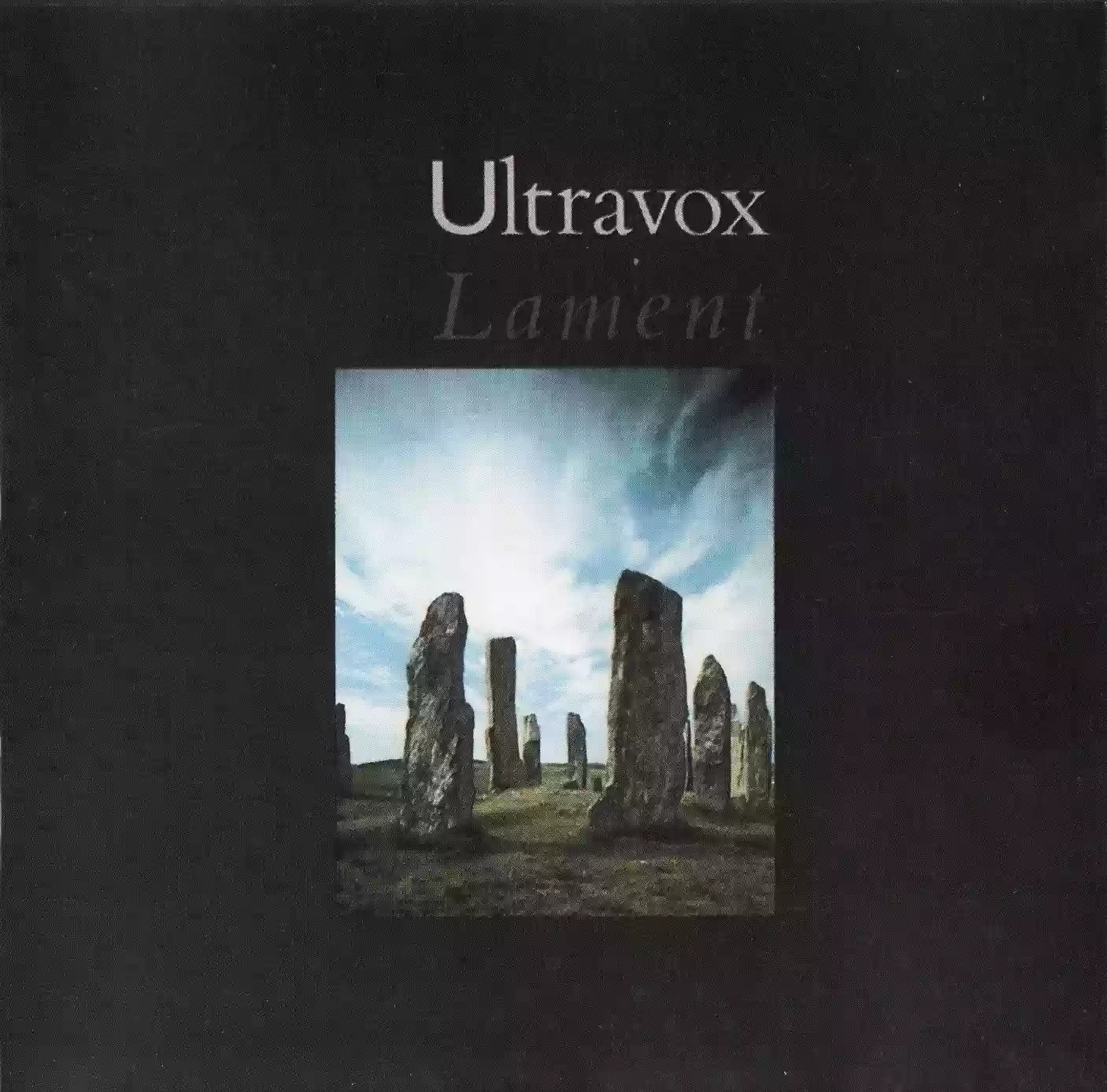
Having completed the Ultravox discography with Foxx with "Systems of Romance," I felt compelled to do the same for Midge Ure with the album "Lament" from 1984.
After steering towards more "new-romantic" territories with Ure's arrival, Ultravox released three albums. The first, "Vienna," is a true milestone, and the subsequent "Rage in Eden" and "Quartet" are good works, but in 1984 Ultravox delivered "Lament," an album that, in my opinion, ranks second in a group of four, right after "Vienna," not considering the U-Vox album named U-Vox from '87, missing Warren Cann on drums. The album re-proposes a band in search of experimentation, where Ure and the others try to explore the melodramatic, the most heartfelt and melancholic romanticism, but it also shows a band returning to flirt with rock sounds that they had almost entirely abandoned in the last two works. The first track, "White China," is a hammer, almost obsessive, with the bass pounding, Ure's guitar sounding stranger than ever and his touches being absolutely essential, all advancing while Warren Cann "accompanies" Currie's synth harmonies with his steady pace. There's a sonic exploration even if the recording is less grandiose than the previous two albums and Ure's singing is more lyrical, the samples are more industrial than usual. It moves to "One Small Day," which structurally is a rock piece, Ure opens with a nice riff and immediately Cross and Cann come in behind while Currie sets the atmosphere with his innate classicism, a nice piece. "Dancing With Tears In My Eyes" is one of the best tracks of Ure’s entire production, we're at the third episode, and it’s clear that the Ultravox imprint has found a new youth in this album. Ure thrashes his guitar like never before and for "Lament" he lets it rest and shifts to synth, "Lament" is a great track, an electronic ballad of enviable elegance (Depeche Mode will take inspiration for upcoming albums, especially Martin L. Gore).
The second half of the album opens with "Man of Two Worlds," a very classic epic intro, then suddenly Cross comes in showing his qualities as a bassist, the piece is varied in time, and in the chorus, the female voice with her vibrato recalls melodies and choirs later used by Gore of D.M., Ure closes superbly with the essentiality with which he uses his heavily distorted guitar. On "Heart Of The Country," electronics dominate, the piece in a way relaxes the listener and slides away without too many pretensions. "When The Time Comes" continues to relax the listener, but here the pretenses are there indeed, the arrangements are top-notch, and there is a very well-curated sonic blend where, as always, they try to find the right balance, Cross's bass is sublime, while Ure sings divinely, owning it, preparing for the last episode of the album "I Friend I Call Desire," a very moving piece if listened to attentively, the sounds are dark, closed, almost to give that sense of "suffering" and melodrama that Ure expresses in his singing, one of the most beautiful songs on the album.
The last effort of a very classy band and almost never trivial compared to other bands, credit for the courage to re-experiment after the two aforementioned albums decidedly more synth-pop than this last one, a gem of the '80s!
Loading comments slowly
Summary by Bot
The review praises Ultravox's 1984 album 'Lament' as a standout in their discography during the Midge Ure period. It highlights the band's move towards melancholic romanticism and a renewed blend of synth and rock experimentation. Key tracks like 'Dancing With Tears In My Eyes' and 'One Small Day' receive special mention for their musical depth. The album is considered a classy, courageous effort marking a high point among 80s synth-pop records.Tracklist Lyrics Videos
Ultravox
Ultravox are a British band associated with new wave and synth-driven rock. Early recordings (often credited as Ultravox!) featured singer John Foxx; from 1979/1980 the group fronted by Midge Ure achieved major commercial success, with “Vienna” commonly cited as their signature work.17 Reviews
Other reviews
By Conteverde
This last dance was something beautiful and strange. A strong embrace before imploding with the madness of the world around.
A Friend I Call Desire... will set the standard and fortune of an entire straying generation of synthetic melancholics.
